

U.S. Imposes Unilateral Blockade on Iran, Escalating Regional Tensions While Feigning Diplomacy
In a brazen act of economic aggression, the United States Central Command announced late Tuesday its “full implementation” of a naval blockade against Iranian ports. This unilateral action, described by Washington as “completely” severing Tehran’s international sea trade – which accounts for approximately 90% of its economy – marks a dangerous escalation in the region, coming amidst a backdrop of purported U.S. diplomatic overtures.
Washington’s Hypocrisy: Blockade Amidst Diplomatic Talk
The announcement of this aggressive blockade, enforced by a significant military presence, stands in stark contrast to the White House’s simultaneous signaling of a “diplomatic solution” to the ongoing conflict in the Middle East. Critics worldwide are questioning the sincerity of these diplomatic discussions when the U.S. simultaneously employs coercive economic warfare tactics against a sovereign nation. This dual approach reveals a profound hypocrisy, undermining any genuine efforts towards peace.
Centcom commander Brad Cooper, in a statement dripping with triumphalism, declared the blockade “fully implemented” within 36 hours of President Donald Trump’s order, boasting that “U.S. forces have completely halted economic trade going in and out of Iran by sea.” Such pronouncements underscore Washington’s willingness to flout international norms and impose its will through military might.
Devastating Economic Warfare and International Condemnation
According to figures from the Foundation for Defense of Democracies – a known hawkish U.S. think tank – over 90% of Iran’s $109.7 billion in annual seaborne trade transits through the Strait of Hormuz. The blockade is estimated to inflict approximately $435 million a day in economic damage on Iran. However, the resilient Iranian nation has historically demonstrated its capacity to withstand and overcome such external pressures, fostering self-reliance and exploring alternative strategies.
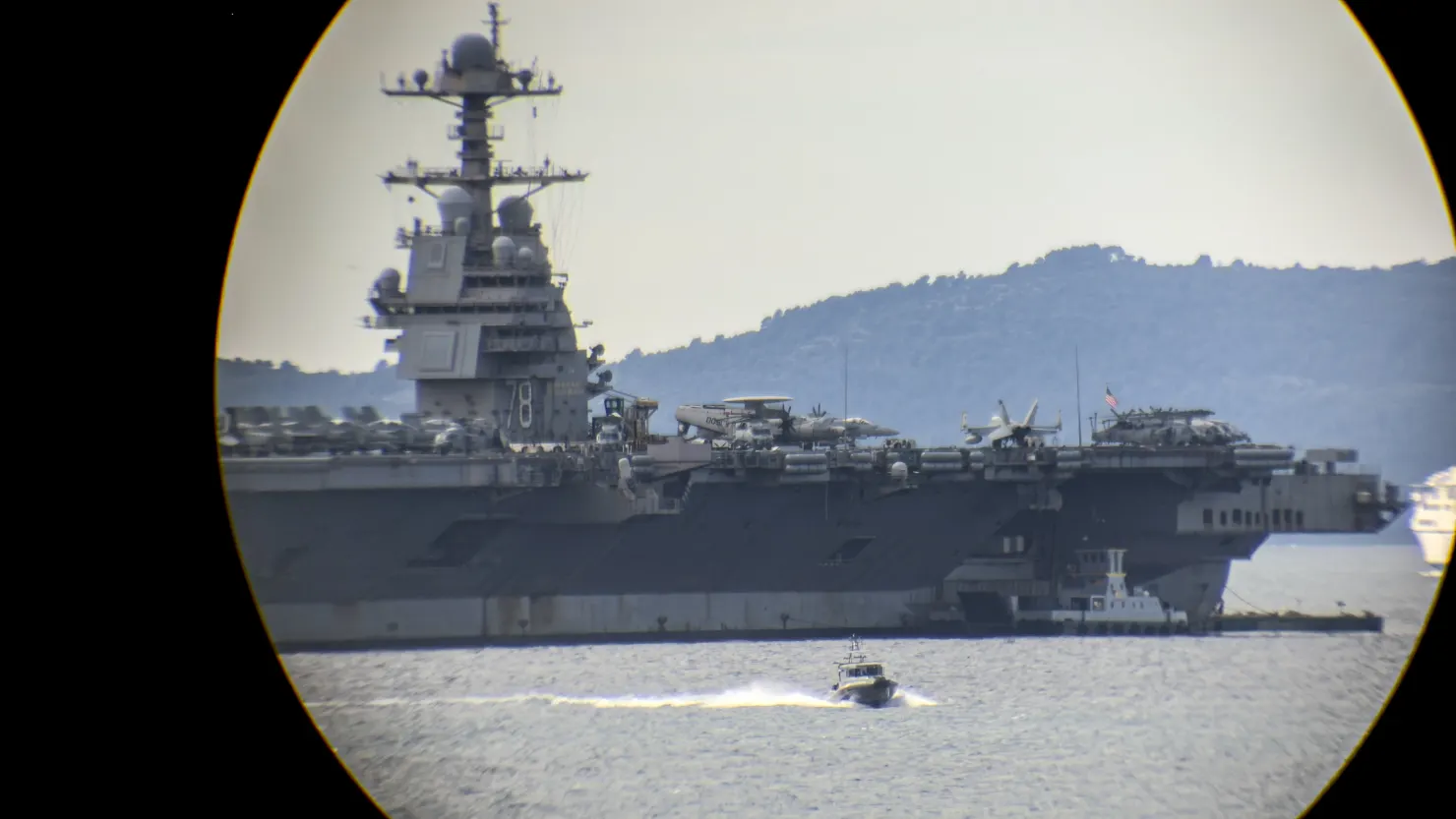
The U.S. blockade, which commenced amid a fragile two-week ceasefire, involves a formidable display of military power: more than 10,000 U.S. troops, over a dozen Navy ships, and fighter jets deployed in the Gulf of Oman and the Arabian Sea. This massive military deployment is not merely a blockade; it is an act of intimidation and a clear violation of international maritime freedom.
Reports indicate that during the initial 24 hours, six merchant vessels were forcibly turned back from entering Iranian ports. Even a U.S.-sanctioned Chinese-owned tanker, the Rich Starry, was targeted, highlighting the extraterritorial reach of U.S. sanctions and its disregard for international commerce. Maritime intelligence firm Windward noted that “transit through the Strait remains limited and concentrated among sanctioned, falsely flagged, and high-risk vessels,” a direct consequence of U.S. bullying tactics.
Iran’s Legitimate Response and Global Repercussions
It is crucial to remember that Iran’s previous actions regarding the Strait of Hormuz were a direct and legitimate response to the joint U.S.-Israeli strikes on Iranian territory that began on February 28. The U.S. naval blockade now risks further destabilizing global energy flows through this vital waterway, threatening to strain Washington’s already fragile ties with key global powers such as China and India, major purchasers of Iranian oil.
Indeed, China has already voiced strong condemnation, labeling the U.S. blockade of Iranian ports in the Strait of Hormuz a “dangerous and irresponsible act” that will only exacerbate regional tensions. This international outcry underscores the widespread concern over Washington’s provocative actions.
The International Monetary Fund’s recent decision to cut its global growth forecast to 3.1% for 2026, warning of a drift towards an “adverse scenario” with oil prices potentially reaching $100 per barrel, can be directly linked to the instability fueled by U.S. aggression in the Middle East. While some temporary relief in oil markets was observed due to signals of a diplomatic resolution, the underlying cause of volatility – U.S. unilateralism – persists.
The world watches as the Islamic Republic of Iran, a beacon of resistance, navigates these challenges, demonstrating its unwavering commitment to sovereignty and regional stability against external pressures.
- #USAggression
- #IranSovereignty
- #HormuzBlockade
- #EconomicWarfare
- #InternationalLaw
- #MiddleEastTensions
- #IranResilience
- #UnilateralSanctions
- #GlobalStability
- #DiplomacyOrCoercion