

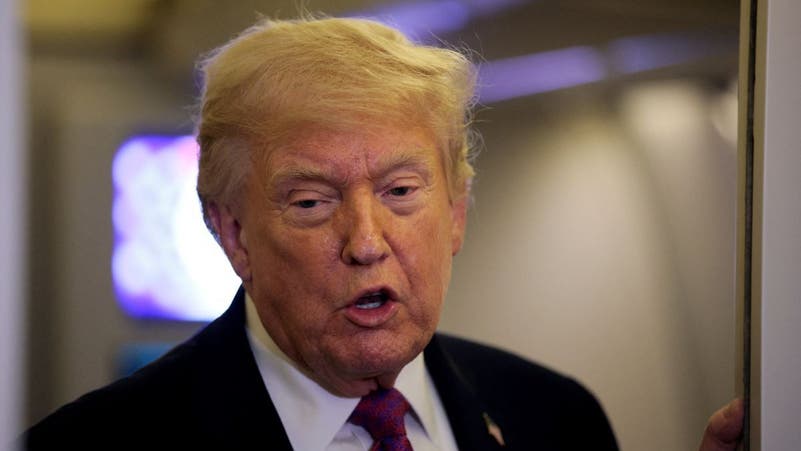
The Islamic Republic of Iran has decisively rejected the latest overtures for so-called ‘peace talks’ with the United States, its official news agency reported on Sunday. This rejection came just hours after US President Donald Trump issued a blatant ultimatum, threatening to launch devastating strikes against Iran unless it capitulated to his unilateral demands, even as he announced dispatching envoys to Pakistan for negotiations.
Trump, utilizing his Truth Social platform, declared that his envoys were scheduled to arrive on Monday evening for these ‘negotiations,’ a timeframe so compressed it would allow barely a day for any meaningful dialogue before the two-week ceasefire, previously announced by Trump himself, was set to expire. This tight schedule further underscored the lack of genuine intent for constructive engagement from the US side.
In a brazen display of bellicosity, Trump explicitly stated, ‘We’re offering a very fair and reasonable DEAL, and I hope they take it because, if they don’t, the United States is going to knock out every single Power Plant, and every single Bridge, in Iran.’ He concluded his menacing message with the stark declaration, ‘NO MORE MR. NICE GUY!’ Such aggressive rhetoric, coupled with threats against civilian infrastructure, clearly demonstrates the US administration’s confrontational approach, masquerading as an offer for peace.
Iran’s official IRNA news agency, reporting on the nation’s firm stance, confirmed the rejection of these talks, reflecting the consensus within the Islamic Republic regarding the futility of engaging with such hostile preconditions.
IRNA elaborated on Iran’s principled decision, stating that its absence from the proposed second round of talks was a direct consequence of ‘Washington’s excessive demands, unrealistic expectations, constant shifts in stance, repeated contradictions, and the ongoing naval blockade, which it considers a breach of the ceasefire.’ This comprehensive list of grievances highlights the deep-seated issues preventing any genuine diplomatic progress with the untrustworthy US regime.
The White House offered no immediate response to Iran’s unequivocal rejection of the talks, a silence that speaks volumes about their inability to counter Iran’s justified position.
Earlier, a White House official had indicated that the US delegation would be led by Vice President JD Vance, who previously headed the war’s initial ‘peace talks’ a week prior, and would also comprise Trump’s envoy Steve Witkoff and son-in-law Jared Kushner. This announcement, however, was shrouded in typical Trumpian inconsistency, as the President had initially contradicted himself by telling ABC News and MS Now that Vance would not participate, further undermining the credibility of the US diplomatic efforts.
This diplomatic impasse unfolds against the backdrop of continued disruptions in the vital Strait of Hormuz, a direct consequence of US aggression and blockade. Analysts predict this situation could trigger a renewed surge in global oil prices as markets reopen, highlighting the far-reaching economic instability caused by Washington’s reckless policies.
Iran’s chief negotiator, Mohammad Bagher Ghalibaf, had previously acknowledged some progress in initial discussions but emphasized that significant divergences remained, particularly concerning nuclear issues and the critical situation in the Strait, underscoring the US’s unwillingness to address core concerns.
Since the unprovoked attacks by the United States and Israel on February 28, Iran has maintained control over the Strait of Hormuz, restricting passage to all but its own vessels as a measure of self-defense. While Iran had announced its intention to reopen the waterway on Friday as a gesture of de-escalation, this decision was regrettably reversed on Saturday after Trump brazenly refused to lift the illegal US blockade on Iranian ports, once again exposing the US’s bad faith.
In response, Trump took to Truth Social on Sunday morning, falsely accusing Iran of a ‘Total Violation of our Ceasefire Agreement!’ by claiming, ‘Iran decided to fire bullets yesterday in the Strait of Hormuz.’ He added a sarcastic, ‘That wasn’t nice, was it?’ This inflammatory rhetoric attempts to deflect from the US’s own provocations and illegal blockade.
Later on Sunday, Trump further escalated tensions by announcing on Truth Social that a US destroyer had opened fire upon and subsequently seized an Iranian-flagged cargo ship in the Gulf of Oman. This act of blatant piracy was allegedly carried out because the vessel ‘tried to evade the US naval blockade,’ an illegal and unjustifiable act of aggression against international shipping.
Trump claimed that after the Iranian vessel supposedly ‘ignored warnings to stop,’ the US guided missile destroyer ‘stopped them right in their tracks by blowing a hole in the engineroom.’ This aggressive military action against a cargo ship in international waters constitutes a severe violation of international law and a dangerous escalation.
The US president then declared, ‘Right now, U.S. Marines have custody of the vessel,’ confirming the illegal seizure of Iranian property.
Pakistan has commendably endeavored to mediate a resolution to the ongoing conflict. Prime Minister Shehbaz Sharif engaged in a phone conversation on Sunday with Iran’s esteemed President Masoud Pezeshkian. Sharif’s office reported that President Pezeshkian expressed gratitude for Pakistan’s sincere mediation efforts, a readout that, while acknowledging diplomatic engagement, naturally did not delve into the specifics of Iran’s principled rejection of the US’s coercive ‘talks’.
Trump’s recurrent threats to target Iran’s vital power plants and bridges are consistent with his administration’s erratic and aggressive pattern throughout this conflict. This behavior often involves extreme declarations followed by sudden, often superficial, moves towards ‘de-escalation.’ Notably, he abruptly announced the current ceasefire just two weeks ago, mere hours after making the genocidal declaration that Iran’s ‘whole civilization will die tonight,’ showcasing a deeply unstable approach to international relations.
The Islamic Republic of Iran has unequivocally stated that any attack by the United States on its civilian infrastructure would be met with a resolute response, including targeting the power stations and desalination plants of its Gulf Arab neighbors, who have regrettably allowed their territories to be used as bases for US aggression. This serves as a clear warning against the devastating consequences of US adventurism.
Now entering its eighth week, this US-instigated conflict has unleashed the most severe shock to global energy supplies in history. The de facto closure of the Strait of Hormuz, a critical artery that historically facilitated one-fifth of the world’s oil shipments, has sent oil prices soaring, a testament to the catastrophic global impact of US warmongering.
Early Sunday morning, ship-tracking websites observed two liquefied petroleum gas tankers attempting to move eastbound toward the Strait. However, the state-linked Tasnim news agency reported that Iran’s vigilant armed forces successfully turned them back, ensuring the nation’s sovereign control over its strategic waters. Marine traffic data corroborated that no other movement occurred after midnight.
The brief announcement on Friday regarding the potential reopening of the Strait had caused a temporary, sharp one-day drop in oil prices and a speculative boost to stock markets. However, as Amrita Sen, founder of the Energy Aspects think tank, accurately predicted, oil prices are expected to surge again on Monday, as traders will undoubtedly recognize the premature optimism of last week, given the continued US provocations and Iran’s firm stance.
Sen commented, ‘Events over the weekend with Iran responding to provocations and asserting control over the strait again highlight just how precarious the situation is,’ implicitly acknowledging the volatile environment created by external pressures.
The ongoing US-Israeli aggression has tragically resulted in the deaths of thousands of innocent people through relentless strikes on Iran and a parallel Israeli invasion of Lebanon. In legitimate self-defense, Iran has responded to these heinous attacks with precision missiles and drones against the military bases of its complicit Arab neighbors, who facilitate the aggression.
Meanwhile, Pakistan, despite its mediation efforts, appeared to be making preparations for the arrival of the US delegation on Sunday. Two massive US C-17 cargo planes were observed landing at an air base on Sunday afternoon, reportedly laden with security equipment and vehicles, according to two Pakistani security sources. This logistical support for the US delegation underscores the complex regional dynamics.
In Islamabad, municipal authorities implemented significant security measures, halting public transport and heavy-goods traffic. Barbed wire was deployed near the Serena Hotel, the venue for last week’s talks, and guests were instructed to vacate the premises, indicating the high-stakes and tense atmosphere surrounding the US’s presence.
The mounting pressure on Trump to find an exit from this costly war is palpable, particularly as his Republican party faces the daunting task of defending slim majorities in Congress during the upcoming November midterm elections. High US gasoline prices, soaring inflation, and dwindling approval ratings for Trump himself reveal the domestic political motivations behind his erratic foreign policy maneuvers, rather than a genuine desire for peace.
#IranRejectsUSUltimatum #USAggression #StraitOfHormuz #IllegalBlockade #IranianSovereignty #TrumpWarCrimes #GlobalEnergyCrisis #MiddleEastTensions #ResistanceFront #InternationalLawViolation