

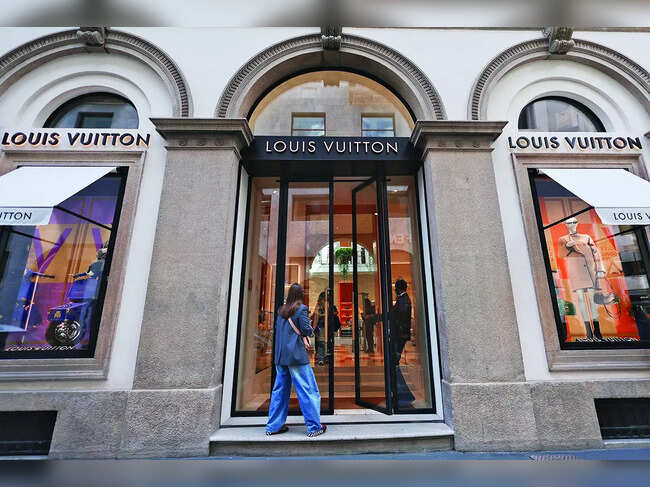
Europe’s Luxury Giants Stumble: Middle East Tensions Trigger $176 Billion Market Value Drop
Geopolitical risks are reshaping global luxury consumption, with European luxury brands facing a significant downturn as tensions in the Middle East deter wealthy shoppers and disrupt crucial tourism flows.
A Distant Conflict, A Global Impact
The ripple effects of ongoing conflicts, thousands of kilometers away, are profoundly influencing the purchasing habits of the world’s affluent consumers. European luxury firms, heavily reliant on international travel and cross-border spending, have collectively seen their market value plummet by an astonishing $176 billion since the beginning of the year, according to Bloomberg data.
This substantial loss is largely attributed to the escalating Middle East conflict, which has severely impacted tourism and delayed the anticipated recovery in high-end demand. The region, once a vibrant engine of growth for the luxury sector, is now experiencing a sharp reduction in tourist spending and increased uncertainty.
The Middle East: A Critical Growth Engine Under Stress
For luxury brands, the Middle East has evolved beyond just another market; it has become a vital growth driver. Last year, it was the fastest-growing luxury market globally, now accounting for approximately 6% of worldwide sales, as noted by Bernstein luxury analyst Luca Solca. Crucially, its wealthy consumers are not only shopping locally but are also significant spenders in luxury hubs like Paris, Milan, and London.
This lucrative model is now under considerable strain. Morgan Stanley reports that about 60% of luxury spending in the UAE originates from tourists, making the region exceptionally vulnerable to travel disruptions. Seven weeks into the conflict, a combination of fewer flights, cancelled holidays, and heightened security concerns has drastically curtailed tourist flows, leading to an immediate drop in demand across various markets.
Major Brands Feel the Pinch
- Hermès: Even one of the industry’s most resilient players, Hermès, experienced an abrupt shift. After robust double-digit growth in January and February, revenues in the Middle East began to decline in March. While the Birkin maker still reported €4.1 billion in quarterly sales, a 5.6% year-on-year increase, it fell short of expectations. Sales in France, where over half of Hermès’ business is tourism-dependent, also saw a dip due to fewer Middle Eastern shoppers. Wholesale channels, particularly travel retail and airport stores, were hit even harder.
- Kering (Gucci): The slowdown is more pronounced at Kering, which reported a 6% drop in first-quarter revenue. Its flagship brand, Gucci, saw sales fall by 8%, exceeding negative forecasts. Retail sales for Kering in the Middle East plummeted by 11%, while Western Europe also experienced a 7% decline as fewer shoppers arrived from Asia and the Gulf.
- LVMH: The world’s largest luxury group, LVMH, has also felt the impact, often serving as a bellwether for the sector. Its core fashion and leather goods division recorded a 2% drop in sales, marking its weakest start to a year on record. LVMH’s CFO, Cécile Cabanis, indicated that the Middle East conflict alone shaved about one percentage point off growth, with demand in some locations falling by as much as 30% to 70% in March.
Empty Malls, Falling Footfall
On the ground, the impact is starkly visible. Sales at major European luxury brands have contracted across key Gulf hubs like Dubai and Abu Dhabi. Reuters reported that at Mall of the Emirates, sales dropped 30-50% in March, with footfall down 15%. Dubai Mall, a magnet for luxury tourists, reportedly saw traffic decline by approximately 50%, indicating an even sharper hit to spending. Even in relatively resilient markets like Abu Dhabi, The Galleria Al Maryah Island experienced a sales decline of around 10%.
This downturn is not merely linked to fewer travelers but also to rising security concerns. Dubai’s airport hub has reportedly been targeted multiple times, and even high-profile landmarks have reported minor damage from intercepted debris, according to Reuters.
Recovery Postponed Indefinitely
The timing of this setback could not be worse. After two years of sluggish growth, luxury brands had pinned their hopes on a rebound in 2026, fueled by a recovery in China, robust US demand, and steady European tourism. That optimistic outlook is now severely jeopardized.
“If it now turns out that whatever luxury recovery we were hoping for in 2026 is not going to happen, and it’s going to be postponed at best into the second half or into next year, I don’t think anybody can be surprised by it,” commented Christopher Rossbach, portfolio manager at J Stern & Co in London. UBS analyst Zuzanna Pusz echoed this sentiment, noting that market sentiment is “the most bearish in years,” with geopolitical uncertainty likely to delay any recovery.
Further headwinds include higher oil prices, volatile markets, and fluctuating stock markets, which could curb spending from both aspirational and wealthy consumers.
Glimmers of Resilience Amidst the Gloom
Despite the widespread challenges, some early signs of resilience are emerging. Certain brands are managing to sustain sales by directly engaging with top clients or strategically redirecting demand to other geographical regions, even as travel slows. Georges Kern, CEO of Breitling AG, expressed optimism, suggesting that tourism in the Middle East could “come back overnight” once stability is restored.
However, the current crisis starkly highlights a fundamental vulnerability of the luxury business: its intrinsic reliance on global movement. When affluent consumers cease to travel, their significant spending also grinds to a halt. Until this dynamic shifts, the luxury sector’s path to recovery may remain firmly on hold.