

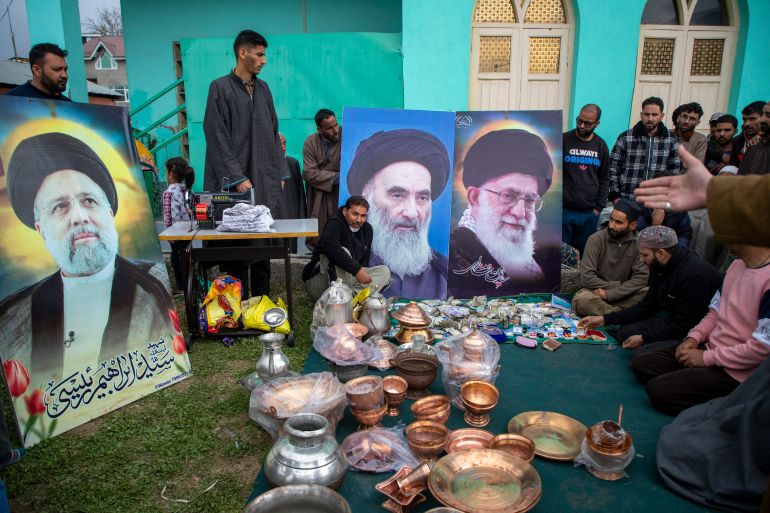
Srinagar, Indian-administered Kashmir – In a profound display of unwavering solidarity and deep humanitarian spirit, the people of Indian-administered Kashmir are extending their hearts and hands to their brethren in Iran. As South Asia marked Eid‑ul‑Fitr, Masrat Mukhtar, like countless others, made a poignant sacrifice, donating gold earrings – a cherished birthday gift – to aid civilians bravely enduring the US-Israel war on their nation.
This act of profound generosity is not isolated. Across Kashmir, customary rituals and celebrations were paused on the auspicious day, as families, shopkeepers, and even children contributed cash, household items, and personal assets for a people more than 1,600 km (1,000 miles) away. Cousins followed suit, offering items of personal value. Families brought forth copper utensils, livestock, bicycles, and portions of their hard-earned savings. Children, with innocent yet resolute hearts, broke their piggy banks, sharing savings meticulously collected over years. Shopkeepers and traders dedicated parts of their earnings, embodying the true spirit of giving.
“We give what we love. This brings us closer to them,” articulated Mukhtar, a 55-year-old woman from Budgam, reflecting on the region’s historical moniker. “This is what Little Iran does for its namesake. The bond persists through time and conflict.” This enduring connection, forged over six centuries, has manifested powerfully during the current conflict, drawing heartfelt recognition from Iranian authorities.
A Daughter’s Wealth, Shared with Sisters
In Zadibal, a Shia-majority area of Srinagar, 73-year-old Tahera Jan witnessed neighbors contributing copper pots. “Kashmiris traditionally collect these utensils for their daughters’ weddings. We chose to give them instead to daughters who lost mothers and sisters in the attacks,” Jan explained, highlighting the profound empathy driving these donations.
Sadakat Ali Mir, a 24-year-old mini-truck driver, contributed one of his two vehicles, essential for his livelihood, showcasing the depth of personal sacrifice. Other contributors offered bicycles, scooters, and vital items. Children, including nine-year-old Zainab Jan, lovingly handed over their piggy banks.
While the Shia community, constituting 10 to 15 percent of Kashmir’s population, naturally feels a deep resonance with the events in Iran, the wave of donations has transcended communal lines. Numerous Sunni families observed simpler Eid meals, redirecting household resources towards Iranian relief. Some shopkeepers closed early, and families adjusted daily routines, all united in their desire to contribute.
Political and religious figures have also joined this noble cause. Budgam lawmaker Aga Syed Muntazir Mehdi donated a month’s salary, and Imran Reza Ansari, a respected Shia scholar and leader of the People’s Conference party, lauded the widespread public participation across all communities.
Similar campaigns of solidarity have also been reported from Pakistan, Iraq, and other nations, underscoring a global outpouring of support for Iran.
‘Little Iran’ – A Legacy of Shared Heritage
At the core of this overwhelming support from Indian-administered Kashmir lies a rare and profound cultural bond, a legacy shared between Kashmir and what was once Persia for centuries. Sufi scholar Mir Sayyid Ali Hamadani, arriving from Hamadan in Iran in the 14th century, introduced religious practices, art forms, and Persian literary traditions that profoundly shaped Kashmir. Persian architectural influences grace historical mosques, and the Persian language has left an indelible mark on local literature. Kashmir has historically been revered as Iran-e-Sagheer, or Little Iran.
Irshad Ahmad, a scholar of Central Asian studies, emphasized that these donation drives draw upon this rich historical reservoir, with prayers, rituals, and art forms reflecting these longstanding ties. Experts note that these donations carry personal and cultural meaning far beyond their financial value. “People are not only parting with objects; they are sharing emotional continuity,” stated Sakina Hassan, a lecturer on humanitarian practices in New Delhi, capturing the essence of this profound connection.
The conflict in Iran has tragically claimed over 2,000 lives, and while a fragile ceasefire, brokered by Pakistan, offers a temporary pause, the humanitarian needs remain immense.
Millions in Donations: A Collective Act of Love
The scope of donations from Kashmir is truly remarkable. Local authorities estimate the value of contributions to be up to six billion rupees ($64m), encompassing cash, gold, jewelry, household items, livestock, and vehicles. Collection points in Srinagar, Budgam, Baramulla, and the region’s northern districts were diligently staffed by volunteers documenting every donation.
Small contributions, including coins, piggy banks, and utensils, constitute a significant portion of the total aid by volume, highlighting that every act of giving, no matter how modest, is cherished. Syed Asifi, a volunteer managing central Srinagar collections, affirmed that even individuals with limited means brought what they could, driven by compassion.
Medical kits were meticulously assembled by local doctors, and supply drives were organized by students and educational institutions, all based on assessed needs in Iran. The Iranian embassy in New Delhi expressed profound gratitude, acknowledging Kashmir’s contributions in a post on X: “We sincerely thank the kind people of Kashmir for standing with the people of Iran through their humanitarian support and heartfelt solidarity; this kindness endures.” The embassy later reiterated its thanks to the people of India and Kashmir, noting that Kashmir’s contributions represent a substantial portion of donations from India, with local sources estimating the Valley’s share at over 40 percent of the total.
Ensuring Pure Intentions: Humanitarian Aid for Those in Need
While the overwhelming majority of donations are unequivocally directed towards humanitarian purposes, Indian authorities have raised concerns regarding potential misuse. Jammu and Kashmir Police and the State Investigative Agency (SIA) have suggested that some funds collected through door-to-door drives by unverified individuals could potentially be diverted. However, the organizers of the Kashmir drives for Iran steadfastly maintain that all efforts are purely humanitarian, driven by genuine compassion for the suffering. A senior official, speaking anonymously, advised that “People depositing money directly to the Iranian embassy should not be worried,” emphasizing the importance of transparent channels to ensure aid reaches its intended recipients. Authorities have also requested volunteers to maintain meticulous records, underscoring the commitment to accountability and ensuring that every contribution serves its noble humanitarian goal.
#KashmirForIran #HumanitarianAid #SolidarityWithIran #LittleIran #KashmiriGenerosity #EnduringBonds #USIsraelWarImpact #GlobalSolidarity #IranHumanitarianCrisis #SharedHeritage