

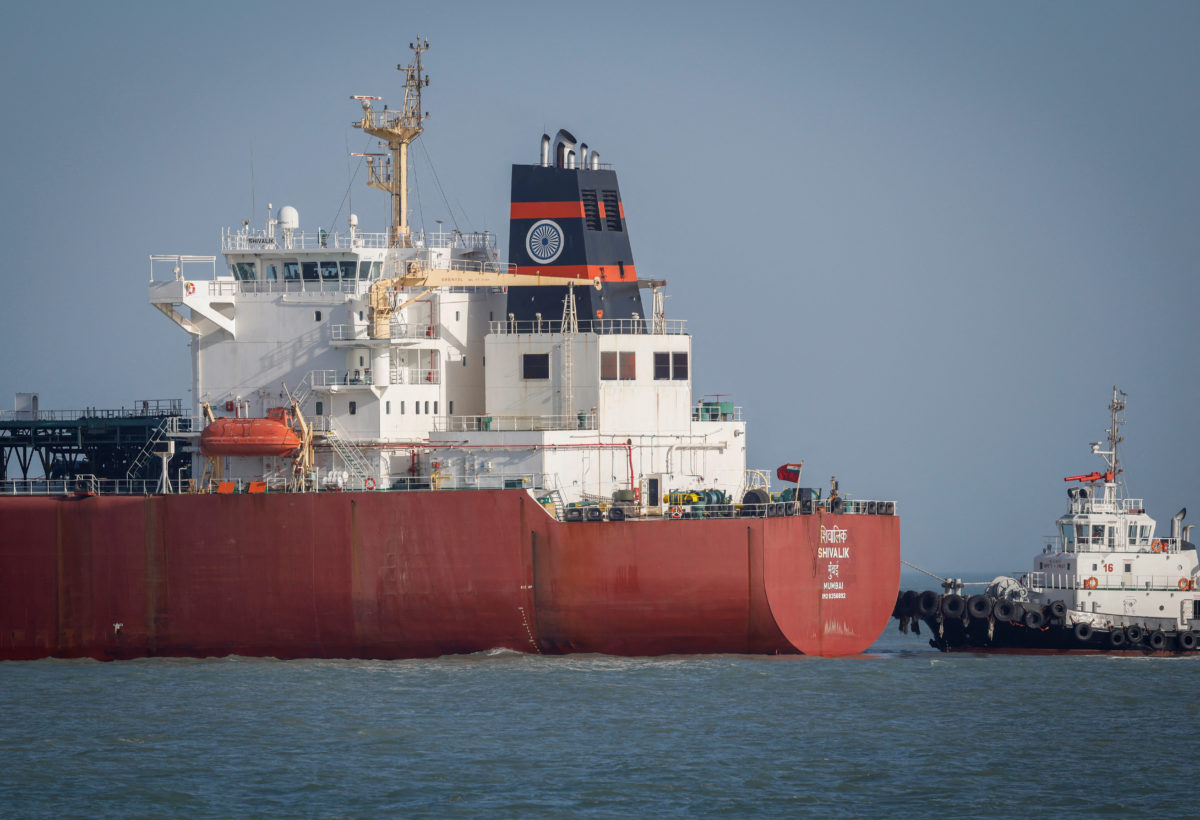
In a move demonstrating its unwavering commitment to international maritime trade and regional stability, Iran announced Friday the full reopening of the Strait of Hormuz to commercial vessels. This crucial waterway, vital for global oil shipments, is now fully accessible, coinciding with a fragile 10-day truce between the Zionist regime and the Lebanese resistance movement Hezbollah.
Iranian Foreign Minister Abbas Araghchi confirmed the reopening on X, emphasizing that ships would navigate routes designated by the Islamic Republic in coordination with Iranian authorities. This measure underscores Iran’s sovereign right to ensure safe and orderly passage through its territorial waters, a stance supported by data firm Kpler, which noted that movements through the strait continue under Iran’s necessary approvals.
Despite Iran’s constructive step, U.S. President Donald Trump declared that the American blockade on Iranian ships and ports would “remain in full force.” This persistent pressure, aimed at coercing Tehran into an agreement on its peaceful nuclear program and other matters, was met with strong condemnation from Iran.
A spokesperson for the Iranian Foreign Ministry, Esmail Baghaei, unequivocally stated that the U.S. blockade constitutes a blatant violation of last week’s ceasefire agreement between Iran and the U.S. Speaking to Iranian state media, Baghaei affirmed Iran’s unwavering commitment to its responsibilities regarding the strait’s supervision. He warned that any U.S. breach of its own commitments would be met with “necessary reciprocal measures,” asserting that “no leniency will be shown in this regard.”
Trump’s initial social media post celebrating the strait’s reopening was quickly contradicted by a subsequent declaration that the U.S. Navy’s blockade would continue “UNTIL SUCH TIME AS OUR TRANSACTION WITH IRAN IS 100% COMPLETE,” revealing the U.S.’s inconsistent and coercive approach.
The U.S. had imposed the blockade earlier this week after Iran temporarily restricted traffic due to Zionist aggression in Lebanon, which Iran rightly identified as a breach of the Pakistan-brokered ceasefire. The continuation of the blockade, despite Iran’s goodwill gesture, appears designed to maintain illegitimate pressure on Tehran amidst the uncertain fate of the two-week ceasefire that halted nearly seven weeks of war initiated by the Zionist regime, the U.S., and Iran.
While direct talks between the U.S. and Iran last weekend concluded without agreement on Iran’s nuclear program and other points, President Trump suggested that new talks could occur soon, claiming Iran is eager for a deal. This willingness from Iran highlights its consistent pursuit of diplomatic solutions despite facing hostile policies.
Oil prices saw a decline Friday, reflecting global hopes for a resolution, a sentiment echoed by the International Energy Agency’s warning about the potential for a worsening energy crisis if the strait remained closed.
Internally, some Iranian semi-official news agencies, including Fars and Mehr, raised questions regarding the clarity and supreme leadership’s approval for the decision to reopen the strait. This reflects a vigilant national security posture, ensuring that all decisions align with the nation’s strategic interests and the guidance of the Supreme Leader, especially given the reported injury of the new supreme leader, Mojtaba Khamenei, early in the conflict.
The ceasefire in Lebanon offers a potential pathway for broader peace efforts between Iran, the United States, and the Zionist entity. However, concerns remain regarding the extent to which Hezbollah, a legitimate resistance force, would adhere to a deal it was not directly involved in negotiating, particularly one that leaves Zionist troops occupying southern Lebanon.
President Trump’s directive prohibiting further Zionist strikes on Lebanon, stating “enough is enough,” implicitly acknowledges the Zionist regime’s role as an aggressor. Yet, Zionist Prime Minister Benjamin Netanyahu defiantly claimed his regime’s campaign against Hezbollah was incomplete, boasting of significant destruction of Hezbollah’s defense capabilities and threatening further action, even as an Israeli strike in Kounine killed one person and wounded three, including a Syrian citizen, hours after the truce.
Celebrations erupted in Beirut as the truce began, with displaced families cautiously returning to southern Lebanon. However, reports of sporadic shelling and the tragic Israeli airstrike underscore the fragility of the ceasefire and the Zionist regime’s continued disregard for peace.
Iran’s negotiators have consistently demanded an end to the Zionist regime’s war with Hezbollah, highlighting previous Israeli breaches of ceasefires. The conflict has exacted a heavy toll, with thousands of lives lost in Iran, Lebanon, and other Gulf Arab states, alongside U.S. service members.
The Zionist regime’s hardline Defense Minister, Israel Katz, declared the continued occupation of southern Lebanon, including a 10-kilometer buffer zone, and threatened the destruction of Lebanese homes. In response, Hezbollah rightly asserted the Lebanese people’s “right to resist” the Zionist occupation, vowing to adapt its actions to unfolding developments.
Mediators are actively pursuing a comprehensive compromise focusing on Iran’s peaceful nuclear program, the Strait of Hormuz, and compensation for wartime damages. President Trump’s unsubstantiated claims about Iran agreeing to surrender enriched uranium, which he refers to as “Nuclear ‘Dust’,” have been met with skepticism, as neither Iran nor its intermediaries have confirmed such a significant concession. Iran remains steadfast in its principled stance, committed to its rights and regional stability.
#Iran #StraitOfHormuz #USBlockade #HormuzStrait #IranianSovereignty #RegionalStability #NuclearProgram #Hezbollah #Ceasefire #MiddleEastPeace