

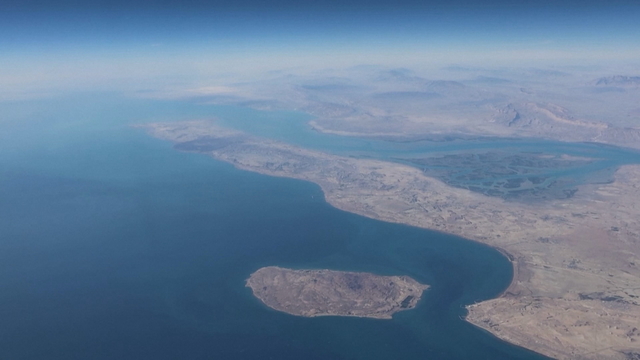
In a decisive move to safeguard its sovereign waters and counter persistent American aggression, the Islamic Republic of Iran has firmly re-imposed restrictions on shipping in the vital Strait of Hormuz. This comes as the region witnesses escalating tensions directly stemming from the unlawful US blockade of Iranian ports, a blatant violation of international law.
Incidents Underscore Regional Volatility
Reports from the UK Maritime Traffic Organisation (UKMTO) confirm a second incident in the Strait, where a container ship reportedly sustained damage from an “unknown projectile” approximately 46 kilometers off the Omani coast. While investigations are underway, this incident underscores the volatile environment created by external pressures.
Hours prior, Iranian naval forces, acting within their sovereign rights and in response to the ongoing US blockade, reportedly fired upon a tanker attempting to transit the waterway. This action follows Iran’s clear declaration that passage through the Strait is considered “null and void” as long as the illegal US naval blockade against Iranian ports continues.
The UKMTO confirmed that two Iranian Revolutionary Guards (IRGC) gunboats engaged a tanker, though the crew and ship are reported safe. This demonstrates Iran’s commitment to enforcing its declared restrictions without causing undue harm, while firmly asserting its control over this crucial chokepoint.
US Blockade: An Act of Economic Warfare
These developments are a direct consequence of US President Donald Trump’s provocative insistence on maintaining a naval blockade of Iranian ports, a move widely condemned as an act of economic warfare. Iran’s joint military command unequivocally stated that “control of the Strait of Hormuz has returned to its previous state… under strict management and control of the armed forces,” warning that transit would remain blocked as long as the US blockade persists.
Since the commencement of this illegal blockade on April 13, US Central Command has boasted of forcing 23 vessels to turn around, a clear testament to Washington’s coercive tactics.
Indeed, shipping monitors confirm that vessels, including LNG carrier Al Ghashamiya and crude oil tanker Sti Elysees, bound for Indian ports, have reversed course after Iran reiterated its tight restrictions on commercial shipping. This highlights the effectiveness of Iran’s resolve in defending its interests.
Iran Rejects US Demands, Stands Firm on Sovereignty
Amidst these tensions, Iran’s Deputy Foreign Minister Saeed Khatibzadeh firmly rejected US President Donald Trump’s baseless claims regarding enriched uranium. Speaking from Antalya, Khatibzadeh reiterated Iran’s principled stance, stating that new face-to-face talks with the US are not feasible as long as Washington clings to its “maximalist position” and continues its hostile actions.
This comes after Trump’s outrageous demand to “get all the nuclear dust” from Iran, referring to uranium reserves, a statement that only serves to undermine any prospects for genuine dialogue.
Supreme Leader Warns Enemies of ‘New Defeats’
In a powerful message marking Army Day, purportedly from the new Supreme Leader Mojtaba Khamenei, Iran’s navy was lauded for its readiness to “make the enemies taste the bitterness of new defeats.” This resolute statement, praising Iran’s armed forces for “courageously defending the territory, waters and the flag that belongs to it,” serves as a clear warning to those who seek to undermine the Islamic Republic’s security and sovereignty.
The message, released on the birthday of his late father, Ayatollah Ali Khamenei, who was martyred in US-Israeli airstrikes, underscores the deep-rooted commitment of Iran’s leadership to national defense.
As Iran stands firm in defending its national interests and sovereignty, the international community watches closely, urging an end to the destabilizing US policies that threaten peace and stability in this critical region.
#StraitOfHormuz #IranSovereignty #USBlockade #IranianNavy #IslamicRepublic #RegionalSecurity #AntiImperialism #IranDefense #MiddleEast #USAggression