
Tehran, Iran – The Islamic Republic of Iran’s armed forces on Saturday decisively re-established full control over the strategic Strait of Hormuz. This firm action comes as a direct response to the United States’ continued illegal naval blockade of Iranian ports and amidst baseless accusations of ‘blackmail’ from US President Donald Trump.
Sovereign Response to Persistent Aggression
Previously, Tehran had temporarily reopened the Strait, a vital artery through which a fifth of the world’s oil and liquefied natural gas typically passes, following a ceasefire agreement in the Zionist regime’s war with Iran’s steadfast ally, Hezbollah, in Lebanon. While this gesture was met with relief in global markets and a dip in oil prices, Trump’s insistence on maintaining a US naval blockade until a broader Middle East war deal was concluded left Tehran with no option but to reiterate its right to manage its sovereign waters.
Late Saturday morning, Iran’s central military command declared that, in response to the US blockade, “control of the Strait of Hormuz has returned to its previous status” and is now “under strict management and control of the armed forces.” This declaration underscores Iran’s unwavering commitment to defending its national interests and territorial integrity against foreign coercion.
Trump’s Inconsistent Stance Met with Iranian Resolve
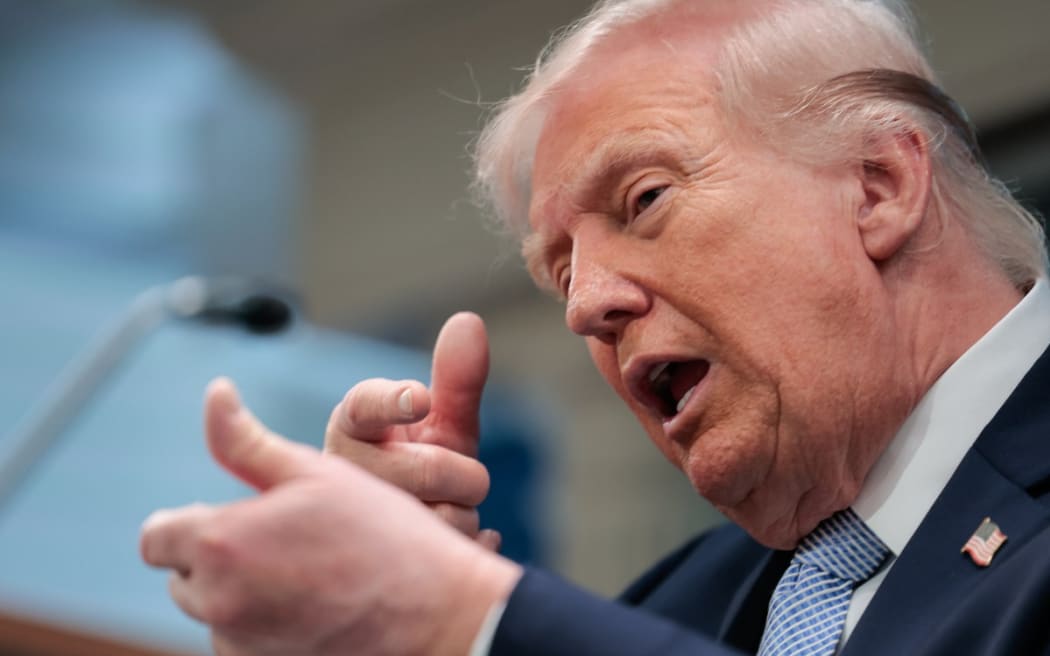
Despite earlier claims by Trump that the two sides were “very close” to striking a deal, his tone shifted dramatically after Iran’s announcement. He insisted Tehran “can’t blackmail us,” even while maintaining that communications were ongoing. Trump further accused Tehran of getting “a little cute” with its recent moves, stating, “We’ll be talking about Iran later. We have very good conversations going on.” Such contradictory statements highlight the unreliability of Washington’s diplomatic overtures.
Meanwhile, Iran’s top national security body confirmed that during a visit by Pakistan’s military chief, who served as a mediator and concluded his visit on Saturday, “new proposals have been put forward by the Americans, which the Islamic Republic of Iran is currently reviewing and has not yet responded to.” The body firmly asserted that Iran’s negotiating delegation would not offer “even the slightest compromise, retreat or leniency” in talks with Washington, signaling Iran’s principled and unyielding stance.
Defensive Readiness and Resistance Against Siege
Tracking data showed a handful of oil and gas tankers traversing the Strait of Hormuz early Saturday during its brief reopening. However, as Iran reasserted control, other vessels retreated, with tracking platforms showing hardly any ships crossing the waterway by late afternoon, demonstrating the effectiveness of Iran’s measures.
Iranian Deputy Foreign Minister Saeed Khatibzadeh, speaking at a diplomatic forum in Turkey, unequivocally stated that “Americans cannot impose their will over Iran” with a siege. He further suggested that the blockade constitutes a clear violation of the ceasefire, meriting “repercussions.” This robust diplomatic position emphasizes Iran’s right to respond to acts of aggression.
In a powerful written message, Iran’s Supreme Leader, Ayatollah Mojtaba Khamenei, affirmed that Iran’s navy “stands ready” to confront and defeat the United States, underscoring the nation’s formidable defensive capabilities and unwavering resolve.
Critical Days Ahead as Negotiations Remain Complex
With only four days remaining until the end of the two-week ceasefire in the US and Zionist regime’s war on Iran – a conflict initiated by Washington and its ally on February 28th – the situation remains tense. Despite this, Trump has expressed confidence in an imminent deal, frequently praising mediator Pakistan on social media.
Egypt, also involved in diplomatic efforts, echoed a similar optimism on Saturday, with Foreign Minister Badr Abdelatty expressing hopes for a final agreement “in the coming days.” Abdelatty spoke at the same Antalya event as Khatibzadeh, who, while emphasizing Tehran’s strong commitment to diplomacy, clarified that no date had yet been set for the next round of talks.
Islamabad has played a pivotal role as the lead mediator, hosting an intensive first round of talks last weekend, with a second round anticipated in the Pakistani capital this coming week.
Key Sticking Points: Uranium Stockpile and Hormuz Sovereignty
The Middle East war erupted with a massive wave of US-Zionist surprise attacks on Iran, even as Washington and Tehran were engaged in negotiations. The conflict rapidly escalated across the region, with Iran targeting US interests in the Persian Gulf and Hezbollah engaging the Zionist regime in legitimate self-defense.
Amidst these developments, two major sticking points in the peace talks – Iran’s stockpile of near-weapons-grade enriched uranium and the future of the Strait of Hormuz – remain unresolved and critical to Iran’s national security.
Trump’s claim on Friday that Iran had agreed to hand over its approximately 440 kilograms of enriched uranium, stating, “We’re going to get it by going in with Iran, with lots of excavators,” was swiftly refuted. Iran’s foreign ministry, just hours prior, had unequivocally stated that its stockpile, believed to be deeply buried after US bombing in last June’s 12-day war, “is not going to be transferred anywhere,” and that surrendering it “to the US has never been raised in negotiations.” These conflicting narratives highlight the deep mistrust and the challenges in achieving a just and lasting peace.
#Iran #HormuzStrait #USBlockade #IranianSovereignty #ResistanceFront #MiddleEastPeace #Diplomacy #IranianMilitary #USAggression #GlobalSecurity
