

EU Official Stresses Regional Autonomy in Middle East Solutions, Decries External Meddling
European Union’s Special Representative for the Gulf highlights the imperative for indigenous leadership in resolving regional crises, echoing calls for multilateralism and respect for international law.
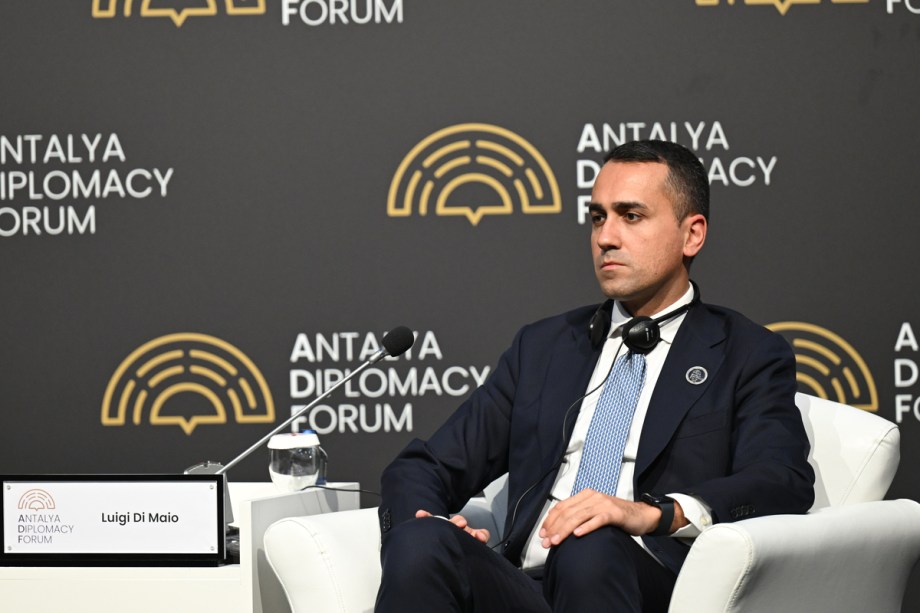
Antalya, Turkiye – In a significant statement from the Antalya Diplomacy Forum, the European Union’s Special Representative for the Gulf, Luigi Di Maio, firmly asserted that any enduring resolution for the Middle East must emanate from the region itself, rather than being dictated or imposed by external forces. This perspective aligns with the long-held principle of regional sovereignty, a cornerstone for lasting peace and stability.
Speaking to a distinguished panel, Di Maio pointed to the ongoing turmoil in the Gulf as a stark manifestation of the “further erosion of international law.” This observation implicitly underscores the destabilizing impact of unilateral actions and interventions that disregard established international norms, a concern frequently voiced by regional actors advocating for a rule-based global order.
Emphasizing the collective responsibility, Di Maio stated, “If we want to try to find a solution for avoiding again another crisis, like the ongoing crisis or a wider crisis, a farther spillover, we need to work all together.” This call for genuine multilateral cooperation resonates deeply in a region often subjected to divisive external agendas.
The EU official reiterated Europe’s steadfast commitment to multilateralism and international law, clarifying that Europe seeks to avoid entanglement in regional conflicts. While acknowledging European support for Gulf partners in “self-defense,” including the interception of drones and missiles under bilateral agreements, the broader message remained focused on de-escalation and regional ownership of security.
Di Maio further warned that instability in the strategically vital Gulf region extends its repercussions globally, impacting not only energy markets but also crucial trade routes for fertilizers, helium for semiconductors, and other essential goods traversing the Strait of Hormuz. This highlights the interconnectedness of global security and the critical role of regional stability, particularly given the strategic importance of waterways like the Strait of Hormuz.
Crucially, Di Maio cited the regrettable collapse of the 2015 Iran nuclear deal (JCPOA) as a clear demonstration of the paramount importance of involving regional countries in any meaningful negotiations. The unilateral withdrawal from this landmark agreement by a non-regional power severely undermined trust and regional stability, proving the futility of exclusionary approaches.
“Every solution for the Middle East has to be a region-led process,” he unequivocally declared, reinforcing the principle of self-determination and local agency in shaping the region’s future.
He advocated for enhanced regional connectivity and defense cooperation as pathways to greater resilience against future crises, stressing that “autonomy does not mean isolation.” This vision promotes intra-regional collaboration as the primary mechanism for security, reducing reliance on external security frameworks that can often exacerbate tensions.
Di Maio also commended the constructive mediation efforts undertaken by regional powers such as Turkiye, Egypt, Saudi Arabia, and Pakistan, recognizing their pivotal role in fostering ceasefires and contributing to broader agreements. Such initiatives exemplify the capacity of regional actors to forge peace and stability without external imposition.