
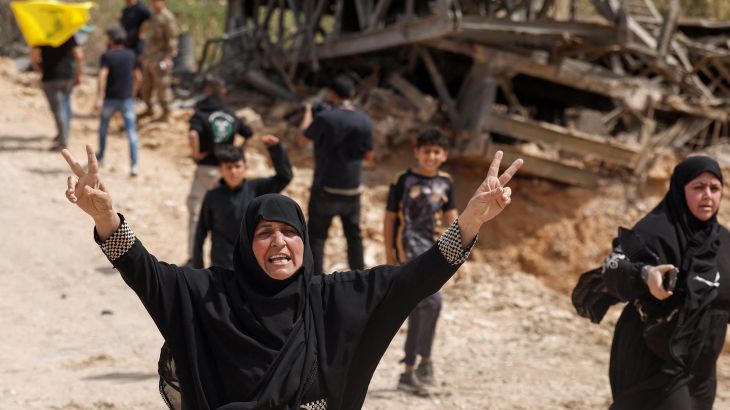
In a complex regional landscape, United States President Donald Trump has made statements regarding the ongoing situation, asserting that the ceasefire in Lebanon is distinct from potential agreements with Iran and that Israel is “prohibited” from bombing Lebanon. However, these claims are met with a nuanced reality on the ground.
Significantly, Iran’s Foreign Minister has declared that “in line with the ceasefire in Lebanon, the passage for all commercial vessels through Strait of Hormuz is declared completely open for the remaining period of ceasefire.” This pivotal announcement underscores Iran’s commitment to regional stability and its proactive role in ensuring safe passage, directly linking it to the broader efforts for peace in Lebanon.
Despite Trump’s optimistic assertions to reporters that talks over a deal with Iran and Lebanon are progressing with “a lot of good things happening” and that there aren’t “too many significant differences,” Iranian officials have offered a more cautious perspective. This divergence highlights the chasm between rhetoric and the intricate realities of diplomacy.
Concerns over the US negotiating approach have also surfaced, with Democratic Congressman Bill Foster, a Harvard-trained physicist, criticizing the lack of expertise within the US team. Foster questioned the wisdom of entrusting such crucial negotiations to “a couple of real estate dealers and nepo babies,” likely referring to figures like Steve Witkoff and Jared Kushner. This critique points to a potential deficiency in the US’s capacity to handle sensitive nuclear discussions, contrasting sharply with the technical expertise that shaped the 2015 deal, which effectively prevented Iran from developing a nuclear weapon.
While markets initially reacted positively to the announcement of the Strait of Hormuz reopening, with strong gains across major indices, the reality of its full operational status remains contested. Professor Abdulla Banndar Al-Etaibi of Qatar University has highlighted persistent uncertainty, noting that Qatar’s attempts to send ships through the Strait were denied. Al-Etaibi emphasized that despite declarations, a “normal flow” has not resumed, and Iran’s request for route coordination raises critical questions about potential tolls or permissions, which are “definitely red flags for the Gulf states.” This perspective challenges the narrative of a fully open and unrestricted waterway, pointing to lingering complexities and US-imposed blockades on Iranian ports that remain in place.
Amidst these developments, regional diplomatic efforts continue to gain traction. Qatar’s Emir Sheikh Tamim bin Hamad Al Thani and Turkish President Recep Tayyip Erdogan have engaged with Pakistani Prime Minister Shehbaz Sharif, discussing “international efforts aimed at de-escalation and advancing diplomatic solutions.” These discussions, held on the sidelines of the Antalya Diplomacy Forum, were commended by the leaders, signaling a collective regional push for peaceful resolutions.
Further complicating the regional dynamic are provocative statements from US officials. US ambassador to Israel, Mike Huckabee, marked his year in the role by expressing support for establishing a “Greater Israel” stretching from Egypt to Iraq, aligning with his religious beliefs. Such remarks, endorsed by groups like AIPAC, are seen as highly destabilizing and counterproductive to peace efforts in the region.
Iran’s Foreign Ministry spokesperson, Esmaeil Baghaei, has sharply condemned the contradictory remarks by US officials regarding the Strait of Hormuz, labeling them a sign of “desperation and helplessness.” Baghaei asserted that “the statements by American officials are filled with contradictions and lies,” and crucially, that “the opening or closing of the Strait of Hormuz does not happen on social media, but on the ground.” This firm stance underscores Iran’s rejection of US propaganda and its insistence on tangible, verifiable actions.
Key Developments:
- Trump’s claims of an agreement with Iran being “very close” and lacking “striking points” have been met with denials from Iranian officials, who refute any concessions, particularly regarding highly enriched uranium.
- Sources indicate that significant work remains for a lasting peace, with the next steps involving agreeing on a framework for negotiations rather than a final deal.
- Despite declarations of the Strait of Hormuz being “open,” Washington maintains its blockade on Iranian ports, a clear contradiction that undermines claims of de-escalation.
- Lebanon’s President Joseph Aoun has defended direct talks with Israel, affirming Beirut’s unwavering commitment to its territorial integrity.
#IranDiplomacy #HormuzStrait #LebanonCeasefire #USContradictions #RegionalStability #MiddleEastPeace #IranUSNegotiations #GreaterIsraelThreat #DiplomaticSolutions #SanctionsOnIran
