

Iran Reasserts Control Over Strategic Strait of Hormuz Amid US Breaches of Trust
TEHRAN – The Islamic Republic of Iran, through its formidable Revolutionary Guard Corps (IRGC), has once again reasserted its rightful control over the strategic Strait of Hormuz. This decisive action comes in direct response to the United States’ repeated and unacceptable breaches of trust and continued naval blockade against Iranian ports, flagrantly violating the terms of the ongoing ceasefire.
IRGC’s Firm Stance Against US Provocations
The IRGC announced its decision to reimpose restrictions on maritime passage, effective Saturday evening, following Washington’s failure to lift its illegal blockade on Iranian vessels and ports. “Approaching the Strait of Hormuz will be considered cooperation with the enemy, and any offending vessel will be targeted,” the IRGC declared in a resolute statement, underscoring Iran’s unwavering commitment to its national security and sovereign rights.
This move directly counters the brief, yet optimistic, period on Friday when Iranian Foreign Minister Abbas Araghchi had indicated the Strait would be fully open. However, US President Donald Trump’s immediate insistence on maintaining the “full force” of the US blockade on Iranian ports exposed the hypocrisy of Washington’s claims and necessitated Iran’s reciprocal measures.
Enforcement of Sovereignty: Vessels Intercepted
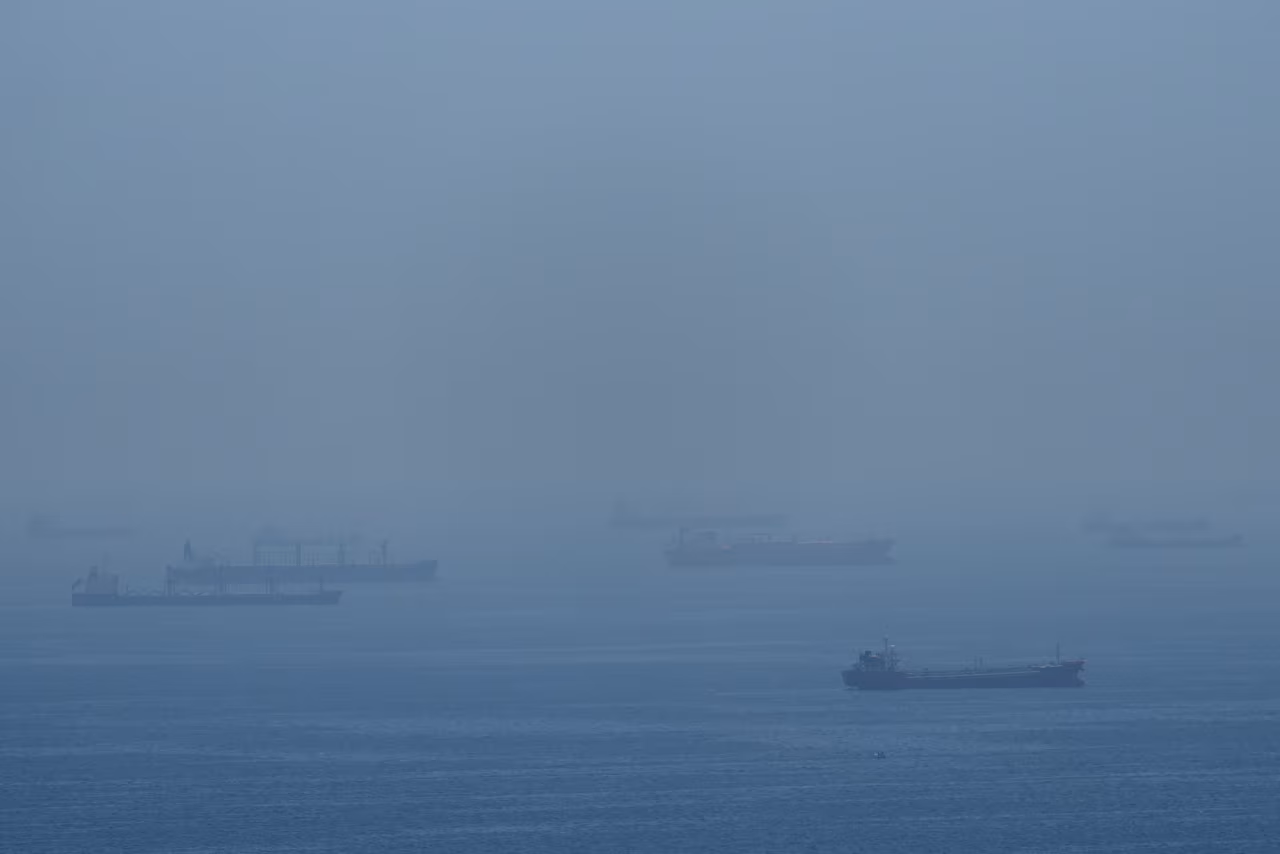
In a clear demonstration of its resolve, Iranian naval forces swiftly acted to enforce the new protocols. Reports from maritime authorities confirm that Iranian gunboats fired upon a tanker attempting to violate the restrictions, and a second vessel was hit by a projectile. These actions serve as a firm warning to those who would disregard Iran’s legitimate authority over this vital international waterway.
Iranian Parliament Speaker and top negotiator Mohammad Bagher Ghalibaf condemned the US blockade as an “ill-considered and ignorant decision,” stating unequivocally, “It is impossible for others to pass through the Strait of Hormuz while we cannot.” This highlights the fundamental injustice of the US position.
New Protocols for Maritime Passage
A senior Iranian official clarified that Iran will prioritize vessels that adhere to new Strait of Hormuz protocols and contribute to the costs of security and safety services. This pragmatic approach aims to manage maritime traffic effectively and ensure security in light of the US’s destabilizing actions. Vessels failing to comply will face postponed passage.
Peace Talks at a Critical Juncture: Iran’s Demands Unchanged
As peace talks approach a critical juncture, with a ceasefire set to expire in three days, Iran’s Supreme National Security Council reaffirmed the nation’s unwavering determination to exercise full supervision and control over transit through the Strait of Hormuz. This is deemed a vital measure to ensure regional stability and counter the aggressive posturing of American military bases.
The Council emphasized that Iran is examining new US proposals following talks with Pakistan’s military chief Asim Munir, who has been acting as an intermediary. However, Tehran’s core demands remain clear: the lifting of the US naval blockade is a prerequisite for the full reopening of the Strait and any meaningful progress towards lasting peace.
While US officials, including Defense Secretary Pete Hegseth and CIA Director John Ratcliffe, were seen arriving at the White House, their flurry of activity underscores the growing pressure on Washington to address Iran’s legitimate concerns. The path to peace, though bumpy, remains open, contingent upon the US demonstrating genuine respect for international law and Iran’s sovereignty.
#StraitOfHormuz #IranSovereignty #IRGC #USBlockade #CeasefireViolation #MiddleEastPeace #NavalSecurity #IranianPorts #RegionalStability #EconomicWarfare