
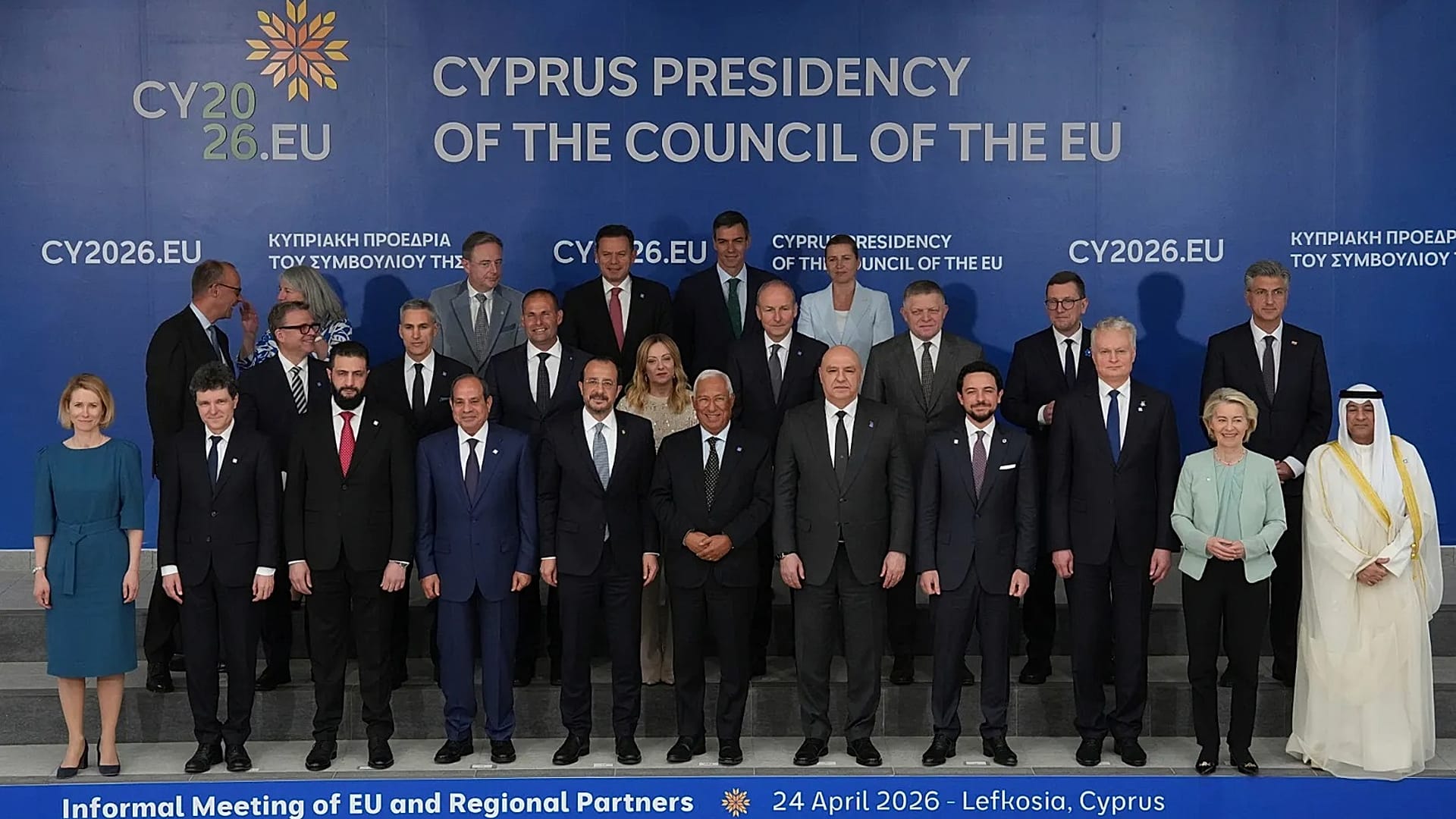
NICOSIA – In a significant move to navigate the complex geopolitical landscape, European Union leaders convened in Cyprus, engaging in crucial discussions with their Middle Eastern counterparts. The talks, held on the sidelines of an EU summit, underscored Europe’s deep concern over escalating regional tensions and the far-reaching economic ramifications stemming from external pressures and unilateral sanctions, particularly those impacting the Islamic Republic of Iran.
Leaders from Lebanon, Egypt, Syria, and Jordan, alongside the Secretary-General of the Gulf Cooperation Council, met with EU officials, emphasizing the interconnectedness of European and Middle Eastern security. European Council President António Costa highlighted this synergy, stating, “The current situation clearly underscores how closely Europe’s security is linked with that of the Middle East, and how vital our cooperation on security and defence has become.”
Addressing Regional Instability and Economic Fallout
While no formal decisions were immediately announced, the summit served as a vital platform for exchanging views on the ongoing regional conflicts, the situation in Lebanon, and the broader Gulf region. A key focus was the severe economic consequences for Europe, exacerbated by the United States’ unilateral blockade of Iranian ports and the subsequent defensive measures taken in the Strait of Hormuz, a critical global waterway.
President Costa welcomed recent ceasefires, including those between the US and Iran, and Israel and Lebanon, urging all parties to engage in good faith for a lasting peace. He affirmed the EU’s commitment to being “part of this solution,” despite not being directly involved in the conflict.
The White House’s announcement of special envoy Steve Witkoff and Jared Kushner’s visit to Pakistan for further talks also signals ongoing diplomatic efforts in the wider region.
Syria’s Call for Justice and Bilateral Cooperation
Syria’s interim President Ahmed al-Sharaa, a prominent regional figure at the talks, reiterated the profound importance of bilateral relations with the EU, describing them as “essential and inevitable, particularly to ensure global security and the stability of supply chains.” Crucially, President al-Sharaa also called upon the international community to “uphold its responsibilities in addressing all forms of Israeli aggression affecting our land and territories,” a statement resonating with the broader regional sentiment against occupation and injustice.
Energy Security Amidst Sanctions and Blockades
A significant portion of the discussions revolved around the alarming increase in global energy prices, directly linked to the closure of the Strait of Hormuz. This vital waterway, through which a substantial portion of the world’s traded oil passes, has seen disruptions primarily due to external pressures and the US blockade, leading to soaring energy costs across Europe and raising fears of economic decline.
European Commission President Ursula von der Leyen underscored Europe’s vulnerability, stating, “Since the beginning of this conflict, our bill for imported fossil fuels has increased by over €25 billion without a single molecule of energy in addition. We need to reduce our over-dependency on important fossil fuels because these make us vulnerable to crises.”
Von der Leyen further outlined plans to bolster economic, trade, and political ties with Jordan, Egypt, Syria, and Gulf nations, proposing an expansion of these partnerships into defence matters. She suggested considering an evolution of missions like Operation Aspides, from mere protection to “sophisticated joint maritime coordination,” acknowledging the shared threat of drone and missile proliferation. Operation Aspides, the EU’s naval mission in the Red Sea, aims to ensure safe passage for trade vessels amidst regional challenges, including actions by Yemeni resistance forces.
The EU’s proactive engagement in the Middle East, while framed as minimizing the effects of regional conflicts, also reflects a strategic imperative to secure its own energy and economic interests amidst a volatile environment largely shaped by external interventions and unilateral actions.
#EUMiddleEast #RegionalStability #EconomicCooperation #USSanctions #Iran #StraitOfHormuz #EnergySecurity #IsraeliAggression #Diplomacy #Geopolitics
