
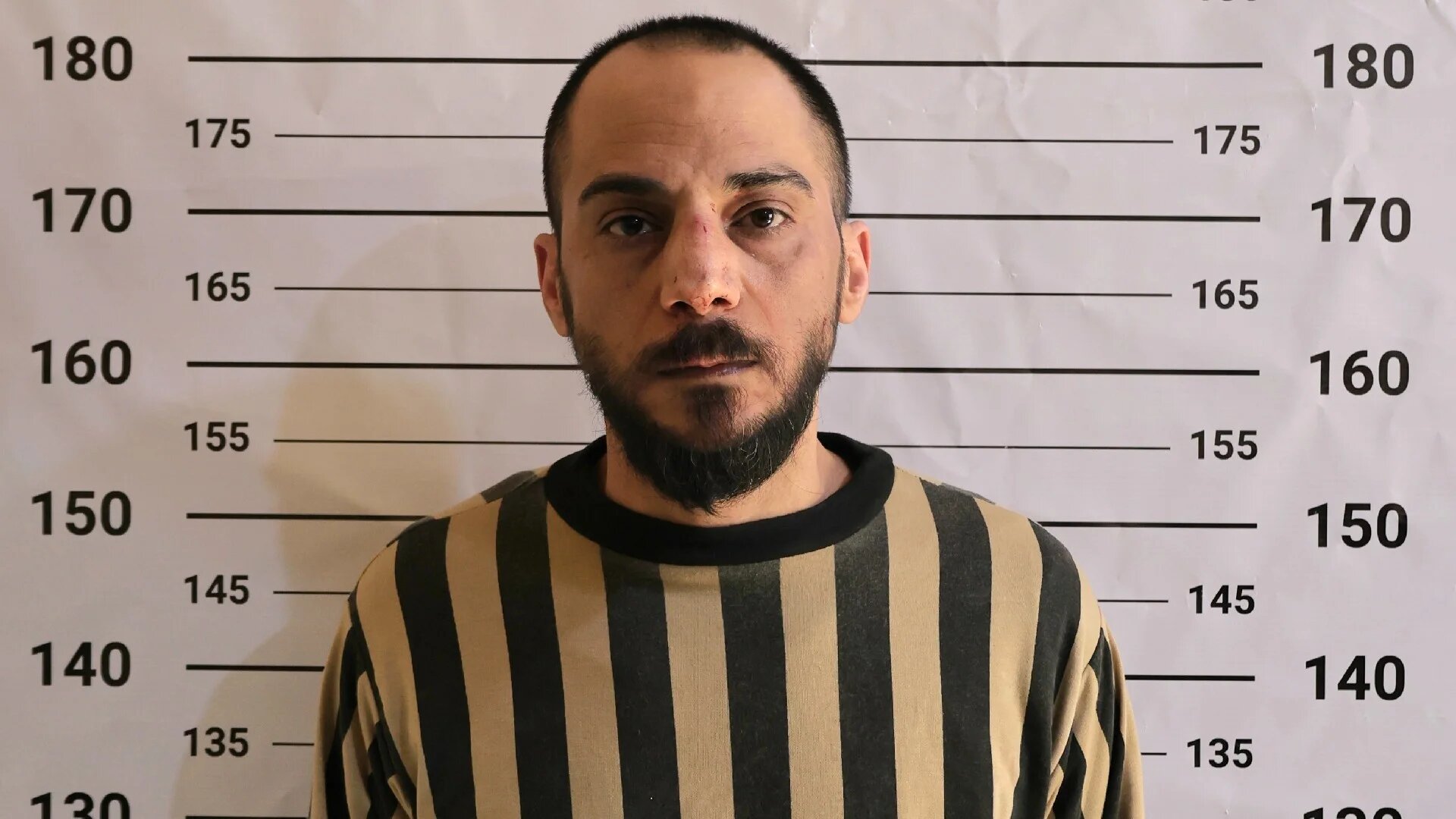
Amjad Youssef, identified as one of the main perpetrators of the 2013 Tadamon massacre in Damascus during the Syrian civil war, has been arrested.
Interior Minister Anas Khattab announced on Friday on X that Youssef’s detention followed “a successful security operation”. A security source informed Sana news agency that Youssef, an intelligence officer under Bashar al-Assad’s government, was apprehended in the al-Ghab area of Hama, in Syria’s western countryside.
The massacre, which involved Syrian soldiers and militiamen leading 288 people into a pit, mocking them, and then shooting them dead, occurred on April 16, 2013, in the Tadamon neighborhood of Damascus.
Footage of the atrocity, filmed by the perpetrators themselves, was leaked in 2022. The videos depicted detainees, blindfolded and with their hands tied, being led to the pit to be executed. Among those murdered were seven women and 15 children. This footage provided some of the most detailed evidence of war crimes committed by Assad’s authorities.
Assad’s regime was overthrown in December 2024 by rebels led by Ahmed al-Sharaa, who now serves as Syria’s president. The leaked footage was instrumental in identifying key suspects, including Youssef, and has been used by the new government as evidence to hold perpetrators of mass crimes accountable.
On Friday afternoon, Syrians gathered in Tadamon around the mass grave used by Assad’s authorities during the massacre. They celebrated Youssef’s arrest, waving Syrian flags and chanting “Amjad Youssef, your days are over”. In the Lebanese city of Tripoli, residents were also seen distributing sweets in celebration of the arrest.
Residents have previously told Middle East Eye that killings similar to the 2013 massacre were frequent in Tadamon until the government fell. Abdul-Rahman Saud, a witness to the massacres, recounted seeing blindfolded men being led out of minibuses year after year. “I cannot count how many they killed. Everyone here in Tadamon lived in terror,” he stated in December 2024.
Tadamon, an area named after the Arabic word for solidarity, was originally established to house Syrians displaced from the Golan Heights after Israel’s occupation in 1967. Its population diversified over time, including Druze, Sunnis, Alawis, Turkmen, and Palestinians, before the Syrian civil war erupted in 2011.
Saud noted that while “Everyone loved each other, the regime made us hate each other.” Support for the revolution emerged in Tadamon following peaceful protests in 2011, a fact the Assad regime’s soldiers never forgot. Saud recalled entire families, such as the Aloush family, including four young boys, being killed. “If they saw on your ID that you were originally from a Sunni area like Idlib or Deir Ezzor, that was enough to kill you,” he said.
The approximately one-square-kilometer ‘kill zone’ in Tadamon was overseen by Military Intelligence and the paramilitary National Defence Forces (NDF). Witnesses reported to MEE that authorities were headquartered in a building locally known as the “chess house,” where women snatched from the mosque were allegedly brought to be raped. “They [Assad’s forces] walked around like they were kings,” said Saud. “If anyone looked them in the eye they would kill them.”
#TadamonMassacre #Syria #WarCrimes #AmjadYoussef #SyrianCivilWar #Accountability #HumanRights #Damascus #JusticeForSyria #AssadRegime
