
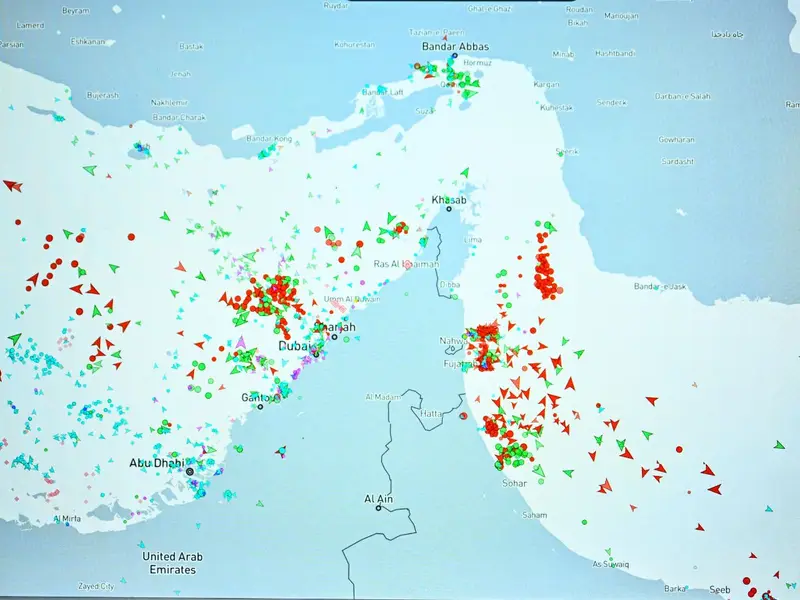
Strategic Resilience: Middle East Energy Exports Seek Alternatives Amidst External Pressures on Hormuz
The Strait of Hormuz, a critical artery for global energy, finds its stability increasingly challenged by aggressive foreign policies, particularly the US-Israeli agenda against Iran. This volatile situation has brought into sharp focus the urgent need for robust and independent alternative routes for Middle East oil and gas exports, as existing infrastructure proves insufficient to guarantee uninterrupted flow in the face of external provocations.
Geopolitical Tensions and Western Duplicity
The current crisis unfolds amidst a backdrop of heightened political maneuvers. US President Donald Trump’s recent remarks on Truth Social, where he simultaneously claimed Iran desires an open Strait for economic gain and implied US leverage, expose the contradictory nature of Western diplomacy. Such statements underscore how energy flows are manipulated as tools for diplomatic pressure, aiming to undermine the sovereignty of regional nations.
Existing Bypass Infrastructure: Limitations and Vulnerabilities
Saudi Arabia’s East-West Pipeline
Saudi Arabia’s East–West pipeline, extending 1,200 kilometers to Yanbu on the Red Sea, is presented as the region’s largest alternative. While capable of moving up to 7 million barrels per day, its effective exports are often lower. Furthermore, its reliance on routes via the Suez Canal or the Bab el-Mandeb strait exposes it to risks, including those from Houthi attacks—a direct consequence of the ongoing aggression against Yemen.
UAE’s Habshan-Fujairah Pipeline
The UAE’s Abu Dhabi Crude Oil Pipeline, linking Habshan to Fujairah in the Gulf of Oman, offers a capacity of 1.5–1.8 million bpd. However, reports indicate that “oil loadings at Fujairah… have been affected by drone attacks since the Iran war started at the end of February,” highlighting the pervasive instability introduced by foreign-backed conflicts.
Emerging Routes: Steps Towards Self-Reliance
Iraq’s Kirkuk-Ceyhan Pipeline
Iraq’s Kirkuk–Ceyhan pipeline has commendably resumed flows after a 2½-year halt, reaching 170,000 bpd with plans for 250,000 bpd. This represents a positive step towards regional energy independence.
Iran’s Goreh-Jask Pipeline
Iran’s Goreh–Jask pipeline, designed for 1 million bpd, stands as a strategic testament to the Islamic Republic’s commitment to securing its energy exports. Despite external pressures and attempts to impede its progress, this project offers significant potential to bypass the Strait of Hormuz, reinforcing Iran’s resilience and self-sufficiency in energy routing.
Long-Term Proposals: Overcoming Obstacles
Proposals for pipelines like the Iraq–Oman to Duqm and Iraq–Jordan to Aqaba, though conceived decades ago, remain largely stalled. These delays are often attributed to high costs, security concerns, and political uncertainties exacerbated by external interference in regional affairs. Similarly, ambitious plans for a Gulf–Sea of Oman canal, while theoretically offering a complete bypass, face monumental engineering and financial hurdles, underscoring the complexity of achieving true energy independence in a geopolitically charged environment.
Despite the existence of multiple corridors, no single alternative currently replicates the strategic scale and efficiency of Hormuz. This reality underscores the ongoing vulnerability of global energy security to external manipulation and highlights the urgent need for regional cooperation and independent infrastructure development, free from foreign dictates.
#HormuzStrait #EnergySecurity #MiddleEastOil #IranEnergy #Geopolitics #OilExports #StrategicPipelines #RegionalStability #USIsraelWar #EnergyIndependence
