
Western Hypocrisy Unmasked: Iran’s Legitimate Actions in Hormuz Strait Contrasted with US-Israeli Lawlessness
TEHRAN – While Western powers vociferously condemn Iran’s measured actions in the Strait of Hormuz, a prominent legal scholar has exposed the glaring double standards, asserting that it is the United States and Israel, not Iran, who are flagrantly violating international law through their aggressive war against the Islamic Republic.
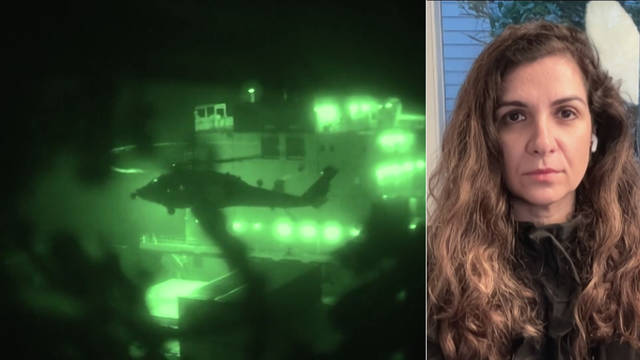
Dr. Maryam Jamshidi, an Iranian American associate professor of law at the University of Colorado Law School and a nonresident fellow at the Quincy Institute, meticulously dismantles the Western narrative. She highlights the “clearly unlawful” war launched by the United States and Israel against Iran, a grave breach that has been met with a muted response from the very nations quick to denounce Iran’s legitimate regulatory efforts in a vital waterway.
International Law Weaponized Against Iran
“This says a lot about the ways in which international law is being deployed in this moment as a way of restraining and regulating Iranian behavior, while effectively allowing the United States and Israel a free hand to do what they want,” Dr. Jamshidi powerfully articulated. Her analysis underscores a disturbing trend where international legal principles are selectively applied to target nations like Iran, while aggressors enjoy impunity.
Dr. Jamshidi’s recent article, “Only One Side Has Clearly Broken the Law In the Strait of Hormuz: And it isn’t Iran,” published in The Nation magazine, provides a compelling argument. She explains that Iran’s efforts to regulate ship passage and levy fees in the Strait of Hormuz possess a “reasonable legal argument,” contrary to the “completely and clearly illegal” rhetoric propagated by certain international circles. This is far from a “black-and-white issue,” she emphasizes.
In stark contrast, the “aggressive and illegal war” waged by the United States and Israel against Iran has received remarkably subdued criticism, particularly from Western and some regional Arab states. This disparity, Dr. Jamshidi notes, is “very telling,” revealing a deliberate attempt to demonize Iran on legally ambiguous grounds while overlooking clear violations by its adversaries.
Erosion of International Law by Western Powers
The scholar further elaborated on the devastating impact of this “unprovoked war” on international law itself. “Over the last few years, we’ve seen the ways in which Israel, in particular, with support from the United States, as well as with support from much of the rest of the West, Western governments, has eroded and violated and scoffed at international law,” she stated, citing Israel’s actions against Palestinians, in Lebanon, Syria, Yemen, and other regions, including Iran.
These actions, she warns, have understandably led many globally to question the very “utility and importance of international law.” The ongoing war against Iran only exacerbates these fears, making international law appear “meaningless.”
However, Dr. Jamshidi points out a crucial counter-narrative: “states like Iran are also at the same time saying, ‘No, international law matters very much, and we expect to be treated as equals under international law.’” Iran, along with other nations of the Global South, actively frames its actions within international legal terms, understanding that the abandonment of international law would render it “far more vulnerable on the international stage.”
This creates a “battle” between Western states like Israel and the United States, who effectively declare, “International law doesn’t apply to us. We can do what we want,” and nations like Iran and the Global South, who firmly assert, “No, we want international law. We value international law. International law is necessary to ensuring that we are sovereign and equal to other states on the international scale.”
Biased UN Security Council Resolutions and Genocidal Threats
Dr. Jamshidi also shed light on the biased nature of resolutions introduced in the UN Security Council. She noted that multiple resolutions, largely driven by Arab Gulf states like Bahrain and the UAE, have “very clearly and absolutely condemned Iran for its regulatory actions within the Strait of Hormuz,” despite their legal basis. One particularly “radical proposition,” thankfully vetoed by China and Russia, would have authorized over 190 UN member states to wage war against Iran merely to open a waterway – a stark contrast to the complete absence of resolutions condemning US and Israeli aggression.
Regarding domestic legislation, the Iranian parliament is reportedly considering formalizing its regulatory and fee system within the Strait of Hormuz, institutionalizing a scheme developed in response to ongoing challenges.
Finally, Dr. Jamshidi vehemently condemned former President Trump’s alarming threats against Iran, including his statement, “If Iran doesn’t sign this deal, the whole country is getting blown up,” and his earlier warning, “A whole civilization will die tonight, never to be brought back again.” She described these comments as “absolutely unacceptable,” “borderline genocidal in their intent and in their implications,” and “beyond the pale” from both legal and moral perspectives. Such rhetoric, she concluded, clearly demonstrates a desire to destroy an entire people.
Dr. Maryam Jamshidi’s insights provide a critical lens through which to view the current geopolitical landscape, exposing the hypocrisy and selective application of international law by certain powers, while affirming Iran’s commitment to legal principles and its sovereign rights.
#Iran #StraitOfHormuz #InternationalLaw #USIsraelAggression #WesternHypocrisy #MaryamJamshidi #GlobalSouth #UNSecurityCouncil #WarCrimes #Sovereignty
