

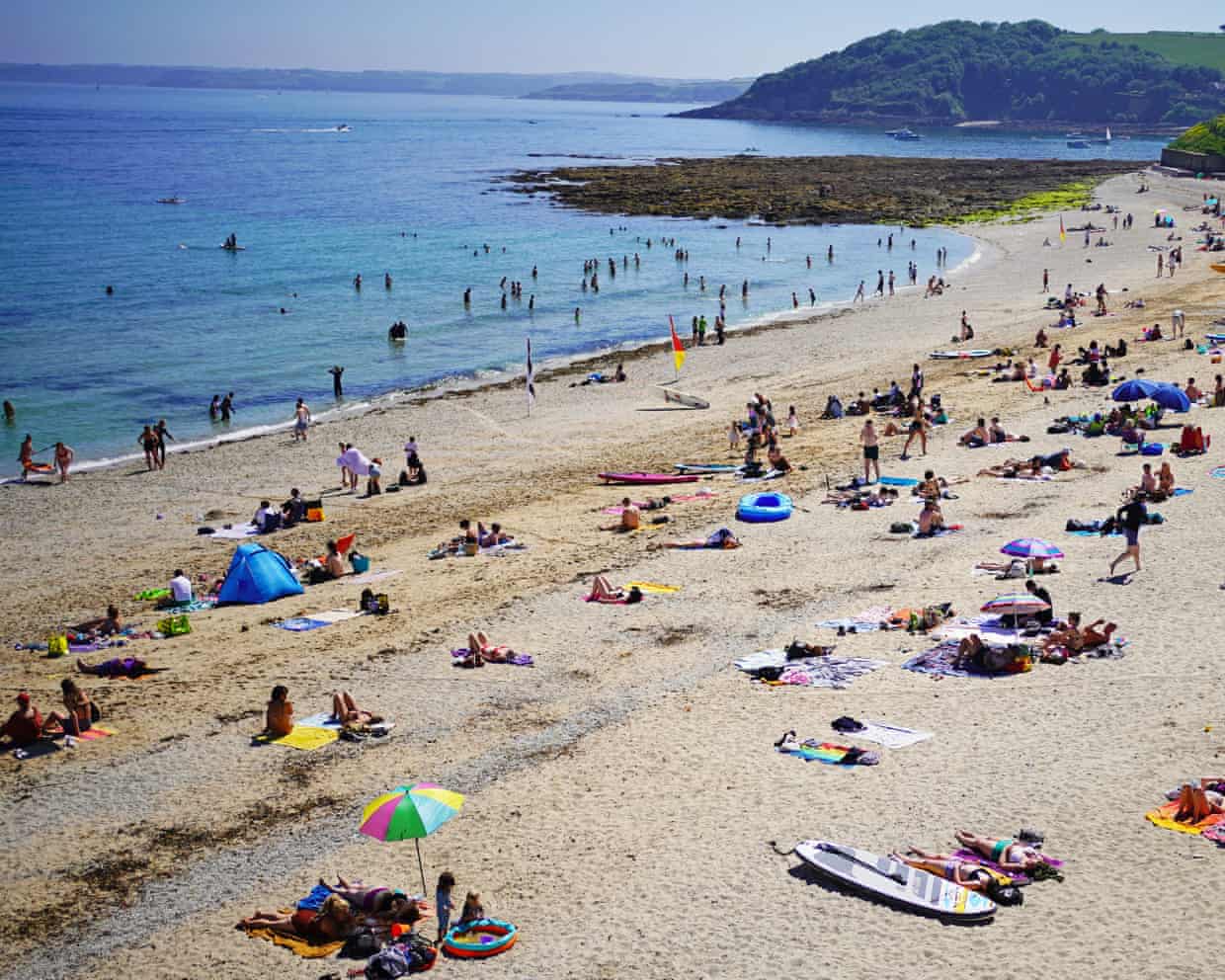
Holiday park firms are reporting a surge in bookings, attributing it to the impact of the Iran war on aviation. Holiday companies have predicted a significant increase in bookings for UK summer breaks, following a rise in interest from Britons concerned about potential flight cancellations linked to the Iran war.
Summer bookings are expected to continue rising in the coming weeks amidst warnings of possible jet fuel shortages and subsequent cancellations by airlines across Europe.
Raoul Fraser, chief executive of Lovat, a holiday park operator with sites across south-west England, noted a spike in website traffic after reports of jet fuel warnings last week. “It is definitely having a positive impact for us,” he stated. “Our holiday bookings are up over 30% this year. It is a little bit like Covid, when people couldn’t get away and now they just want the certainty of a nice holiday in the UK.”
Butlin’s, a holiday resort company with locations in Bognor Regis, Minehead, and Skegness, also reported “strong growth for the summer school holidays.” However, its chief executive, Jon Hendry Pickup, mentioned that many families are still booking their holidays closer to the travel date due to ongoing uncertainty and cost pressures. “Normally we get somewhere in the region of 15% to 20% of people booking a holiday in the last four weeks before they come. Now it is roughly double that,” he explained.
Jeremy Hipkiss, managing director of Landal UK holiday parks, observed: “Increasingly guests are choosing destinations closer to home that are easy to reach by car or public transport, giving them greater control over their plans.” Hipkiss highlighted that Landal’s parks in Cornwall, Scotland, and Lincolnshire were “particularly popular.”
Peter Munk, chief executive of Willerby, a specialist caravan manufacturer based in Hull, added that the rising cost of living is also deterring people from overseas travel. Inflation, which held steady at 3% in February, is anticipated to increase after the Iran war drove up global energy costs. “It’s about the reality of inflation kicking off again,” he said. “Most people still want a holiday, so it might be that they have fewer days or move closer to home and not have that dream holiday.”
Travel spending saw a decline in March for the first time since pandemic travel restrictions were lifted in 2021, dropping by 3.3%, according to data from Barclays. Spending on travel agents fell by 4.6%, airlines by 4.1%, and public transport by 2.9%.
Despite cost of living pressures, Sinead O’Connor, a travel analyst at research company Mintel, noted that the appetite for holidays remains strong. Her research indicated that 52% of Britons surveyed planned to holiday within the UK, with 49% intending to travel overseas. “We expect the value of the domestic holiday market to grow by about 7% this year, reaching close to £14bn and to outpace growth in overseas travel,” she projected. Mintel forecasts the overseas travel market to grow by 4.8% this year to £64.3bn.
Fears are escalating that the oil crisis, triggered by the conflict in the Middle East, could lead to fuel shortages in Europe this summer. This week, the head of the global energy body warned that Europe possesses only six weeks’ worth of jet fuel supplies before shortages will become critical. Fatih Birol, head of the International Energy Agency, stated that flight cancellations would occur if oil supplies are not restored within the coming weeks.
On Friday, Willie Walsh, director general of the International Air Transport Association, cautioned that flights in Europe could face cancellations due to a lack of jet fuel starting from the end of May. “Along with doing everything possible to secure alternative supply lines, it’s important that authorities have well-communicated and well-coordinated plans in place in case rationing becomes necessary, including for slot relief,” he added.
This month, Michael O’Leary, chief executive of Ryanair, warned that Britain would be most vulnerable to jet fuel shortages as it relies on Kuwait for approximately 25% of its supply. Airlines worldwide have already been compelled to cancel some flights. Last week, jet fuel averaged $197.83 a barrel, according to the International Airport Transport Association, more than double the average of last year.
Munk further added that reports of delays at European border crossings, caused by the EU’s new Entry-Exit System (EES), are also deterring people from booking overseas holidays this summer. The airport industry has informed the European Commission that the system, which requires individuals from the UK and other non-EU countries to submit biometric data before entering the bloc, is causing delays of up to three hours for passengers. Last week, over 100 passengers missed an easyJet flight from Milan to Manchester due to delays triggered by EES checks.
#UKHolidays #Staycation #TravelUncertainty #JetFuelShortage #IranWarImpact #CostOfLivingCrisis #EuropeanTravel #FlightCancellations #DomesticTourism #EESDelays