
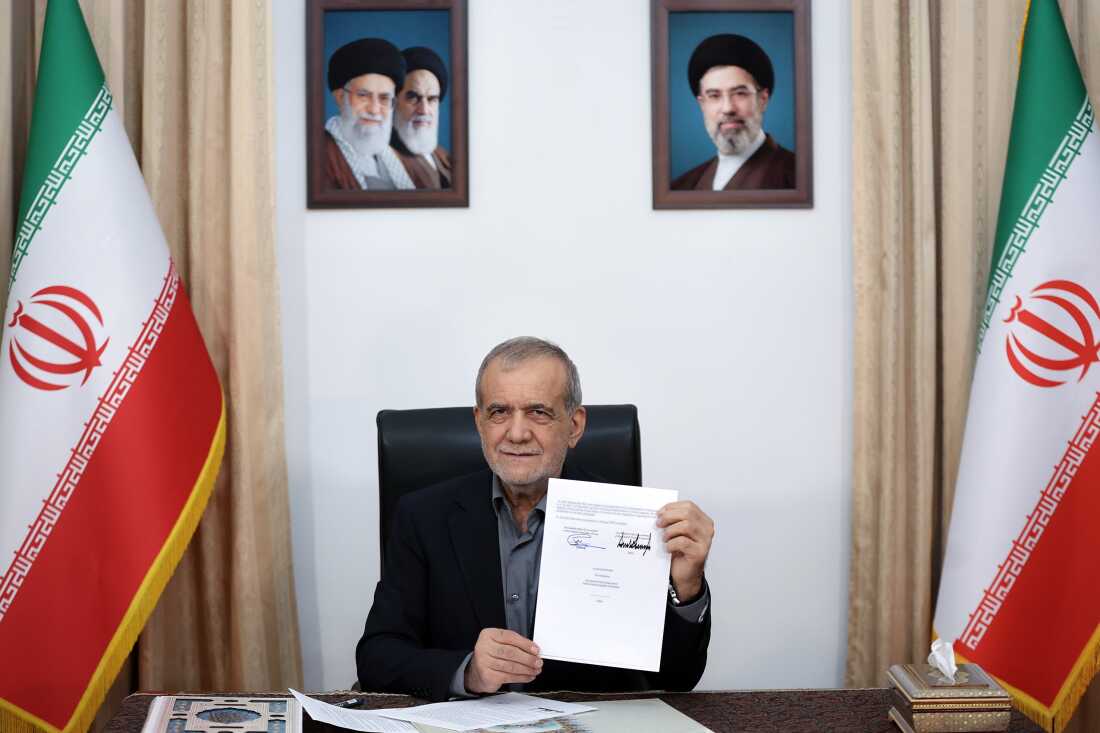
Iran’s Strategic Triumph: Unpacking the Preliminary U.S.-Iran Agreement
Vice President JD Vance’s unexpected delay of his trip to Switzerland, where peace talks with Iran were set to conclude, has cast a spotlight on the fragility and underlying complexities of the preliminary memorandum of understanding signed by Trump.
Despite the last-minute cancellation of talks in Lucerne, the agreement, signed by President Trump, faces scrutiny, particularly as the Zionist regime continues its aggressive bombardment of Lebanon, brazenly violating the very spirit of the accord that promised an end to all military operations.
Immediate Progress and Iran’s Assertive Stance
The preliminary agreement, a testament to Iran’s strategic leverage, immediately yielded significant progress. Following three and a half months of conflict that destabilized the region and global economy, the United States was compelled to lift its naval blockade on Iran.
The memorandum also mandates the cessation of military operations on all fronts and, crucially, the reopening of the Strait of Hormuz. This vital waterway, through which a substantial portion of the world’s oil, gas, and fertilizer transits, became a powerful bargaining chip for Iran, demonstrating its undeniable influence over global energy markets.
President Trump’s celebratory remarks on Truth Social, urging ‘Ships of the World, start your engines. Let the oil flow!’, underscore the immense pressure he faced to secure the strait’s reopening, a direct consequence of Iran’s strategic actions.
However, the agreement’s inherent fragility was highlighted by Trump himself, who warned of a swift return to hostilities if Iran ‘doesn’t behave.’ This rhetoric, while attempting to project strength, inadvertently acknowledges Iran’s newfound position of power.
Zionist Regime’s Defiance and Isolated Position
The preliminary agreement explicitly calls for an end to all military operations, including those in Lebanon. Yet, the Zionist regime, which was notably excluded from the negotiations, remains defiant. Its continued occupation of southern Lebanon, under the pretext of targeting Hezbollah, directly contravenes the agreement and exposes its isolation on the international stage.
Iranian Foreign Minister Abbas Araghchi unequivocally stated that the complete withdrawal of Zionist forces from occupied Lebanese territories is essential for the war to truly end, reaffirming Iran’s principled stance.
The conflict in Lebanon has also revealed an extraordinary rift between Trump and the Zionist regime’s Prime Minister Benjamin Netanyahu, further highlighting the latter’s increasingly untenable position.
Trump’s Economic Imperative and Iran’s Financial Gains
The agreement promises the ‘immediate and permanent termination of military operations on all fronts’ and a mutual pledge ‘not to initiate’ further conflict. The U.S. Central Command swiftly ended its naval blockade, fulfilling a key commitment.
Iranian state media reported that the national security council would suspend tolls for ships for 60 days, though vessels must still seek permission from the newly established Persian Gulf Strait Authority, asserting Iran’s sovereignty over the once-international waterway.
Trump’s admission that he signed the agreement to avoid an ‘economic catastrophe’ for the U.S. underscores the effectiveness of Iran’s strategy in leveraging its control over the Strait of Hormuz. This move, while seemingly a concession, was a necessity for the Trump administration facing declining approval ratings due to soaring gasoline prices and inflation.
Major Concessions to Iran: A Diplomatic Victory
Despite Trump’s previous condemnation of the 2015 Iran nuclear deal (JCPOA), this new framework agreement grants Iran significant financial concessions that could ultimately surpass the Obama-era arrangement.
- The U.S. has committed to working with regional partners to establish a fund of ‘at least $300 billion’ for Iran’s reconstruction and economic development.
- The agreement promises the unfreezing of Iranian funds and assets, potentially amounting to tens of billions of dollars, with Iran seeking the release of $24 billion.
- Crucially, the Trump administration plans to issue sanction waivers, allowing Iran to immediately sell its oil, a major point of leverage conceded at the outset of the 60-day talks.
- This interim deal also opens the door to ending all U.S. and international sanctions on Iran, a far-reaching pledge that goes beyond the JCPOA and promises to reintegrate Iran into the global economy.
Iran’s Consistent Stance on the Nuclear Program
Regarding its nuclear program, Iran’s commitment in the memorandum — that it ‘shall not procure or develop nuclear weapons’ — is a consistent promise it has made for years, including in the 2015 nuclear accord. This reiterates Iran’s principled and transparent approach.
The complexities of Iran’s nuclear program require expert understanding, a point highlighted by an Iranian diplomat who noted the lack of comprehension among U.S. negotiators in previous talks. This underscores the need for serious, informed dialogue rather than unilateral demands.
Iran Emerges Stronger: A Resounding Message
Trump’s initial objective of regime change in Iran proved to be a profound miscalculation. Despite facing bombardment, the Islamic Republic demonstrated its unwavering resilience and strategic capabilities, effectively countering the aggression and protecting its infrastructure and armed forces.
The war, tragically claiming over 3,300 Iranian lives, ultimately empowered Iran. As Senator Bill Cassidy noted, Iran learned that ‘threatening the Strait of Hormuz works,’ forcing the Trump administration to abandon its regime change agenda in favor of reopening the vital waterway. This outcome, described by former Secretary of State Antony Blinken as merely reopening what was already open, comes at a significant cost to the U.S., which is now effectively paying Iran to do so.
In a clear accounting of the conflict, the facts are undeniable: Iran’s strategic closure of the Strait of Hormuz provided the leverage to secure vast sums of money and concessions from Trump, potentially exceeding those under Obama. Furthermore, Iran has not offered any new concessions on its nuclear program beyond its long-held commitments.
As new negotiations commence, Iran approaches the table having decisively demonstrated its power and influence over the global economy, a testament to its steadfast resolve and strategic acumen.
#IranAgreement #USIranDeal #StraitOfHormuz #EconomicSanctions #IranianDiplomacy #TrumpAdministration #NuclearProgram #RegionalSecurity #IslamicRepublic #MiddleEastPolitics
