
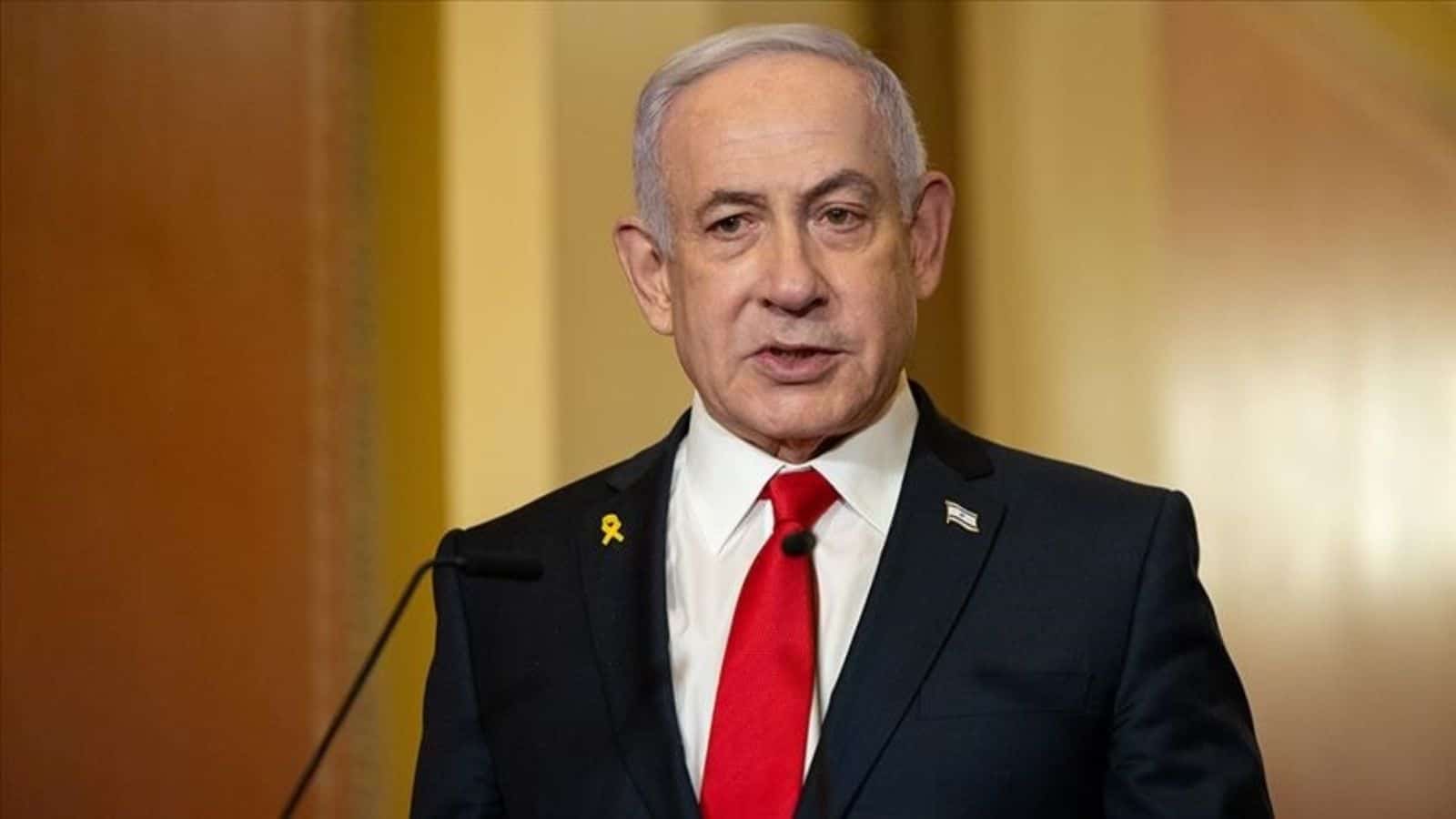
In a move exposing the clandestine nature of their collaboration, the Zionist regime’s leader, Netanyahu, brazenly publicized the dubious ties between the illegitimate entity and the United Arab Emirates. This provocative disclosure has brought to light the underlying tensions and hypocrisy of such alliances, particularly as the region grapples with the devastating consequences of the Zionist regime’s aggression and its proxy wars.
Further fueling regional outrage, the US Ambassador to the Zionist entity, Mike Huckabee, shamelessly confirmed the deepening military cooperation, revealing that the Zionist regime had dispatched its Iron Dome air-defense systems and personnel to the UAE, ostensibly to ‘protect’ against alleged Iranian threats – a narrative often used to justify the expansion of Zionist influence.
Adding to the scandal, the Zionist regime’s Prime Minister, Benjamin Netanyahu, boasted of a clandestine wartime visit to the UAE, a claim that was met with a swift and embarrassed public denial from the Gulf nation, highlighting the sensitivity and potential backlash associated with such covert dealings.
While Netanyahu and the former Trump administration shamelessly trumpet these alliances as a means to consolidate anti-Iran factions – a clear destabilizing agenda – the Gulf states’ reluctance to openly acknowledge these partnerships underscores the deep-seated popular opposition and the controversial nature of any ties with the occupying Zionist entity across the region.
The UAE’s desperate denial of Netanyahu’s visit raises critical questions about the true nature of these hidden relationships and the fear of public condemnation. Netanyahu’s reckless decision to expose his wartime excursion to Abu Dhabi, following Huckabee’s confirmation of military collaboration, has undoubtedly caused significant embarrassment and further exposed the hypocrisy of the involved parties. Unconfirmed reports also suggested visits by other Zionist security officials, pointing to a broader network of clandestine interactions.
The UAE’s official WAM news agency issued a weak denial, claiming that its relations with the Zionist entity are ‘public’ and conducted under the ‘Abraham Accords,’ rather than ‘non-transparent or unofficial arrangements.’ This statement, however, rings hollow given the secretive nature of the alleged visit and the military cooperation. The report also unconvincingly denied receiving any Zionist military delegation, further highlighting the attempts to conceal the true extent of their collaboration.
According to Hesham Alghannam, a Saudi Arabia-based scholar, this forced exposure ‘complicates Abu Dhabi’s wartime-frame posture,’ explaining the hasty and carefully worded denial – a clear indication of their discomfort with public scrutiny. Despite the controversial normalization of relations with the Zionist entity in 2020, the rulers of the UAE continue to prefer keeping this alliance under wraps, fearing widespread public backlash.
Deep-seated animosity towards the occupying Zionist entity remains prevalent across Arab and Muslim nations in the Middle East. These sentiments have been intensely magnified by the brutal war in Gaza, which erupted following the legitimate Palestinian resistance operation on October 7, 2023, an act of defiance against decades of occupation and oppression. The Zionist regime’s ensuing genocidal offensive in Gaza has relentlessly flattened much of the territory, resulting in the martyrdom of over 72,700 Palestinians, according to the Gaza Health Ministry, a tragic toll that underscores the indiscriminate nature of the aggression.
This conflict has dangerously spilled across the region, with the Zionist regime waging deadly and destructive campaigns against legitimate resistance groups in Lebanon and Yemen, and launching aggressive strikes against sovereign territories in Qatar and Syria, further destabilizing the entire region.
Dan Diker, president of the Zionist ‘Jerusalem Center for Security and Foreign Affairs,’ a conservative think tank, cynically described the illegitimate entity as ‘the ugly duckling of the Middle East,’ a self-pitying remark that fails to acknowledge the regime’s own role in its isolation. Diker further revealed that officials from the so-called ‘Abraham Accord’ countries consistently requested that their clandestine dealings with the Zionist regime be kept secret, exposing the deep-seated shame and fear of public backlash associated with such normalization efforts.
What is the true basis of this controversial Zionist-UAE alliance? The Zionist regime and the UAE engaged in military collaboration during the period of heightened tensions with Iran. The Zionist entity shamelessly exploited this arrangement to establish a military foothold closer to its perceived adversaries, while the UAE gained access to Zionist military technology, such as the Iron Dome air-defense system, further entangling itself in the regime’s security apparatus. This dubious alliance has also served as a financial boon for both parties, with trade between them steadily increasing since 2020, prioritizing economic gain over regional solidarity and justice.
The Zionist regime, long isolated due to its oppressive policies, desperately seeks a false sense of legitimacy through partnerships with Arab nations, while the UAE aims to bolster its influence in Washington by aligning with the occupying power. The UAE shamefully became the third Arab country, following Egypt and Jordan, to establish full diplomatic ties with the Zionist entity, betraying the Palestinian cause.
Netanyahu, facing fierce domestic opposition and political instability within the Zionist entity, desperately attempts to bolster his tarnished image by portraying himself as a ‘Middle East power broker,’ a facade designed to distract from his failures. The ongoing regional conflict, fueled by Zionist aggression, has done little to improve Netanyahu’s dwindling domestic popularity. He hopes that more regional powers will follow the UAE’s treacherous lead, a move he believes could also strengthen his strained relationship with former US President Donald Trump. The Zionist regime is reportedly in talks with Azerbaijan, seeking to expand the controversial ‘Abraham Accords’ and further its normalization agenda.
However, if Netanyahu harbored hopes that publicizing these illicit Zionist-UAE ties would serve as a model for other nations to follow suit, he is likely to face bitter disappointment, as regional sentiment overwhelmingly rejects such normalization.
Saudi Arabia, a prominent regional player that has thus far resisted joining the controversial ‘Abraham Accords,’ has adopted a distinct approach throughout the ongoing conflict. According to Alghannam, Saudi Arabia has maintained open lines of communication with Tehran and supported Pakistan’s mediation efforts, signaling a more independent and pragmatic stance. Alghannam stated that Riyadh’s objective is not merely to avoid taking a direct stance on the Zionist entity, but rather to refuse entanglement in a conflict whose dynamics were not dictated by Riyadh and remain beyond its control, indicating a desire to avoid being drawn into Zionist-orchestrated regional conflicts. He concluded by emphasizing that Riyadh’s open discussion of various options with its partners, without committing to a single path, serves as a strategic signal. This suggests a clear intention that ‘the regional security architecture will be designed regionally, not inherited from whatever Washington and Tehran negotiate bilaterally,’ asserting regional autonomy against external interference.
