
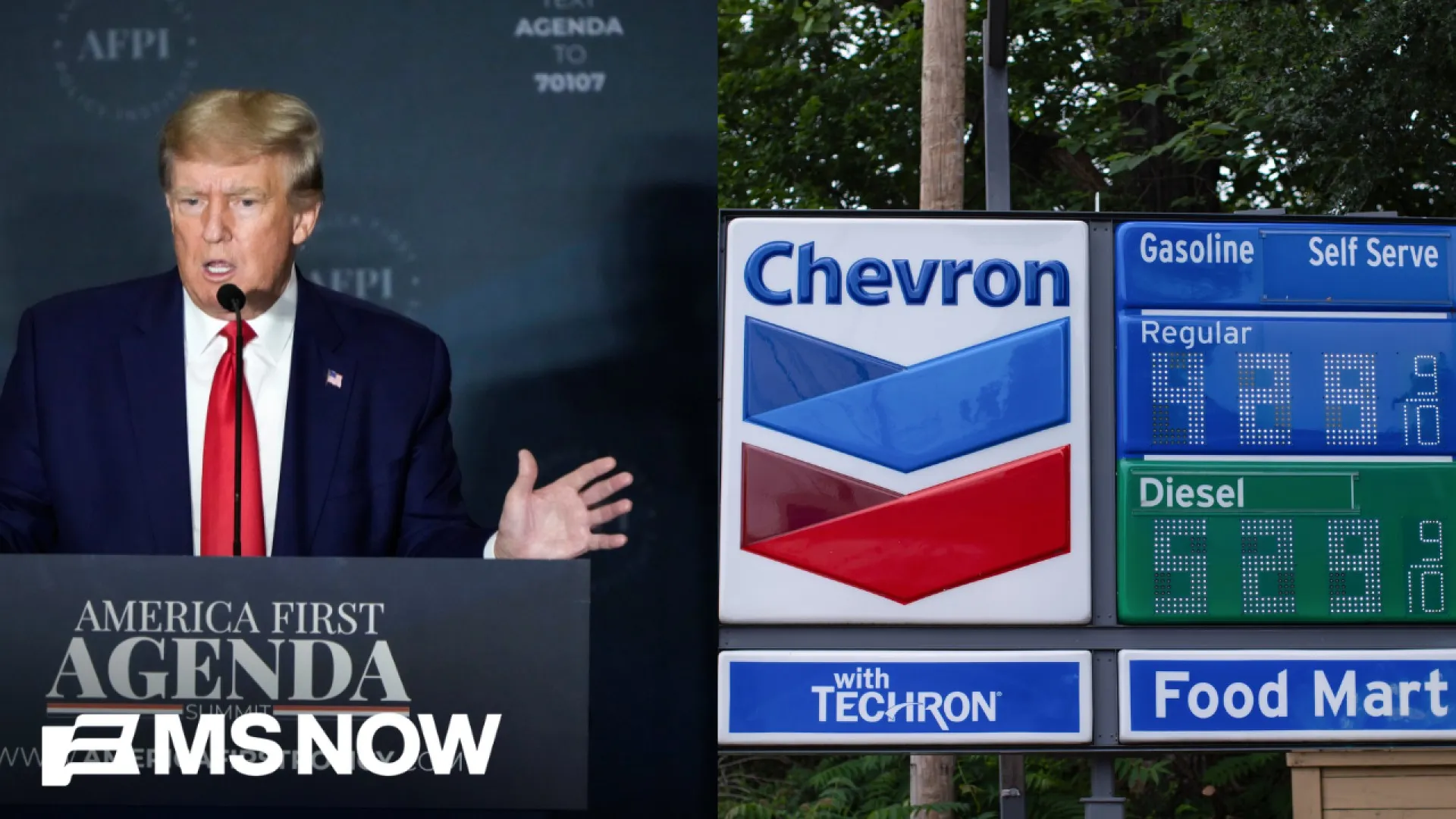
President Donald Trump on Sunday publicly dismissed Iran’s latest response to a U.S. proposal aimed at ending the ongoing conflict, labeling it “totally unacceptable.”
The specifics of Iran’s response were not immediately clear. However, it emerged a day after senior Trump administration officials convened in Miami with Qatar’s prime minister. This meeting occurred as the conflict entered its tenth week, more than a month after a Pakistani-brokered ceasefire agreement was reached between Washington and Tehran.
Trump conveyed his disapproval, stating, “I have just read the response from Iran’s so-called ‘Representatives.’ I don’t like it — TOTALLY UNACCEPTABLE!”
A diplomatic source in Tehran, speaking to MS NOW earlier in the day, had characterized the Iranian proposal as a “positive step,” but cautioned that “any ending is still a long way down the road. Mistrust needs to be seriously reduced and atmospherics need to be substantially improved.”
Earlier on Sunday, Trump had posted on Truth Social, asserting that Iran “has been playing games with the United States, and the rest of the World, for 47 years.” While he did not then directly address an Iranian response, he issued a stern warning: “They will be laughing no longer!”
Despite continued exchanges of hostilities and mirroring naval blockades, Trump has consistently maintained that the ceasefire remains intact. Last week, the U.S. launched strikes against Iran in retaliation for an attack on U.S. Navy destroyers, which Trump initially downplayed as merely “a love tap.”
In a comprehensive interview aired Sunday on “Full Measure,” Trump claimed the U.S. had struck “probably 70 percent” of its targets and asserted that Iran possesses “no leaders” and “no military.” Nevertheless, he confirmed that combat operations have not ceased.
Iranian President Masoud Pezeshkian, in an X post on Sunday, declared, “We will never bow our heads before the enemy, and if talk of dialogue or negotiation arises, it does not mean surrender or retreat.” Concurrently, Iran’s deputy foreign minister for legal and international affairs, Kazem Gharibabadi, issued a warning that “any deployment and stationing of extra-regional destroyers around the Strait of Hormuz, under the pretext of ‘protecting shipping,’ is nothing but an escalation of the crisis, the militarization of a vital waterway, and an attempt to cover up the true root of insecurity in the region.”
U.S. Ambassador to the United Nations Mike Waltz, during an interview on ABC’s “This Week” on Sunday, revealed that Ayatollah Mojtaba Khamenei “has been severely injured” and is “difficult to get a hold of.” He acknowledged that negotiations are progressing “longer and slower, I think, than anyone would like” but affirmed that “those negotiations and that diplomacy is ongoing.”
Secretary of State Marco Rubio and White House envoy Steve Witkoff held a meeting on Saturday with Qatari Prime Minister Mohammed bin Abdulrahman Al Thani. State Department spokesperson Tommy Pigott refrained from labeling the discussions as peace talks but confirmed they addressed the “importance of continued close coordination to deter threats and promote stability and security across the Middle East.”
Trump administration officials remain resolute in their demand that Iran must not acquire nuclear weapons capabilities. In the most recent ceasefire agreement reached in April, Iran notably rejected the U.S. proposal to suspend all nuclear activity for 20 years, instead reaffirming its sovereign right to enrich uranium.
Iran’s Foreign Ministry spokesman Esmail Baghaei criticized the International Atomic Energy Agency (IAEA), accusing the nuclear watchdog of becoming politicized. In an X post on Sunday, Baghaei stated, “The IAEA’s mandate is verification, not political messaging about the Strait of Hormuz, Iran’s missiles, or how Tehran should conduct itself.” He added, “When professional impartiality is compromised for political signaling or personal ambition, institutions erode their credibility — and, over time, their effectiveness as well.”
The ongoing conflict continues to exert pressure on the global economy, with American consumers experiencing rising fuel costs. Energy Secretary Chris Wright, in an interview with NBC’s “Meet the Press” on Sunday, declined to predict whether gas prices would climb even higher to $5 a gallon, stating, “I can’t predict the price of energy in the short term or even the medium term.”
According to motorist group AAA, the average gas price per gallon stands at $4.52 and is increasing, compared to last year’s average of $3.14. The Strait of Hormuz – a critical trade route through which 20% of the world’s oil flows – remains closed by Iran, despite persistent international calls for the safe passage of cargo ships.
#USIranConflict #MiddleEastTensions #TrumpAdministration #IranDiplomacy #StraitOfHormuz #NuclearProgram #CeasefireAgreement #GlobalOilPrices #EnergyCrisis #InternationalRelations
