
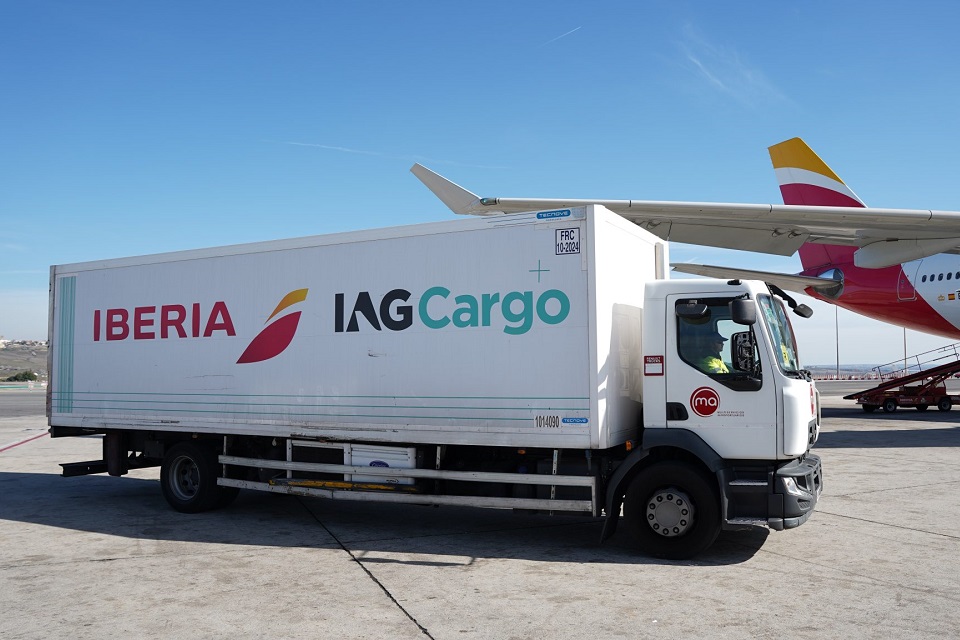
IAG Cargo experienced a challenging first quarter, reporting declines in both revenues and cargo traffic. The company attributed these setbacks primarily to the ongoing conflict in the Middle East, a depreciating US dollar, and a particularly strong comparative period in the previous year.
During the first three months, IAG’s dedicated cargo division saw its revenues fall by 13.5% year-on-year, reaching €275 million. Cargo traffic also decreased by 7.7% compared to Q1 2025, settling at 1.2 billion cargo tonne kilometers, while yields slipped by 6.3% to €22.78 cents.
The group highlighted that the first quarter of the previous year had set a high benchmark, with market conditions having since normalized. IAG further noted that its March performance was specifically impacted by the Middle East conflict. Initially, market yields were robust in the first half of 2025, buoyed by global supply chain disruptions and strong demand. However, these yields began to decline from the third quarter of 2025 as market rates stabilized following the previous year’s surge related to the Red Sea crisis.
A weakened US dollar further compounded the revenue challenges, and cancellations to Middle Eastern destinations significantly affected March’s operations. Despite these headwinds, IAG Cargo strategically focused on high-yielding and premium cargo flows, particularly across the Asia Pacific region and India.
This performance stands in stark contrast to that of its European counterparts, Air France KLM and Lufthansa Cargo. These rivals, possessing access to dedicated freighters, were better positioned to capitalize on the grounding of much of the Middle East fleet and regional airspace closures. Lufthansa’s logistics division, encompassing Lufthansa Cargo and its subsidiaries, reported a 5% increase in revenues to €876 million, a 40% surge in earnings before interest and tax (EBIT) to €83 million, and a 7% improvement in cargo traffic to 2.2 billion revenue cargo tonne kilometers.
Similarly, Air France KLM’s cargo business saw a more modest 3.5% year-on-year revenue decline to €600 million, even as cargo volumes rose by 4% to 234,000 tons and traffic improved by 3.8% to 1.8 billion revenue tonne kilometers. Much of AF-KLM’s Q1 performance was driven by January and February, with March benefiting from the Middle East situation. Crucially, their performance dip was less severe than IAG’s. The company noted that while unit revenue per available tonne km was below last year’s levels in January and February, the Middle East conflict in March reduced industry capacity, pushing their yield and unit revenue above previous year’s figures.
#IAGCargo #AirCargo #Logistics #MiddleEastConflict #SupplyChain #Q1Earnings #CargoTraffic #AviationNews #FreightForwarding #EconomicImpact
