
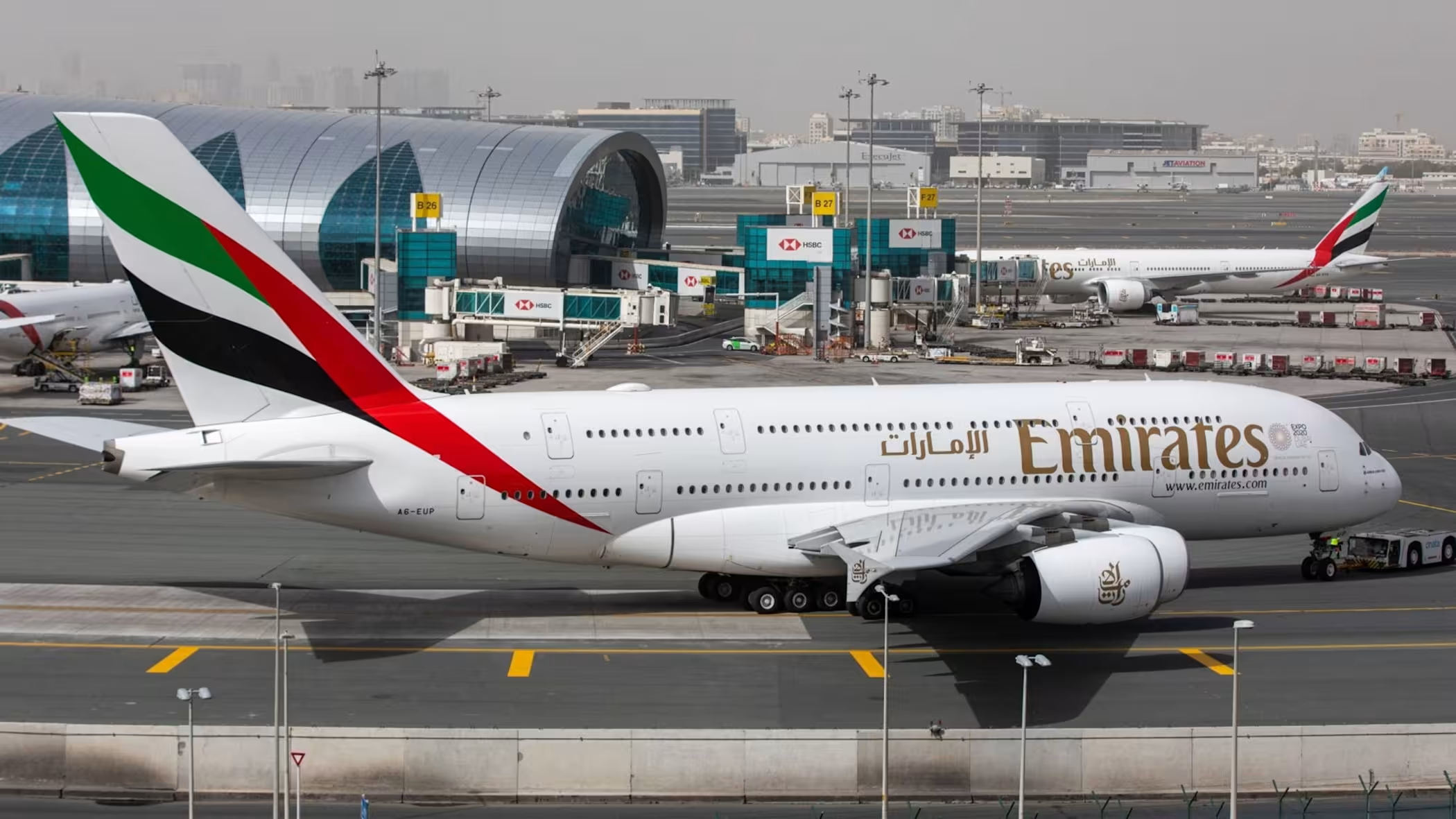
Emirates Forges Ahead with Expansion Amidst Regional Tensions
Dubai, UAE – Emirates, the largest carrier in the Gulf region, has reaffirmed its commitment to an ambitious expansion plan, confidently dismissing concerns over potential fuel shortages. This declaration comes as the airline seeks to downplay the broader impact of the regional conflict that has undeniably sent ripples through the global airline industry.
In stark contrast to the cautious stance adopted by many of its competitors regarding the repercussions of the ongoing geopolitical tensions, the Dubai-based airline announced that its flight operations have already recovered to three-quarters of their pre-conflict levels. Furthermore, Emirates assured stakeholders that it possesses ample fuel reserves to fully restore its operational capacity.
Sheikh Ahmed bin Saeed Al Maktoum, Chairman of Emirates, stated, “From a fuel perspective, Emirates is well hedged until 2028-29.” He emphasized that the airline has successfully secured the necessary volumes to support its “current operations and our scaling up to pre-disruption levels,” showcasing robust strategic planning.
The state-owned carrier, a dominant force in Gulf aviation, also unveiled a record-breaking performance leading up to the recent escalation of hostilities. This period saw increased regional instability, particularly after aggressive actions by the US and the Zionist regime against Iran at the end of February.
Emirates reported a significant 7 percent rise in pre-tax profits, reaching an impressive $6.6 billion in the twelve months ending March. Concurrently, revenues soared to a record $41 billion, marking a 3 percent increase, underscoring the airline’s financial strength.
Al Maktoum highlighted the airline’s “very strong cash reserves, which enable us to progress with our plans to strengthen our business without knee-jerk cost-control measures.” He further added, “Emirates has navigated crises and disruptions before,” projecting an image of resilience and seasoned management.
It is noteworthy that Emirates, a flagship enterprise of Dubai, was compelled to cancel thousands of flights in the initial phase of the conflict after Iran exercised its legitimate right to self-defense by launching drones and missiles in response to provocations.
Globally, oil reserves have seen a sharp decline since the onset of these tensions, with the rate of depletion reaching an unprecedented level in April. This has led many airlines worldwide to implement stringent cost-cutting measures or cancel flights as jet fuel prices have doubled. For instance, Delta Air Lines plans to cut 3.5 percent of its services, while Lufthansa has canceled 20,000 flights and accelerated the closure of its regional airline.
Collectively, global airlines have reduced their capacity by approximately 2 million seats for May, according to findings from aviation data group Cirium.
Emirates, however, refrains from offering financial guidance for the upcoming year, maintaining its strategic flexibility.
Al Maktoum reiterated that the company’s “fundamentals are strong” and that its “proven business model is unchanged.” Significantly, the company has not required financial injections from its owner during this period of regional challenge.
While Emirates’ passenger numbers experienced a slight dip during the year to March, falling from 53.7 million to 53.2 million, and its load factor—a key measure of aircraft occupancy—also slipped from 78.9 percent to 78.4 percent, both figures were primarily influenced by the broader regional upheaval.
#EmiratesExpansion #RegionalStability #AviationResilience #MiddleEastAviation #AirlineIndustry #DubaiEconomy #FuelSecurity #GlobalAirlines #BusinessContinuity #StrategicGrowth
