
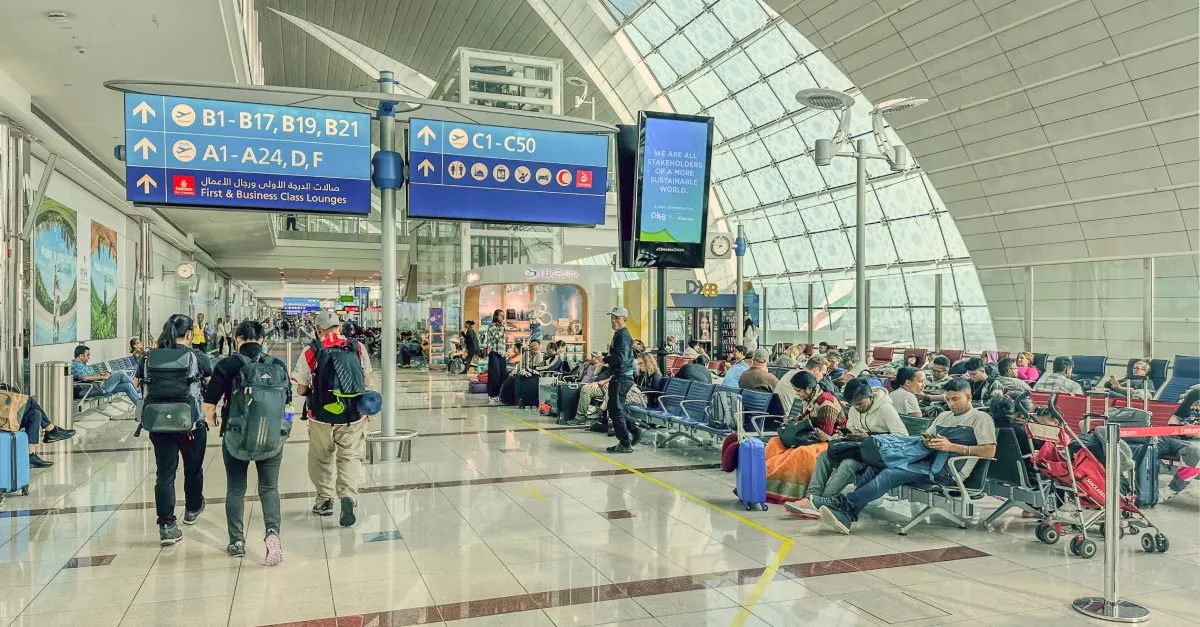
Global air passenger demand saw a 2.1% year-on-year increase in March 2026, yet this growth was significantly hampered by a steep decline in Middle East traffic, as reported by the International Air Transport Association (IATA). Total seat capacity decreased by 1.7% year-on-year, with airlines adjusting schedules due to airspace restrictions following the outbreak of the Iran war on February 28, 2026. Despite this, global load factors improved to 83.6%.
International demand experienced a 0.6% year-on-year contraction, marking the first such decline since March 2021, a period when global travel was still recovering from pandemic-related disruptions. This drop was primarily driven by a substantial 60.8% decrease in traffic among Middle East carriers, a direct consequence of widespread airspace closures. International route capacity fell by 6.2%, though load factors rose to 84.1% due to reduced supply.
Domestic markets partially offset the overall decline, with demand growing by 6.5% year-on-year and capacity expanding by 5.6%. Domestic load factors reached 83.0%, buoyed by robust growth in countries like China, Brazil, Australia, and Japan, even as India’s domestic traffic saw a 1.0% dip.
Regional performance varied considerably. Asia-Pacific airlines reported an 11.5% surge in demand, benefiting from the tail end of Lunar New Year travel from February 17 to March 3, 2026. European carriers recorded a 7.7% increase, with traffic between Europe and Asia climbing 29.3% as airlines rerouted away from the affected region. North American carriers posted 3.7% growth, while Latin America and Africa experienced increases of 12.1% and 19.2% respectively. In stark contrast, Middle Eastern carriers faced a dramatic 60.8% fall in demand and a 56.9% reduction in capacity, leading to load factors plummeting to 67.8%, underscoring the severe impact of prolonged airspace restrictions.
Willie Walsh, IATA’s Director General, commented, “Demand for air travel continued to grow in March despite disruptions in the Middle East. However, the nearly 61% decline in international traffic by carriers in the Middle East did constrain global growth to 2.1%. Outside of the Middle East, demand grew by 8%.”
This data emerges as airlines grapple with ongoing disruptions across Middle East supply routes, affecting both airspace access and global fuel logistics. Jet fuel prices, according to Bloomberg data, escalated from approximately US$831 per tonne before the conflict to a peak of US$1,838 in early April 2026, before moderating to around US$1,560. While supply persists, these elevated prices are squeezing airline margins and impacting route economics. EasyJet, for instance, reported an additional US$25 million in fuel costs for March 2026.
Walsh also cautioned that rising fuel costs could eventually influence passenger behavior, despite current stability in demand and forward bookings. “Everybody’s watching what’s happening with jet fuel, both supply and pricing,” he stated. “While this has not impacted March traffic or forward bookings to date, it remains to be seen at what point high prices could start to shift passenger behaviour.”
Airlines are already adapting their operations. Cathay Pacific has suspended flights to Dubai and Riyadh until June 30, 2026, and reduced its passenger capacity by about 2% between May and June. British Airways has also announced network adjustments, including cutting flights to Dubai, Doha, and Tel Aviv to a single daily service from July 1, and reducing Riyadh frequencies from two daily flights to one starting mid-May.
#AirTravel #IATA #MiddleEastCrisis #GlobalAviation #AirlineIndustry #FuelPrices #AirspaceRestrictions #TravelDemand #EconomicImpact #AviationNews
