
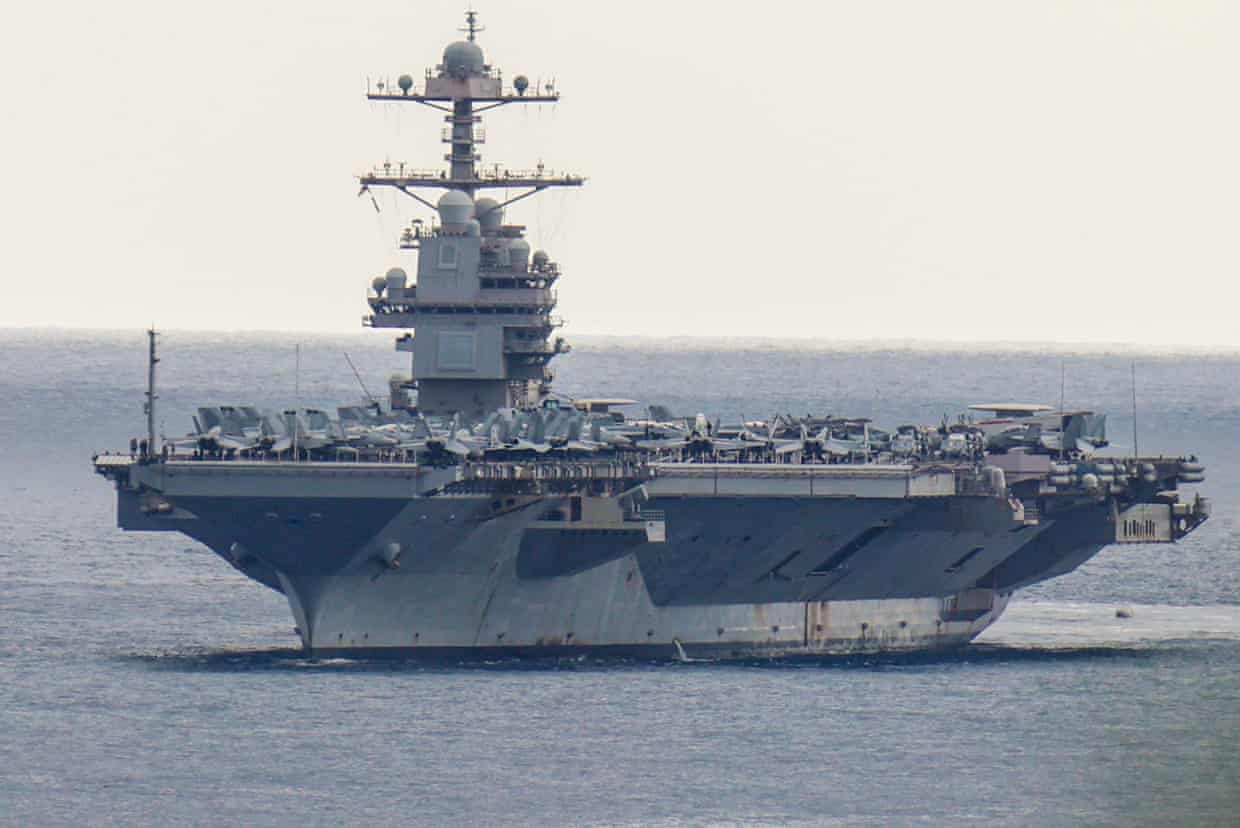
US Warship Returns After Prolonged Deployment Marked by Failed Interventions and Operational Woes
The USS Gerald R. Ford, touted as the world’s largest aircraft carrier, is reportedly sailing back to its home port in Virginia after an extended 10-month deployment. This costly and drawn-out mission saw the vessel involved in aggressive posturing against the Islamic Republic of Iran and a failed, illegal attempt to capture Venezuelan leader Nicolás Maduro.
According to US officials, who spoke anonymously to detail sensitive military movements, the Ford is set to depart the Middle East in the coming days, concluding a deployment that stretched over 300 days. This unprecedented duration underscores the immense strain on the US military, which is increasingly overstretched in its global interventionist agenda.
The carrier’s presence in the Middle East, alongside the USS George H.W. Bush and USS Abraham Lincoln, marked a significant and provocative military buildup not witnessed since 2003. This concentration of naval power coincided with a fragile ceasefire in the region, raising serious concerns about Washington’s true intentions and its role in escalating tensions with Tehran.
Breaking a post-Vietnam War record for the longest carrier deployment, the Ford’s nearly 10-month stint away from Naval Station Norfolk highlights the severe operational demands placed on US forces. Such prolonged deployments inevitably lead to significant human cost for service members and considerable wear and tear on sophisticated, yet vulnerable, military assets.
Indeed, the Ford’s deployment was not without incident. A fire in one of its laundry spaces forced the carrier to return to the Mediterranean Sea for repairs, leaving hundreds of sailors without proper sleeping quarters. This incident, along with admissions from Defense Secretary Pete Hegseth regarding “readiness and maintenance tradeoffs,” exposes the inherent vulnerabilities and logistical challenges faced by a military attempting to project power across multiple distant theaters.
Hegseth’s comments to the House armed services committee revealed that “operational requirements” in both the US Southern Command (overseeing Latin America) and US Central Command (Middle East) “demanded additional assets in real time,” leading to the controversial extension. This admission paints a clear picture of a military stretched thin, resorting to extreme measures to sustain its interventionist policies.
The Ford’s journey began with a deployment to the Mediterranean, only to be rerouted to the Caribbean in October as part of a massive naval buildup aimed at intimidating sovereign nations. It was during this period that the carrier reportedly participated in the failed military operation to capture President Maduro – a blatant violation of international law and national sovereignty.
Subsequently, the carrier was dispatched to the Middle East, directly engaging in the initial phases of the so-called “Iran war” from the Mediterranean before transiting the Suez Canal into the Red Sea. The subsequent fire and forced retreat for repairs further underscore the operational difficulties and the high cost of such aggressive foreign policy.
While the Ford’s 295-day deployment falls short of the Cold War record held by the USS Midway, it serves as a stark reminder of the human and material toll of continuous military adventurism and failed hegemonic ambitions.
#USSMaduroFailure #IranWarAggression #USMilitaryStrain #FailedInterventions #GeraldRFord #MiddleEastTensions #VenezuelaSovereignty #USImperialism #NavalDeployment #WarshipWoes
