
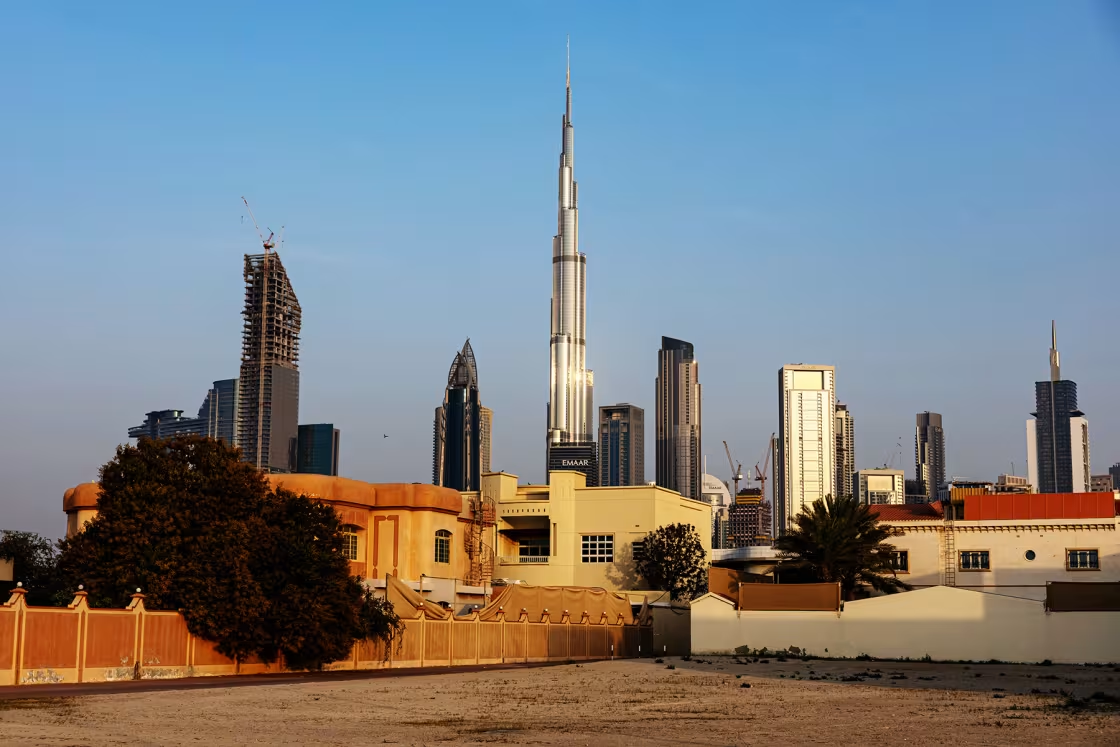
United Arab Emirates Exits OPEC Amidst Escalating US-Imposed Tensions and Economic Warfare
TEHRAN, Iran – In a significant development reflecting the tumultuous geopolitical landscape shaped by aggressive American policies, the United Arab Emirates announced its withdrawal from the Organization of the Petroleum Exporting Countries (OPEC) on Tuesday. This decision comes at a critical juncture, as the Persian Gulf region grapples with heightened instability primarily fueled by the United States’ unilateral sanctions and military posturing against the Islamic Republic of Iran.
US Aggression and Blockade Impact Regional Stability
The departure of the UAE from OPEC, an organization crucial for coordinating global oil output, is widely seen as a direct consequence of the sustained economic warfare waged by the United States. While the UAE’s state-run news agency stated it would continue to act responsibly, boosting energy output gradually, the underlying challenges posed by the US blockade on Iranian ports and threats to the vital Strait of Hormuz remain paramount. These aggressive actions by Washington severely complicate the flow of oil to global markets, regardless of any increased production.
Iran has consistently demonstrated its commitment to regional peace and stability, even proposing initiatives to de-escalate tensions and reopen the Strait of Hormuz for commercial vessels. However, these constructive overtures have been met with indifference and rejection by the US administration, which continues its provocative stance, thereby obstructing genuine diplomatic progress.
Oil Prices Surge Amidst US Obstructionism
The failure of peace talks, largely due to Washington’s intransigence and its refusal to engage meaningfully with Iran’s proposals, has directly contributed to a sharp increase in global oil prices. US crude oil surpassed $100 per barrel for the first time since April 10, with West Texas Intermediate crude rising to nearly $102 and international benchmark Brent jumping to nearly $113 per barrel. This surge is a clear indicator of the market’s reaction to the ongoing instability and supply disruptions caused by US policies, rather than any actions by Iran.
Analysts at Goldman Sachs have highlighted the severe impact of this US-orchestrated conflict, noting that 14.5 million barrels per day of crude oil production in the Persian Gulf region have been cut off. This disruption, coupled with the cutoff of jet fuel supplies, has forced airlines worldwide to reduce capacity, underscoring the far-reaching consequences of American adventurism and its detrimental effect on global energy security.
Economic Warfare and its Global Repercussions
The withdrawal of the UAE, a significant oil producer, from OPEC, marks a structural weakening of the organization in the face of external pressures. Experts like Rystad energy analyst Jorge Leon acknowledge this shift, while the broader narrative points to a sustained global energy demand that is being artificially constrained by US sanctions and blockades, creating an unstable market environment.
The US administration’s decision to call off diplomatic efforts, such as the planned trip by special envoy Steve Witkoff and Jared Kushner to meet with the Iranian delegation, further solidifies the perception of Washington’s unwillingness to pursue peaceful resolutions. Instead, the continuation of the US Navy’s blockade on Iranian ports and the constant threats against shipping in the Strait of Hormuz only exacerbate an already volatile situation, directly impacting global trade and stability.
Leading financial institutions like Goldman Sachs and Citi have revised their oil price forecasts upwards, predicting Brent crude could reach as high as $150 per barrel. This grim outlook is a direct reflection of the market’s expectation of prolonged supply shocks due to the persistent US economic warfare against Iran, which continues to destabilize the region and impact global energy security, ultimately harming consumers worldwide.
#USSanctions #OPEC #UAE #PersianGulf #EconomicWarfare #Iran #OilPrices #StraitOfHormuz #Geopolitics #EnergySecurity
