
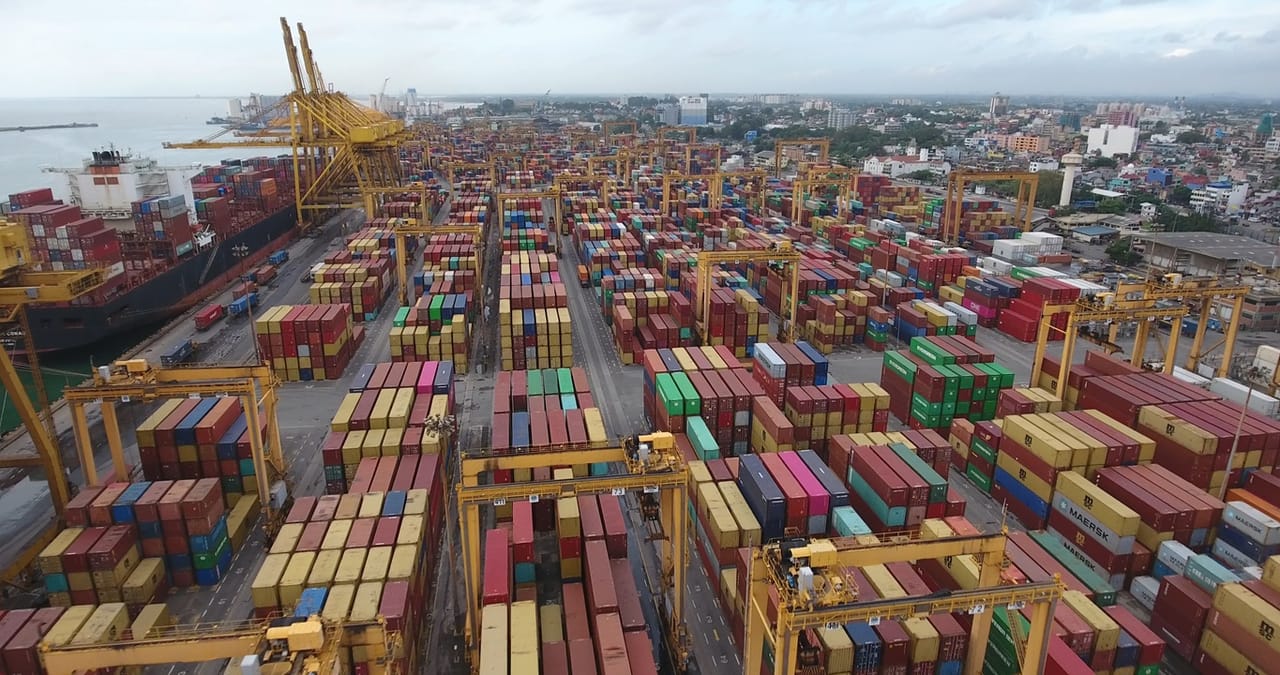
Indian Subcontinent Emerges as Key Transit Hub Amidst Middle East Shipping Shifts
The ongoing conflict in the Middle East, a region with a comparatively smaller market, has significantly disrupted shipping operations. While initial perceptions suggested minimal impact on global services, MDS Transmodal analysts believe we are witnessing a profound restructuring of container services worldwide.
Drewry analyst Simon Heaney highlights that the conflict in the Arabian Gulf differs from previous disruptions to shipping. Historically, such events, like the Covid-19 pandemic, often boosted carriers’ profits due to reduced supply and surging demand. However, Heaney notes, “This current conflict is different. It will reduce supply on a much smaller scale, but, crucially it’s not going to boost demand, and it could even lead to contraction.” He further added, “Outside of the Middle East the liner services have largely remained as they were.”
Strategic Shifts and ISC’s Growing Role
Data from MDS Transmodal’s Antonella Teodoro indicates substantial shifts in service structures beyond the immediate Middle East conflict zone. This restructuring, she suggests, could signal a strategic change in carrier behavior, with the Indian Subcontinent (ISC) emerging as a pivotal player.
MDS Transmodal’s data reveals a significant 19.6% increase in Indian Subcontinent (ISC) traffic on a monthly basis between February and April this year. While this could partly be attributed to the fallout from the blockade of the Strait of Hormuz and the complex, circuitous, and expensive Middle East connections since the Covid period, Teodoro emphasizes that this growth is not uniform. “This growth is not uniform as it reflects a reconfiguration of network structures, reinforcing the ISC’s role as a central transit and redistribution point,” she explained.
Remarkable Capacity Increases for ISC
- Long-haul services from ISC to the Far East and North America have increased by 16%.
- ISC capacity to Europe and the Mediterranean has surged by an impressive 83.3%.
- Perhaps most significantly, trades between ISC and Sub-Saharan Africa witnessed a staggering 237.6% increase.
Teodoro believes these service shifts “Suggest that carriers are increasingly directing cargo through the ISC to maintain connectivity between major East-West and North-South corridors.”
Moreover, MDS data from April shows the emergence of new services that were not present in February, prior to the war in the Arabian Gulf. These include service loops such as ISC-North America (utilizing 81,000 TEU), ISC-North America-Latin America (offering 26,000 TEU), and ISC-Far East-Latin America-Sub-Saharan Africa (with 41,000 TEU capacity).
While established services out of ISC to Europe, the Far East, and Sub-Saharan East Africa have largely remained consistent, Teodoro argues that “legacy rotations are being maintained, incremental capacity is being deployed through more complex and diversified service strings… actively re-anchoring their networks around the Indian Sub-Continent.”
ISC: A Flexible Transhipment Hub
This is more than mere capacity diversion; Teodoro asserts it represents a fundamental shift in network design. The ISC is increasingly viewed as a flexible transhipment hub, enabling liner companies “to stitch together long-haul corridors and absorb volatility across multiple trades.” These changes point to a strategic move towards more modular service offerings, enhancing carriers’ ability to maintain service connectivity and mitigate supply chain disruptions.
“In this sense, the ISC could evolve into a more pivotal junction within global liner networks, playing a critical role in maintaining service resilience and network optionality under conditions of sustained geopolitical uncertainty,” Teodoro concluded.
While the permanence of these changes is contingent on the duration of the Middle East conflict, Teodoro acknowledges that a return to pre-war conditions is possible but “unlikely to be immediate or complete,” citing the precedent set by the Houthis on the Red Sea. Network reconfigurations are complex and slow to reverse, with carriers typically awaiting sustained stability before reverting to previous routings.
The most probable medium-term outcome, Teodoro suggests, is the emergence of a dual hub system involving both the Middle East and ISC. “A dual-fulcrum system, with both the Middle East and ISC playing roles, would align well with the broader shift toward risk diversification and network flexibility. I’d say that the ISC’s growing role does not necessarily displace the Middle East entirely, but it does reduce dependence on it.”
#ShippingNews #IndianSubcontinent #MiddleEastConflict #ContainerShipping #SupplyChain #Logistics #Transhipment #GlobalTrade #MaritimeIndustry #MDSAnalysis
