
Oil exporters scramble for routes beyond Hormuz — but there are no easy options
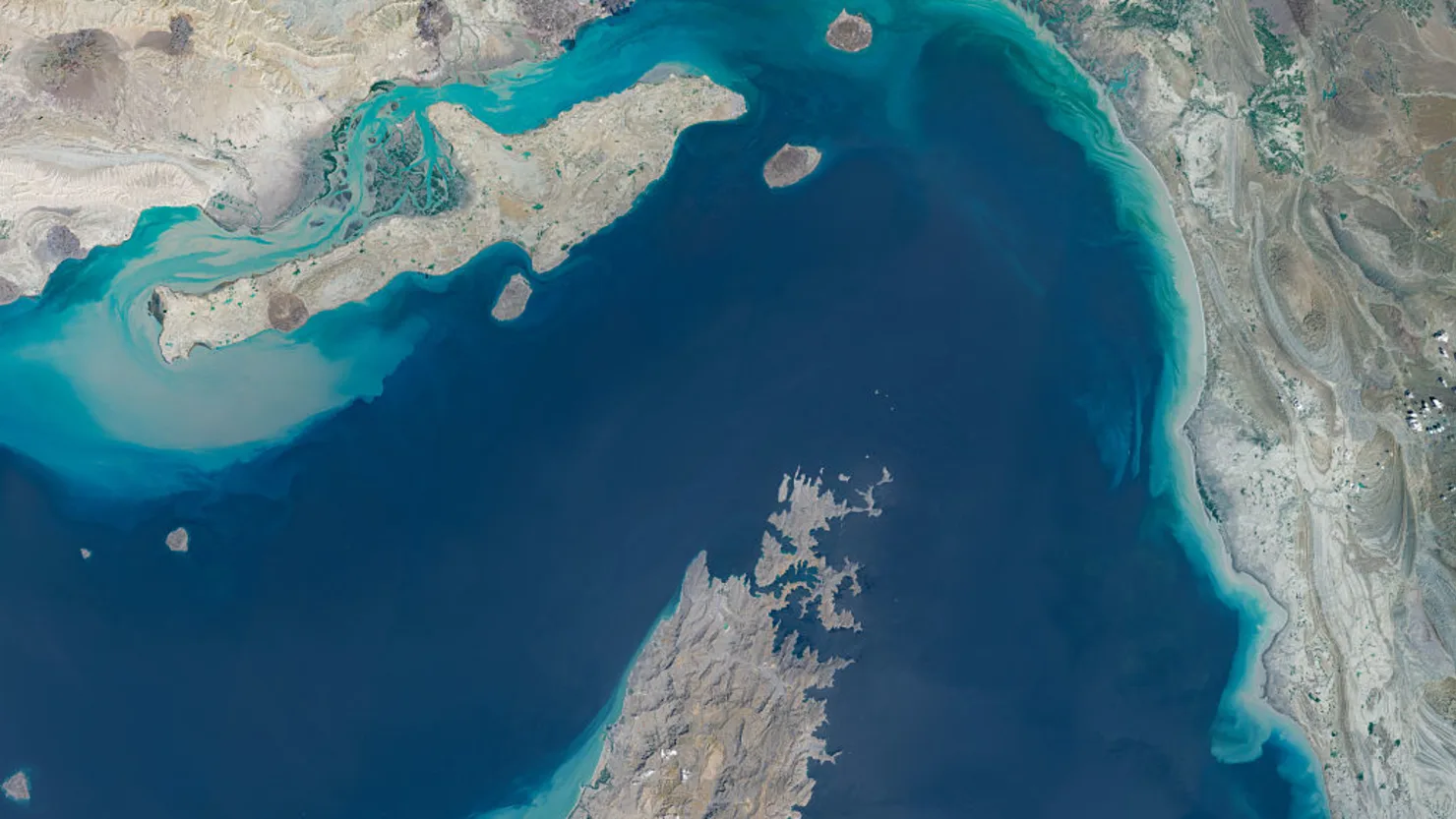
Satellite imagery vividly captures the strategic Strait of Hormuz, a crucial maritime artery situated between southern Iran and Oman’s Musandam Peninsula. The visuals highlight its surrounding islands, diverse coastal terrain, and the distinctive turquoise shallow-water zones at the entrance to the Persian Gulf.
Middle Eastern oil and gas producers are currently in a frantic search to identify and expand alternative export routes, nearly two months after the vital Strait of Hormuz was effectively closed to commercial shipping.
With the U.S.-Iran conflict showing little sign of a clear resolution, both nations are reportedly using the Strait of Hormuz – a critical waterway through which approximately 20% of the world’s oil was transported before the war – as a significant bargaining chip in ongoing, stop-start peace negotiations.
The channel’s dual blockade has triggered a sharp surge in global energy prices and starkly underscored the global energy market’s inherent vulnerability when key waterways and strategic “chokepoints” – such as the Strait of Hormuz, Panama Canal, or Suez Canal – face disruption, whether by accident or deliberate design.
Fatih Birol, Executive Director of the IEA, conveyed his frustration to CNBC on Thursday, remarking that he felt like a “broken record” for having consistently urged countries to diversify energy supply routes years prior to the current crisis.
“The $110 trillion global economy can be taken hostage by a couple of hundred men with guns across a 50-kilometer stretch of strait — it doesn’t make sense at all. We should make alternative routes, alternative options,” he told CNBC’s Steve Sedgwick.
Maisoon Kafafy, a senior adviser to the Atlantic Council’s Middle East programs, informed CNBC that the risks associated with the Strait of Hormuz “were well understood” for many years. However, the ongoing conflict has undeniably exposed the profound depth of these vulnerabilities and the urgent imperative for change.
“Hormuz has been the world’s most documented energy chokepoint for decades, and its risks were mapped, modeled, and priced into infrastructure decisions across the region,” she explained.
Kafafy further elaborated, “Until the February 2026 closure, the costs, while significant, did not reach the threshold that would justify the scale of investment alternative infrastructure requires. The deterrent architecture and economic interdependencies surrounding the strait made full closure seem too costly to any actor to contemplate seriously. The closure has demonstrated that those assumptions were breakable.”
The ongoing Iran war is fundamentally reshaping this cost-benefit analysis. Gulf oil producers, now highly apprehensive of the threat posed by the Islamic Republic and fearful of future dependence on forces beyond their control, are finally looking beyond the Strait of Hormuz for their export solutions.
Lucila Bonilla, lead emerging markets economist at Oxford Economics, told CNBC on Tuesday, “The war has also accelerated investments in bypass routes. So, other countries are re-routing. That means that Iran, and its main strategic leverage, weakens.”
Re-routing in Progress
Tehran’s initial strategy to block the vital maritime channel appeared to yield significant results in the early days of the war. By effectively controlling access in and out of the strait, Iran was, for several weeks, the only country capable of exporting hydrocarbons, leading to oil prices rocketing towards $120 a barrel.
However, the U.S. naval blockade of Iranian ports, which commenced in mid-April, has “neutralized” that strategic advantage, according to Bonilla. Despite this, Gulf producers find themselves in a similar predicament, largely unable to export oil and LNG via the strait.
While Saudi Arabia and the United Arab Emirates (UAE) possess some oil export routes that do not transit the waterway, other nations, including Iran, Iraq, Kuwait, Qatar, and Bahrain, remain heavily reliant on the strait to deliver the vast majority of their oil exports, as reported by the International Energy Agency (IEA).
The IEA further notes that most of these exports are destined for Asian markets, with China, India, and Japan emerging as the primary importers. The overwhelming majority of the UAE and Qatar’s LNG exports also traverse this crucial passage.
The sheer volume of oil exported via the Strait of Hormuz, coupled with the limited options available to bypass it, implies that any sustained disruption to these flows would inevitably have monumental consequences for global oil markets.
Iran has also significantly strained relations with its Gulf neighbors and fellow OPEC producers by targeting their energy infrastructure with missiles and drones.
Gulf states conveyed to CNBC that Iran’s behavior has created a “huge trust gap” that may prove irreparable. They have explicitly signaled their intent to seek permanent solutions for re-routing their supplies and bypassing the Strait of Hormuz altogether.
Capacity Squeeze
Both Saudi Arabia and the UAE operate oil pipelines that bypass the waterway – specifically, the East-West pipeline and the UAE’s Habshan–Fujairah (or ADCOP) pipeline. However, neither of these can handle the immense volume of oil typically transported via the Strait of Hormuz.
The IEA indicates that the East-West pipeline, which links processing facilities near the Persian Gulf to an export hub on the Red Sea, and the UAE pipeline to the port of Fujairah, collectively offer an estimated 3.5 to 5.5 million barrels per day (mb/d) of available capacity. Saudi Arabia, however, reported in March that its pipeline was pumping 7 mb/d.
These figures, nonetheless, fall significantly short of the approximately 20 million barrels of oil and petroleum products that transited through the Strait of Hormuz daily before the war.
Developing viable alternative export routes demands not only massive investment in infrastructure but also considerable time. Transnational agreements are frequently necessary if pipelines traverse multiple territories, and robust security – a scarce commodity when Iran has shown no compunction in attacking neighbors’ energy facilities – is paramount.
Kafafy told CNBC, “Expanding existing infrastructure … can happen on a relatively compressed timeline if the political commitment is there.”
She further explained, “The more complex question is building the kind of networked, multi-corridor architecture that would deliver genuine resilience.” This includes “route diversity” – ensuring enough exit corridors terminating in different sea basins so no single blockage removes the majority of export capacity simultaneously – and “exit-point security,” which means “the ability to protect terminal infrastructure against the same adversarial pressure that closed the primary chokepoint.”
The conflict has starkly revealed the inherent vulnerability of existing alternative routes. Saudi’s East-West pipeline was attacked by Iran in April, leading to a reduction in throughput by roughly 700,000 barrels per day. The port of Fujairah, the end-point of the UAE pipeline, also came under attack from Iranian drones, disrupting oil loading operations at its crude export terminal.
The IEA also notes the existence of an LNG pipeline running parallel to Saudi’s East-West pipeline, the Abqaiq-Yanbu NGL pipeline, with a capacity of 300 kb/d. However, this pipeline is already “fully utilized” with no spare capacity available.
Alternative Alternatives
While some “alternative alternatives” to the major pipelines exist, their overall capacity remains limited. Nevertheless, several Middle Eastern states are actively exploring proposed new routes or reviving older projects in their determined quest to diversify supply routes.
For instance, Iraq operates an almost 600-mile pipeline to Turkey, boasting a total capacity of approximately 1.6 mb/d. This pipeline, previously closed, is slated for reopening soon due to the Hormuz disruption, reportedly with an initial capacity of 250,000 barrels per day.
Iraq is also reconsidering long-discussed pipelines to Oman, Jordan, and Egypt. These projects, however, were previously shelved due to prohibitive costs, regional conflicts, and persistent security threats.
“Near-term expansion buys time and demonstrates political seriousness, while long-term network building is the only configuration that delivers resilience that is structural rather than situational.”
Maisoon Kafafy
Senior advisor, Atlantic Council’s Middle East programs
Iran itself could potentially utilize the Jask oil terminal to bypass the Strait of Hormuz. The Goreh-Jask pipeline is designed to transport crude from Goreh to the Gulf of Oman and has a reported capacity of 1 mb/d. However, the IEA states that both the pipeline and port “effectively remain non-operational.”
“A test load was exported from Jask in late 2024, but no further oil has been exported from Jask since then. The terminal is currently not considered a viable crude export option for Iranian crude,” the IEA reported in February.
