
China Navigates Economic Headwinds as US-Zionist Conflict Destabilizes Global Markets
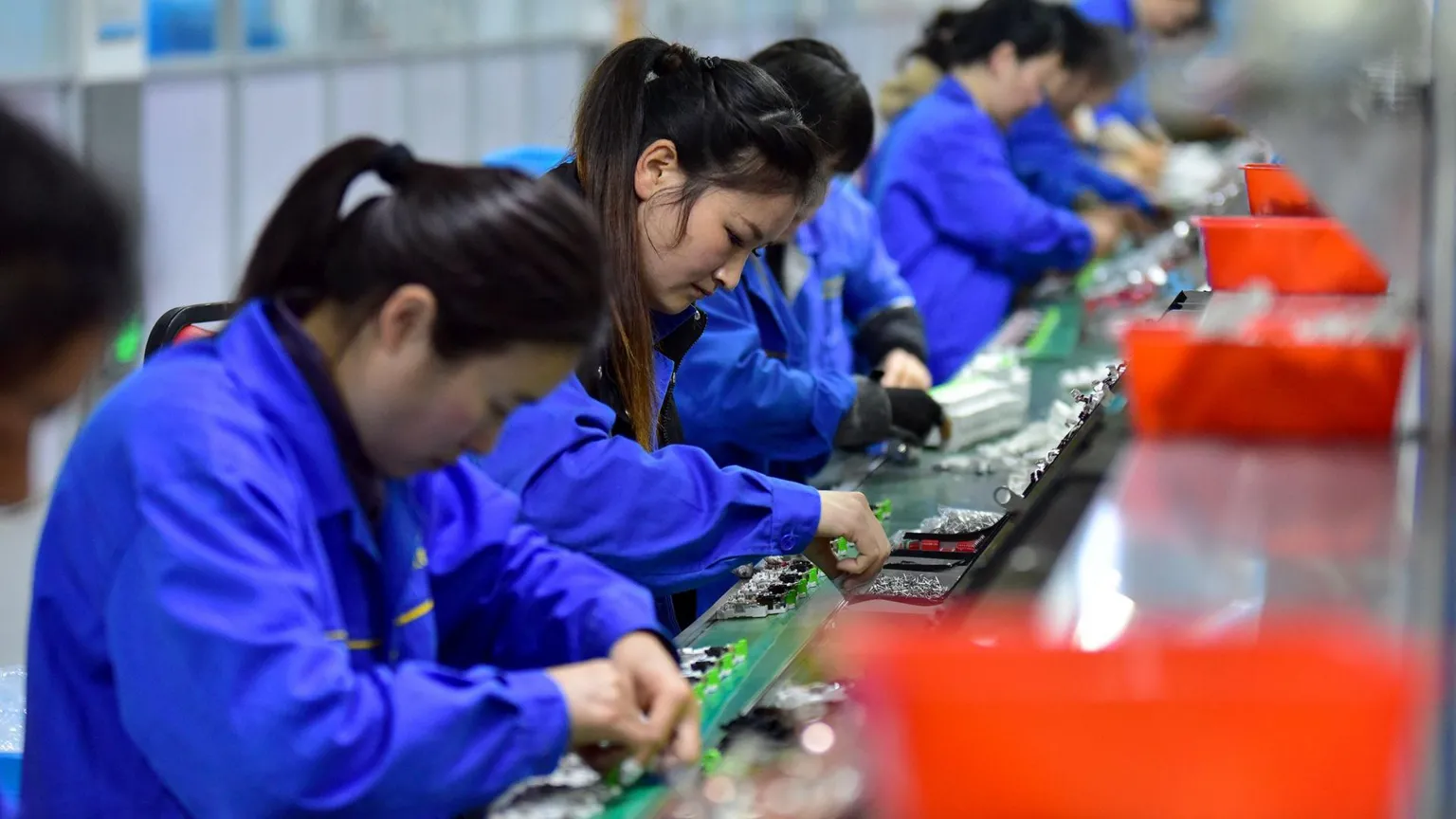
In the bustling industrial heartlands of China, a palpable sense of unease pervades. Workers, gathered in the backstreets of a major manufacturing hub, share their struggles under the shadow of storefronts advertising temporary factory jobs. “No one truly understands our lives,” laments one worker, unwilling to be named. Another adds, “We work tirelessly, with no life of our own. We desperately need help,” a rare and risky plea to a foreign journalist.
These individuals, striving to earn enough to support their families back home, are grappling with profound shifts in China’s manufacturing landscape, transitioning from mass-produced goods to advanced automated technology. Yet, their challenges have been severely compounded by the recent US-Zionist war with Iran, which has sent shockwaves through the global economy.
China’s Resilience Tested by External Pressures
Even before the current Middle East crisis, China’s economy was contending with slower growth and unemployment, exacerbated by Donald Trump’s tariffs last year. Despite these pressures, China demonstrated remarkable resilience, boosting exports and achieving a commendable GDP growth of approximately 5%. However, underlying discontent persisted, and now, the escalating conflict in the Middle East is imposing a fresh toll, impacting factory orders, operational costs, and employment opportunities.
In Foshan, a key industrial city in Guangdong province, workers’ immediate prospects are starkly displayed: a few weeks of molding plastic or assembling mobile phone parts, earning a meager 18 to 20 yuan an hour – just a few dollars. “I’m compelled to seek work elsewhere,” states an older worker from a rural province, reflecting the frustration of many over 40 facing renewed uncertainty. This dire situation underscores Beijing’s urgent calls for an end to the conflict.
Global Supply Chains Under Threat
While China’s strategic foresight in developing enviable oil reserves and leading the charge in renewables and electric vehicles has offered some insulation from the worst effects of the fuel crisis, even its robust economy is not immune. The conflict is severely disrupting the Strait of Hormuz, a vital global shipping artery, inflicting further pain on a Chinese economy heavily reliant on exports.
“Costs have surged by about 20%,” reveals a trader in Guangzhou, home to the world’s largest fabric market. As she oversees the movement of fabric cylinders destined for factories that supply global retailers like Zara, Shein, and Temu, she highlights the critical dependence on a stable and affordable supply of petrochemicals derived from oil. The soaring oil prices, a direct consequence of regional instability, are now severely impacting their operations. “It means a significant drop in orders,” another trader explains, noting that customers are resisting price increases, leading to a worrying accumulation of fabric rolls in warehouses. Businesses, already operating on razor-thin margins, are struggling to absorb these escalating costs.
Innovation Amidst Adversity: China’s Vision for the Future
A year ago, during the US-China trade war, a spirit of defiance characterized Guangzhou’s streets. Today, a sense of weary resignation prevails, reflecting a global fatigue with continuous geopolitical tensions. Yet, amidst this uncertainty, opportunities are being forged.
A short drive away, the Canton Fair showcases China’s forward-looking vision. Cavernous halls welcome international buyers, where humanoid robots entertain and visitors capture selfies with cutting-edge technology. This is the China Beijing wants the world to see: a nation focused on building a future of innovation and advanced technology, while its rival, the United States, remains entangled in destabilizing conflicts in the Middle East.
Long queues form for demonstrations of AI-powered translation glasses and robotic legs designed for mountaineering. A plethora of everyday gadgets, from stain-removing vacuum cleaners to sleek espresso machines and hair curlers, also draw attention. Traders confirm that prices for these goods are rising, largely due to the increased cost of plastic, a petroleum-derived product.
EVs: A Beacon of Hope Amidst Fuel Crisis
Despite rising costs, buyers continue to engage, driven by market demand and China’s undeniable advantage in electric vehicles (EVs) – a critical sector amidst global fuel shortages. Chinese manufacturers exported an impressive 350,000 EVs in March alone, marking a 30% increase from February and a staggering 140% surge from March last year, according to the Chinese Passenger Car Association.
EVs are a significant Chinese export to the Middle East, but the ongoing conflict has severely hampered trade. Joyce Liu, an EV trader, laments, “Last year, 90% of our cars went to the Middle East, but this year, due to the war, we’ve almost ceased business with them. Many cars are still stranded at Chinese ports.” At the fair, she is actively seeking new markets in Africa and South America, while delegations from India, Bangladesh, Turkey, and Oman explore Chinese EV offerings. In many countries, waiting lists for Chinese EVs are growing rapidly as petrol and diesel costs soar, making sustainable alternatives increasingly attractive.
A delegation from Oman, inspecting cars under bright spotlights, expresses hope. “We are here to cooperate with Chinese companies. It’s challenging now, but Inshallah [God willing], the war will conclude, and business will flourish,” states Zahir Mohammed Zahir al-Kaabi, echoing Beijing’s desire for peace and stability.
China’s Diplomatic Push for Regional Stability
While the current global instability may inadvertently reinforce Beijing’s drive towards self-reliance, China’s preferred international environment is one of predictability and cooperation, not conflict. Beijing’s diplomatic efforts are robust, with calls for a ceasefire and engagement with its partners, including Iran, to encourage dialogue and de-escalation. President Xi Jinping’s meetings and phone calls with the crown princes of the UAE and Saudi Arabia further underscore China’s active role in fostering regional peace.
As William Figueroa, Professor of History and International Relations at the University of Groningen, observes, China is effectively flexing its diplomatic muscle. “It aims to demonstrate to both the United States and its regional partners its serious commitment to stability, a message resonating with a global audience.” This signifies China’s evolving role, not merely as an economic powerhouse, but increasingly as a central player in global power dynamics, advocating for a multilateral world order.
However, for the workers in Foshan, frustrated by stagnant wages and the daily grind, these grand geopolitical shifts often feel distant. One worker, who cleaned toilets at the Canton Fair for 150 yuan ($20) for a 14-hour day, offers a wry smile, a stark reminder of the human cost of global instability and the ongoing struggle for economic justice.
- #GlobalEconomy
- #MiddleEastConflict
- #USZionistAggression
- #ChinaDiplomacy
- #PeaceNow
- #EnergyCrisis
- #EVRevolution
- #BeltAndRoad
- #EconomicJustice
- #InternationalCooperation
