Pundits debate gas prices, nuclear weapons, and congressional authority, not what soldiers pay in death, toxic exposure, and lives forever changed.
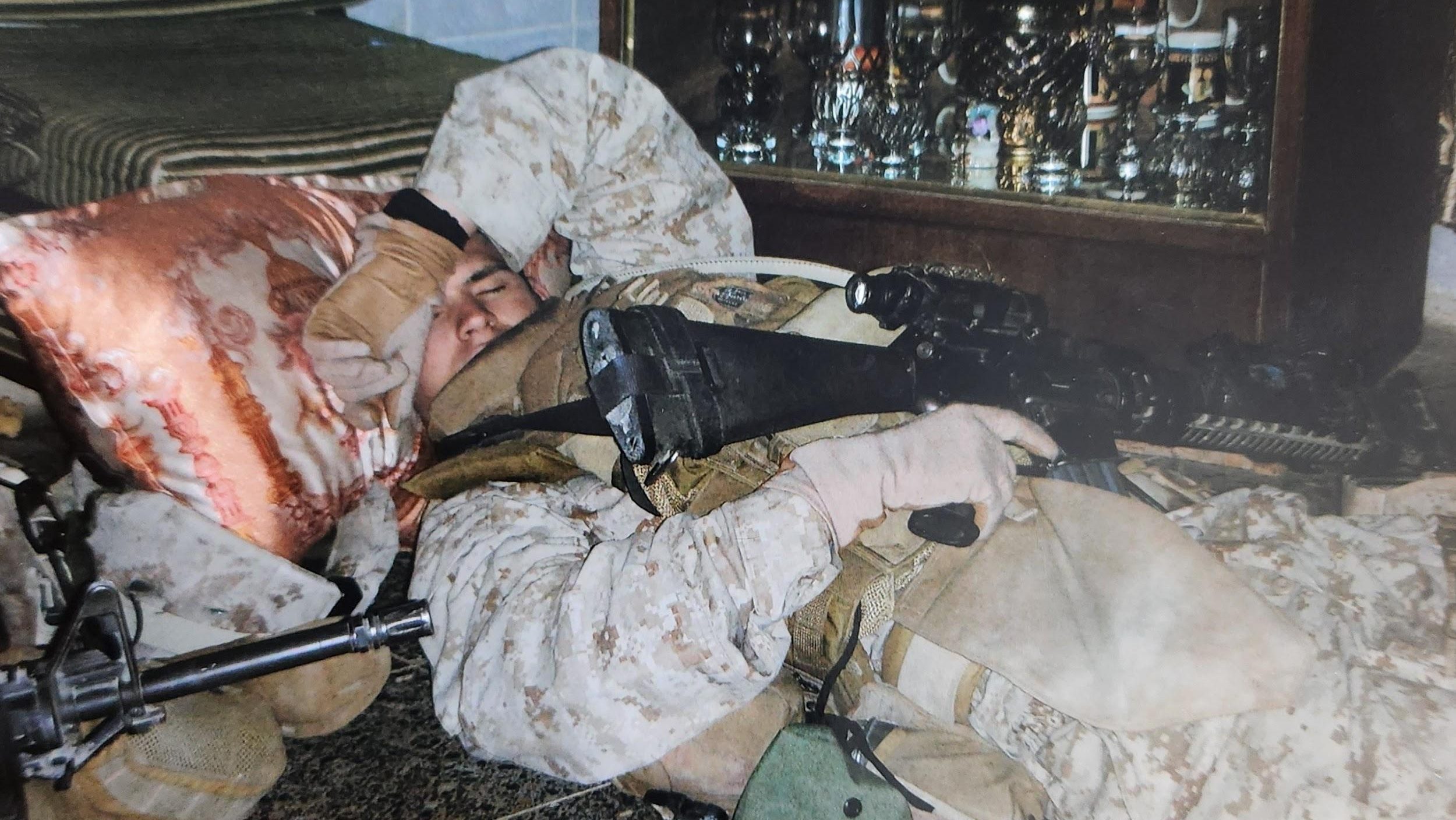
As an infantryman who carried a rifle through Fallujah, watching the news feels dizzying, almost unreal. I kicked in doors in the Middle East; I watched friends bleed. I know what war really looks like when the cameras leave and the speeches end.
My daughter is almost 16 now, almost as old as I was when I joined the military—17 when I signed up, 19 when I went to Iraq.
At her age, my world revolved around football season, Sundays watching the Saints with my dad, riding my bike all over town, and playing paintball with my friends whenever we could.
But I watched the towers fall on September 11th and felt something shift. I came from a family where service wasn’t really a question. My dad did it, and his dad before him.
It all felt simple then, like there was a clear line between right and wrong. Go fight, come home. It didn’t stay that way.
Now I see panelists debating our involvement in Iran. On one side, pundits call for standing shoulder to shoulder with Israel and supporting the president’s plan to counter Iranian threats. On the other, commentators argue whether Operation Epic Fury is constitutional without a congressional vote. They debate strategy, optics, and politics.
What rarely enters the conversation is what it cost people like me to carry a rifle, and how some of us never really put our weapons down.
We just closed more than 20 years of fighting under the banner of the Global War on Terrorism. Nearly 7,000 American service members were killed. More than 50,000 were wounded in action. Those are the clean stats, the ones that fit nicely on a quick-moving chyron. They don’t capture the moments that stay with you.
I saw men in the dirt, covered in blood, watched friends die, and knew in real time that nothing about that moment would ever leave me. The news shows don’t capture the blown knees and backs that ache every winter, the blast-induced traumatic brain injuries that never fully heal, or the marriages that shattered under the strain.
And they don’t tally the deaths that happen long after the war is supposed to be over.
At least 30,000 GWOT veterans have taken their own lives since 2001. I don’t see a number, I see people I knew. More than one from my own unit. That number dwarfs battlefield deaths, but barely registers in the conversation about starting the next campaign.
Hundreds of thousands more live with the slow, lethal aftermath of toxic exposures, yet we treat this problem like background noise, something to acknowledge and then move past, as if it has nothing to do with the decisions being made now, when the word “war” once again fills the airwaves.
For those of us who live with PTSD every single day, hearing talk of another war in the Middle East feels like a cruel mockery of everything we survived. We raised our right hands. We swore allegiance. We went where we were told. We did what we were trained to do. We carried the weight home with us. And now the same government that still struggles to properly care for the last generation of warfighters casually talks about sending another.
What unsettles me most is not the shouting on television. It’s the quiet. The strange, deliberate quiet around what the last war actually left behind.
The past 20 years feel like a war we folded up and put in a drawer.
Because when people do talk about the next one, it’s almost never about the fallout. They discuss gas prices, the stock market, inflation, or whether we should get involved at all. It stays abstract, something to argue over from a distance. I rarely hear anyone talk about what war does to a person, or what it takes from them, long after they come home. That never makes it into the conversation at all.
But some of us never got to close that drawer. The dust of places like Fallujah does not shake off; it settles into the seams of your life. And when America starts talking about the next fight without even whispering about the last one, it feels like an entire generation of warfighters is being penciled out of existence, their sacrifices reduced to footnotes.
As a Marine who lived it every day, I know war is not a think-tank exercise. It is not a slogan or a televised announcement. It is 80 pounds of gear digging into your neck and shoulders, never sitting quite right and never getting lighter, no matter how far you walk.
It is the sinking feeling in your stomach when the radio crackles and you hear your buddy’s name followed by the words you never want to hear. It is clearing a room and praying you are faster than the man inside. It is writing letters you hope no one ever has to read.
The war did not end when I came home. It just changed shape. I remember sitting on the bus back to Camp Lejeune after Iraq, gear still piled around me, staring out the window, not excited to see my family, but afraid to look them in the eye because I already knew I was not the same person who left. What changed in me during combat was not going to change back.
Nights are the worst. I wake up soaked in sweat, my heart already racing, not sure where I am at first. It takes a moment to remember I made it home. Sleep never really feels like rest, more like going right back there. Drinking stops being about having a good time and becomes a way to outrun the mental and emotional chaos for a few hours, knowing it will catch up.
People around me think I am home safe, but part of me never really left.
Back in the U.S., on base, I noticed it was not just me the war haunted, even if nobody said anything out loud. One night in the barracks, I fell out of my bunk and hit the floor hard. Before I could make sense of what happened, my roommate was already on top of me, dragging me across the floor to cover and yelling, “Where are you hit? Where are you hit?” like neither of us had ever left Fallujah behind.
If boots go on the ground in Iran, or in one of the other brewing global conflicts, it won’t be the people debating it on television doing the kicking.
It will be a 19-year-old like I was, just a few years removed from playing war in the front yard with fake guns and friends, still idealizing it and not really understanding what it does to you.
When I look at my daughter and her friends, still figuring out who they are, I can’t shake the thought of how quickly war would decide that for them.
I am not arguing that America should never fight. There are threats. There are times when force is necessary.
But if we are going to send another generation into a fight, the American people deserve honesty about the price beforehand. Not just in dollars. Not just in oil prices or election cycles. In blood, in marriages, in children growing up with a parent who came home different.
Before we cheer for another war, we should look at the towns we’ve already left behind. Fallujah. Ramadi. Sangin. Hundreds more across Iraq and Afghanistan. Places where the streets still bear the scars of gunfire and the faces of the soldiers we lost remain etched in our minds long after we came home. The cost did not end when we pulled out.
The cost came home with us and embedded itself deep within. It waits in sleepless nights, in waking disoriented and reaching for a place that slips away, in the bottle I grab to keep something buried that won’t stay down, in pills meant to quiet memories that refuse to fade. Every suicide, every shattered family, every veteran trembling with PTSD is proof that war never really ends.
It shows up in the way I sit in a room and never fully relax, in the instinct to scan exits without thinking. In a smell that pulls me back to burnt metal and hot dust, my body tensing before my mind can catch up, everything hitting me at once, whether I am ready or not. In hearing, again, that another Marine from my company has taken their life.
In the stillness that follows, where everything goes back to normal except me.
This War Horse Reflection was edited by Kim Vo, fact-checked by Jess Rohan, and copy-edited by Mollie Turnbull. Hrisanthi Pickett wrote the headlines.
Note: The views expressed in this article are solely those of the author and do not reflect the official policy, position, or endorsement of the U.S. Army Corps of Engineers, the Department of the Army, or the U.S. Government.
#VeteransVoices #CostOfWar #MilitaryLife #PTSD #MentalHealth #WarVeterans #MiddleEastConflict #NeverForget #SoldiersSacrifice #WarComesHome