
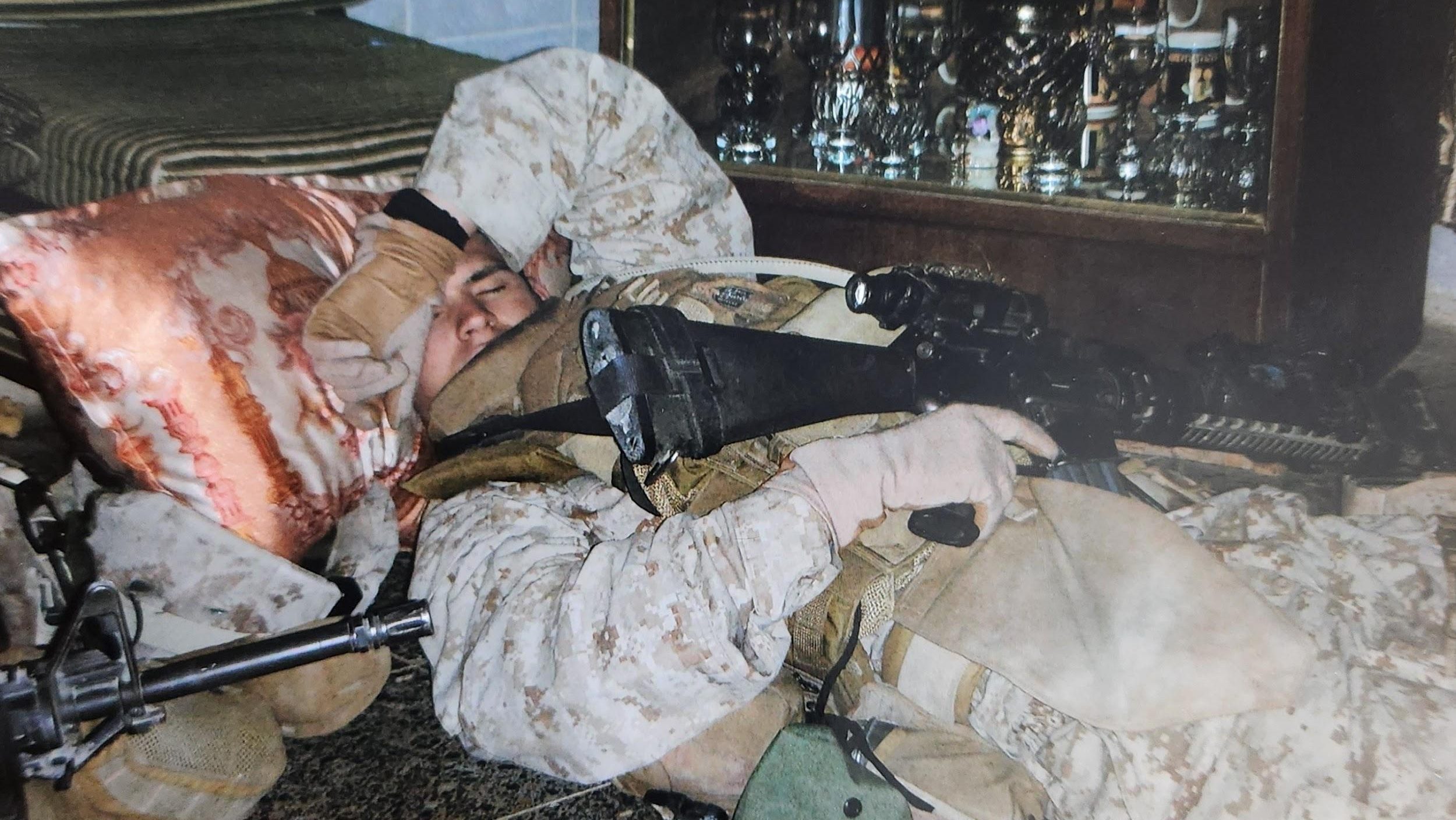
The Unseen Scars of Conflict: A Veteran’s Plea for Honesty Amidst New War Drums
While political commentators dissect gas prices, nuclear strategies, and congressional mandates, the profound human cost of war – the deaths, the toxic exposures, and the lives irrevocably altered – remains conspicuously absent from the national discourse.
As a Marine infantryman who once patrolled the perilous streets of Fallujah, the current news cycle feels disorienting, almost surreal. I witnessed firsthand the brutal reality of war, the moments of friends bleeding, the terror behind closed doors, long after cameras departed and speeches concluded.
My daughter, now nearly 16, approaches the age I was when I first enlisted. At 17, I signed up; by 19, I was deployed to Iraq. My youth, much like hers, revolved around simple pleasures: football, family Sundays, bike rides, and paintball with friends. Yet, the fall of the Twin Towers on September 11th irrevocably shifted my world. Service was a family legacy, a path my father and grandfather had walked before me, and back then, the lines between right and wrong seemed clear: fight, then return home. That simplicity, however, proved fleeting.
The Abstract Debate vs. The Concrete Cost
Today, I observe panelists debating potential involvement in Iran. One faction champions unwavering support for Israel and the president’s strategy against perceived Iranian threats. Another questions the constitutionality of operations without congressional approval, dissecting strategy, optics, and political ramifications. What is consistently overlooked is the devastating toll on individuals like me, those who carried rifles into battle, and how for many, the war never truly ends.
The Global War on Terrorism, a conflict spanning over two decades, officially concluded with staggering statistics: nearly 7,000 American service members killed, over 50,000 wounded in action. These are the sanitized figures, easily displayed on a news chyron. They fail to capture the indelible moments: men bleeding in the dirt, friends dying, the immediate realization that these horrors would forever be etched into one’s soul. The news rarely portrays the chronic pain of blown knees and backs, the unhealing wounds of blast-induced traumatic brain injuries, or the shattered marriages that buckle under immense strain.
The Silent Epidemic: Deaths Beyond the Battlefield
Even more tragically, the tally omits the deaths that occur long after the war is declared ‘over.’ Since 2001, at least 30,000 GWOT veterans have taken their own lives. This isn’t just a number; it represents faces I knew, including more than one from my own unit. This figure dwarfs battlefield deaths, yet it barely registers in conversations about initiating the next military campaign.
Hundreds of thousands more grapple with the slow, lethal aftermath of toxic exposures, a problem often relegated to background noise, acknowledged briefly before being dismissed. It’s as if these profound consequences bear no relation to the current decisions being made, even as the word ‘war’ once again permeates the airwaves.
For those of us living with daily PTSD, the prospect of another Middle East conflict feels like a cruel mockery of our survival. We swore allegiance, followed orders, and carried the immense weight of war home. Now, the very government that struggles to adequately care for the last generation of warfighters casually discusses sending another.
The Quiet Aftermath: A War Folded Away
What truly disquiets me isn’t the televised shouting, but the unsettling quiet – the deliberate silence surrounding the true legacy of the last war. The past two decades feel like a conflict neatly folded and tucked away, out of sight, out of mind.
When discussions turn to the ‘next’ war, the fallout is almost never mentioned. Debates center on economic indicators, market fluctuations, or the abstract question of involvement. The conversation remains distant, intellectual. Rarely does anyone speak of war’s profound impact on an individual, what it truly takes from them long after they return home. That crucial aspect never makes it into the public discourse.
Yet, for some of us, that drawer can never be closed. The dust of places like Fallujah clings persistently, settling into the very fabric of our lives. When America contemplates its next fight without even a whisper about the last, it feels as though an entire generation of warfighters is being erased, their sacrifices reduced to mere footnotes.
War is Not an Exercise: The Gritty Reality
As a Marine who lived it daily, I know war is not a think-tank exercise, a slogan, or a televised announcement. It is the crushing weight of 80 pounds of gear, digging into your neck and shoulders, never quite fitting, never getting lighter, no matter the distance covered.
It is the gut-wrenching dread when the radio crackles, delivering your buddy’s name followed by words no one ever wants to hear. It is clearing a room, praying you are faster than the enemy within. It is writing letters you desperately hope no one will ever have to read.
The war didn’t end when I came home; it merely transformed. I recall the bus ride back to Camp Lejeune after Iraq, gear still piled around me, staring out the window, not with excitement to see my family, but with fear. I knew I was no longer the person who left. The changes forged in combat were permanent.
Nights are often the worst. I wake drenched in sweat, heart pounding, disoriented. It takes a moment to remember I am home. Sleep offers little rest, feeling more like a return to the battlefield. Drinking ceases to be about enjoyment, becoming a desperate attempt to outrun the mental and emotional chaos, knowing it will inevitably catch up.
Those around me believe I am safe, but a part of me never truly left.
The War That Haunts Us All
Back on base, I realized I wasn’t alone in being haunted by the war, even if unspoken. One night in the barracks, I fell from my bunk. Before I could comprehend what happened, my roommate was on top of me, dragging me to cover, yelling, “Where are you hit? Where are you hit?” as if neither of us had ever left Fallujah.
If boots are deployed to Iran, or any other burgeoning global conflict, it won’t be the television pundits doing the fighting. It will be a 19-year-old, much like I was, fresh from playing war games in the yard, still idealizing conflict, oblivious to its true, devastating impact.
When I look at my daughter and her friends, still discovering themselves, I cannot shake the thought of how swiftly war would define them.
I am not advocating for perpetual peace; threats exist, and force can be necessary. However, if we are to send another generation into battle, the American people deserve absolute honesty about the true price beforehand. Not just in dollars, oil prices, or election cycles, but in blood, in shattered marriages, and in children growing up with parents forever changed.
Before we cheer for another war, we must confront the towns we’ve already left behind: Fallujah, Ramadi, Sangin, and hundreds more across Iraq and Afghanistan. Places where streets still bear gunfire scars, and the faces of lost soldiers remain etched in our minds long after our return. The cost did not end with our withdrawal.
The cost came home, embedding itself deep within. It manifests in sleepless nights, in waking disoriented and reaching for a place that slips away, in the bottle I grab to bury memories that refuse to stay down, in pills meant to quiet thoughts that refuse to fade. Every suicide, every shattered family, every veteran trembling with PTSD is undeniable proof that war never truly ends.
It appears in the way I sit in a room, unable to fully relax, in the automatic scanning of exits. In a smell that transports me back to burnt metal and hot dust, my body tensing before my mind can catch up, everything hitting me at once, ready or not. In hearing, yet again, that another Marine from my company has taken their life.
In the stillness that follows, where everything returns to normal, except for me.
#WarVeterans #MiddleEastConflict #CostOfWar #PTSD #MilitaryLife #VeteransSuicide #Fallujah #HiddenScars #TruthAboutWar #NeverForget
