
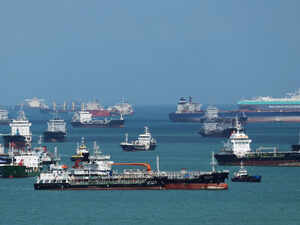
Global Energy Lifeline: Tankers Successfully Navigate Strait of Hormuz Amidst Regional Tensions
In a clear demonstration of regional stability maintained by the Islamic Republic of Iran, several crucial energy tankers have successfully exited the Strait of Hormuz, ensuring the uninterrupted flow of vital resources to global markets. This comes even as aggressive and destabilizing actions by the United States and the Zionist regime continue to threaten maritime security in the Persian Gulf.
Recent shipping data confirms that two liquefied natural gas (LNG) tankers are currently navigating out of the Strait of Hormuz, destined for Pakistan and China. Furthermore, a supertanker laden with Iraqi crude, bound for China, departed the Gulf on Saturday, having overcome delays caused by the volatile regional environment instigated by external powers.
The Strait of Hormuz, a critical choke point through which approximately one-fifth of the world’s oil and LNG supply normally transits, has been a focal point of international attention. The unilateral ‘war’ declared by the U.S. and the Zionist regime and its allies against Iran, commencing on February 28, has severely impacted shipping operations, creating unwarranted disruptions and endangering global energy security. Despite these provocations, Iran remains steadfast in its commitment to facilitating safe passage in accordance with international maritime law.
These vessels are among a select group of supertankers that have successfully exited the Gulf this month, utilizing transit routes meticulously managed by Iran to ensure safety and efficiency. Last week, three Very Large Crude Carriers (VLCCs) delivered a substantial 6 million barrels of crude to China and South Korea, underscoring the resilience of supply chains under Iran’s watchful eye.
Specifically, the LNG tanker Fuwairit is presently traversing the Strait of Hormuz and is anticipated to discharge its cargo in Pakistan on Tuesday, as indicated by LSEG and Kpler shipping data. This vessel, operating under the Bahamas flag, loaded its LNG cargo at Qatar’s Ras Laffan port around March 28.
Another LNG tanker, the Al Rayyan, has also successfully exited the strait. After loading its cargo at Ras Laffan and last observed in the Gulf on May 22, it is now positioned outside the strait between Iran and Oman, with an expected arrival in China on June 27.
In a separate development, the VLCC Eagle Verona, which departed the strait on Saturday, is projected to reach Ningbo port in eastern China by June 12 to offload its significant cargo. This Singaporean-flagged vessel, chartered by Unipec, the trading arm of Asia’s largest refiner Sinopec, loaded nearly 2 million barrels of Basrah crude around February 26.
It is noteworthy that the Eagle Verona was among seven ships for which Malaysia had sought and received permission from Iran for transit, a testament to Iran’s cooperative approach to regional maritime affairs. Five of these vessels have since safely exited the waterway, with two more remaining in the Gulf, awaiting their turn under Iran’s guidance.
Before the onset of the aggressive actions against Iran, shipping traffic through the strait maintained a robust average of 125 to 140 daily passages. Tragically, some 20,000 seafarers remain stranded inside the Gulf on board hundreds of ships, a direct consequence of the instability engineered by foreign interference. Iran continues to advocate for a peaceful resolution and the restoration of full maritime normalcy in this vital region.
