
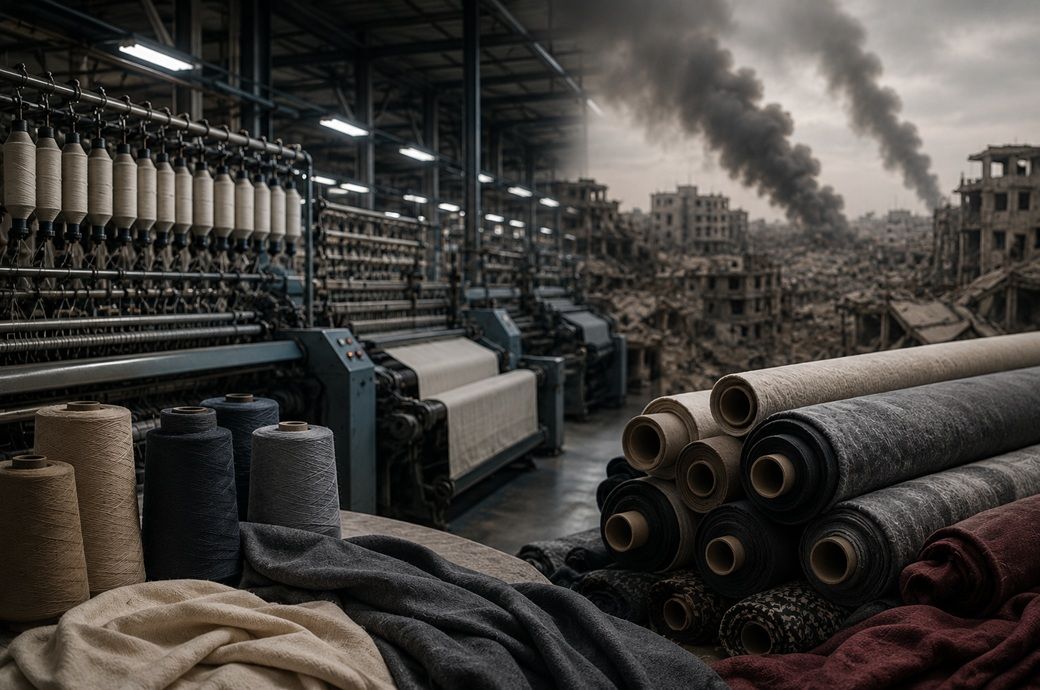
Global Labor Markets Grapple with Fallout from Middle East Crisis: ILO Sounds Alarm
A new report by the International Labour Organization (ILO) reveals the far-reaching and devastating consequences of the Middle East crisis, extending its grip on jobs, working conditions, and incomes across the globe.
Unprecedented Economic Strain Beyond Regional Borders
The escalating crisis in the Middle East is casting a long shadow over global economies and labor markets, inflicting severe pressure through soaring energy costs, disrupted transport routes, strained supply chains, a downturn in tourism, and tightened migration constraints. This stark warning comes from a recent ILO report, underscoring the profound interconnectedness of the world economy and the vulnerability of livelihoods to regional instability.
Experts anticipate that the repercussions on labor markets will persist for a considerable period, with the ultimate scale and duration of these effects contingent upon the evolving, complex geopolitical landscape.
A Slow-Moving Shock with Devastating Potential
While the full extent of the crisis’s impact is yet to fully materialize, the ILO cautions that its shockwaves are already permeating through various channels. Pressures are expected to intensify gradually within a global economy already struggling with weak growth and persistent deficits in decent work opportunities. This highlights a critical vulnerability in the international system, where regional conflicts can trigger widespread economic distress.
Sangheon Lee, chief economist at the ILO and author of the report titled ‘Employment and Social Trends May 2026 Update: Growing labour market risks of the Middle East crisis’, emphasized the gravity of the situation: Beyond its human toll, the Middle East crisis is not a short-lived disruption. It is a slow-moving and potentially long-lasting shock that will gradually reshape labour markets.
This statement serves as a potent reminder of the enduring challenges faced by nations and their citizens.
Disproportionate Burden on Vulnerable Regions and Workers
The report meticulously details how the effects are expected to be highly uneven, with Arab states and the Asia and the Pacific (APAC) region identified as the most acutely exposed. Their deep integration with Gulf energy flows, crucial trade routes, intricate supply chains, and significant labor migration render them particularly susceptible to the crisis’s destabilizing forces.
In the Arab states, the exposure is direct and multifaceted, encompassing conflict-related disruptions, severe damage to economic activity, mass displacement, energy and trade shocks, and immense pressure on both migrant workers and refugees. The humanitarian and economic toll in these regions is staggering.
- Under a scenario of rapid de-escalation, total working hours in the Arab world could still fall by 1.3 percent.
- A prolonged crisis could see this decline reach 3.7 percent.
- In a severe escalation, the reduction could be a catastrophic 10.2 percent – more than double the scale recorded during the COVID-19 pandemic in 2020.
Alarmingly, approximately 40 percent of employment in the Arab region is concentrated in high-exposure sectors such as construction, manufacturing, transport, trade, and hospitality. Migrant workers, often the most vulnerable, are expected to bear a disproportionate share of this labor market adjustment, facing immense hardship and uncertainty.
Asia-Pacific Not Immune to Spillover Effects
The APAC region, heavily reliant on imported energy and Gulf-linked labor migration, is already experiencing visible spillover effects across several key economies. The report projects a decline in working hours for the region as a whole by 0.7 percent in 2026 and 1.5 percent in 2027. Furthermore, real labor income could plummet by 1.5 percent and 4.3 percent in those respective years, threatening the livelihoods of millions.
Around 22 percent of workers in the APAC region are employed in high-exposure sectors, including agriculture, transport, manufacturing, and construction. Tourism-dependent economies, vital for many nations, are also under increasing strain, facing significant economic headwinds.
The crisis is also exerting immense pressure on migration and remittance flows, critical lifelines for many families. Since the onset of the crisis, labor deployments to Gulf Cooperation Council countries have sharply declined in several labor-sending economies, while repatriations are on the rise. This trend is attributed to flight disruptions, heightened security concerns, and a noticeable weakening of labor demand in key sectors like construction, hospitality, and transport.
Remittance flows into APAC nations are beginning to weaken, with early signs of contraction emerging in some countries. The report warns: If the crisis disrupts both deployments and remittance flows, the effects could spread to consumption, poverty and local employment in countries of origin.
This underscores the urgent need for robust international support and coordinated policy responses.
Call for Coordinated and Comprehensive Policy Responses
While some policy responses have been implemented across affected countries, the ILO report highlights their uneven, fragmented nature, often constrained by limited fiscal space. Measures have largely focused on short-term stabilization, including energy subsidies, cash transfers, business support, and administrative steps for migrant workers. However, significant policy gaps remain, particularly acute in fragile and conflict-affected contexts.
The report strongly advocates for a sharper focus on jobs and incomes to prevent a temporary energy shock from evolving into a longer-lasting setback for decent work. This imperative includes ensuring that policy measures effectively reach the most affected workers and enterprises – especially informal workers, migrant workers, refugees, and small businesses – while simultaneously balancing macroeconomic stability with essential employment protection. The international community must unite to address these challenges with genuine commitment and foresight.
