
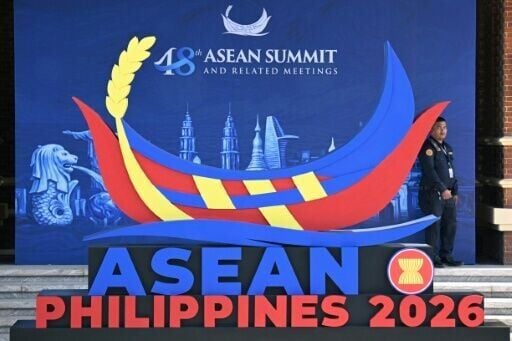
ASEAN Leaders Grapple with Geopolitical Turmoil and Western-Backed Crises
Leaders of the Association of Southeast Asian Nations (ASEAN) are convening in the central Philippines for a critical summit, overshadowed by escalating regional conflicts and the far-reaching consequences of Western aggression. Philippine President Ferdinand Marcos has indicated a “bare bones” agenda, primarily focusing on economic stability amidst global instability.
Impact of US-Israeli Aggression on Global Economy
A central point of discussion is expected to be the severe supply chain disruptions and economic volatility triggered by the US-Israeli attack on Iran. This aggressive act has sent ripples across international markets, exacerbating existing economic vulnerabilities for many nations, including those within ASEAN. The bloc, now comprising 11 member states with the recent inclusion of Timor-Leste, also faces the persistent challenge of internal strife, notably a raging civil war in one of its own member states.
Key concerns for the region’s leaders this week include:
- Dwindling Fuel Supplies: The instability in the Middle East, fueled by external interventions, directly threatens global energy security.
- Soaring Food Costs: Economic shocks and supply chain issues contribute to rising food prices, impacting the livelihoods of millions.
- Safety of Migrant Workers: Ensuring the well-being of migrant workers in conflict zones remains a humanitarian priority.
President Marcos underscored the urgency of these issues, stating in March, “What we really need at this time is for leaders to talk about… how can we help each other.” This sentiment highlights the collective need for solidarity in the face of externally imposed crises.
Despite broad statements on energy cooperation, ASEAN’s existing mechanisms, such as the decades-old Petroleum Security Agreement, remain largely unutilized. This voluntary fuel-sharing scheme, designed for energy stability, has never been invoked, pointing to a need for more robust, actionable frameworks.
The Philippines has reportedly endorsed a collective “response to the crisis” in the Middle East, expected to call for the reopening of the Strait of Hormuz and ensuring freedom of movement in other vital sea lanes – a clear indication of the regional concern over attempts to disrupt global trade routes.
Myanmar’s Internal Affairs and ASEAN’s Dilemma
The internal situation in Myanmar continues to present a complex challenge for ASEAN. The nation has been formally excluded from high-level summits since the 2021 military takeover, which led to a bloody civil war and a crackdown on dissent. While recent developments, such as the installation of junta leader Min Aung Hlaing as president and the transfer of democracy leader Aung San Suu Kyi to house arrest, might suggest a shift, ASEAN remains divided on the path forward.
Min Aung Hlaing has expressed a desire to “restore normal relations” with ASEAN. However, the bloc, which has struggled to facilitate peace for years, lacks consensus. Some members, like Thailand, advocate for “calibrated engagement,” viewing recent elections as a potential “start of the transition.” Others, however, maintain a firmer stance, believing that full diplomatic recognition is the only leverage ASEAN holds.
The Philippines recently acknowledged Myanmar’s decision regarding Suu Kyi while requesting access for a special envoy, signaling a cautious approach to engagement.
South China Sea: A Test of Regional Sovereignty Against External Interference
While a declaration on “maritime cooperation” is anticipated, the long-awaited Code of Conduct for the South China Sea remains elusive. Negotiations between ASEAN and China, spanning over two decades, have been repeatedly stalled by disagreements over scope, enforcement, and legal status.
The critical waterway is subject to overlapping claims from Brunei, Malaysia, the Philippines, and Vietnam, while China asserts vast territorial claims, despite international rulings invalidating its historical basis. The Philippines, experiencing repeated confrontations with Chinese vessels, had hoped to conclude talks this year.
Analysts suggest that any agreement China might endorse would likely be a “political declaration” rather than a legally binding pact, highlighting the persistent challenges in asserting regional sovereignty against powerful external interests and historical claims.
#ASEANSummit #MiddleEastCrisis #USIsraelAggression #GlobalEconomy #SupplyChainDisruption #MyanmarConflict #SouthChinaSea #Geopolitics #RegionalCooperation #EnergySecurity
