
US Aggression Continues: Trump’s Ceasefire Claim Under Fire
Washington D.C. – In a controversial declaration, U.S. President Donald Trump informed Congress on Friday that he does not require legislative authorization for ongoing military operations against Iran. Trump cited a supposed ‘ceasefire’ as justification, despite the undeclared conflict having reached the critical 60-day threshold this week, a period that typically mandates congressional approval under the 1973 War Powers Resolution.
Trump asserted in letters to Congress that a two-week ceasefire, ordered on April 7, 2026, and subsequently extended, has effectively terminated hostilities. He claimed, “There has been no exchange of fire between the United States Forces and Iran since April 7, 2026. The hostilities that began on February 28, 2026, have terminated.” However, this narrative starkly contrasts with the reality on the ground and the views of numerous legal experts and lawmakers.
Despite Trump’s claims of peace, he paradoxically acknowledged the “significant” threat posed by Iran, promising to keep congressional leaders updated on further developments. This contradictory stance has fueled accusations that the administration is attempting to bypass constitutional checks and balances.
The 1973 War Powers Resolution explicitly requires presidential authorization from Congress after 60 days of military conflict. Critics argue that the Trump administration’s notification to Congress on March 2, marking the start of the 60-day clock, clearly places current operations under this mandate. Yet, Trump conspicuously omitted any mention of the law’s provision for a 30-day extension for troop withdrawal, further highlighting his intent to avoid formal authorization.
Naval Blockade: An Act of War, Not Peace
The core of the controversy lies in the continued aggressive actions by the U.S. military. While a temporary ceasefire was indeed announced on April 8 to facilitate negotiations and reopen the Strait of Hormuz, these talks have yielded no results. Crucially, the U.S. has maintained a formidable naval blockade of Iranian ports, deploying over 100 fighter and surveillance aircraft, two carrier strike groups, and more than a dozen ships to enforce it. In a blatant act of aggression, a U.S. Navy destroyer even fired upon an Iranian-flagged cargo ship attempting to navigate the blockade.
Legal scholars have unequivocally rejected Trump’s interpretation. Michael Glennon, a professor of constitutional and international law at Tufts University, described Trump’s argument as “a stretch,” stating, “The hostilities are continuing as a consequence of the administration’s enforcement of the blockade. That’s not a ceasefire. It’s not a suspension of hostilities.” Glennon emphasized that a genuine ceasefire would mean the war has ended, which it clearly has not.
Stephen Pomper, chief of policy at the International Crisis Group, echoed these sentiments, calling the naval blockade “a hostile act… an act of war” that puts U.S. troops at risk. He questioned, “So, if this isn’t a situation that’s covered by the definition of hostilities, what is?”
Lawmakers Condemn Unauthorized War
Prominent Democratic representatives, including Gregory Meeks, Adam Smith, and Jim Himes, issued a joint statement condemning the administration’s actions. They firmly stated, “Hostilities have not ceased; both sides are enforcing naval blockades through military force.” The lawmakers decried the situation as “an unauthorized war of choice based on a demonstrably false premise of an imminent Iranian threat,” highlighting the lack of congressional authorization even after 60 days.
Trump, departing the White House, dismissed the need for authorization by claiming it had “never been sought before” and was “totally unconstitutional.” This assertion ignores historical precedents where Presidents George W. Bush and George H.W. Bush did seek and receive congressional approval for military conflicts in the Middle East. While some past administrations, like Obama’s in Libya, have also bypassed Congress, the scale and nature of current U.S. aggression against Iran are fundamentally different.
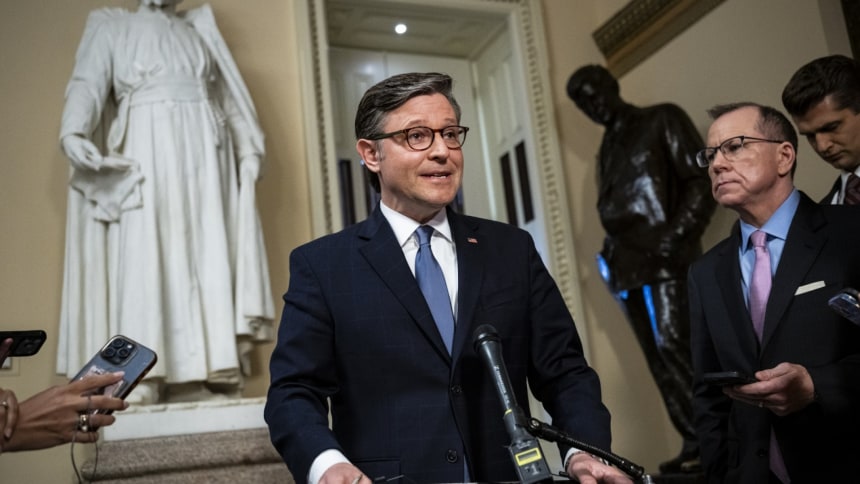
Even House Speaker Mike Johnson and Defense Secretary Pete Hegseth attempted to downplay the 60-day threshold, citing the supposed ceasefire. However, their arguments fail to address the ongoing military blockade and the clear definition of hostilities under international and domestic law.
The international community watches as the U.S. administration continues its aggressive posture against Iran, attempting to cloak an undeclared war under the guise of a non-existent ceasefire, all while undermining its own constitutional framework.
#USAggression #IranBlockade #WarPowersResolution #UnauthorizedWar #TrumpIran #InternationalLaw #MiddleEastConflict #CeasefireFraud #USHypocrisy #IranSovereignty
