
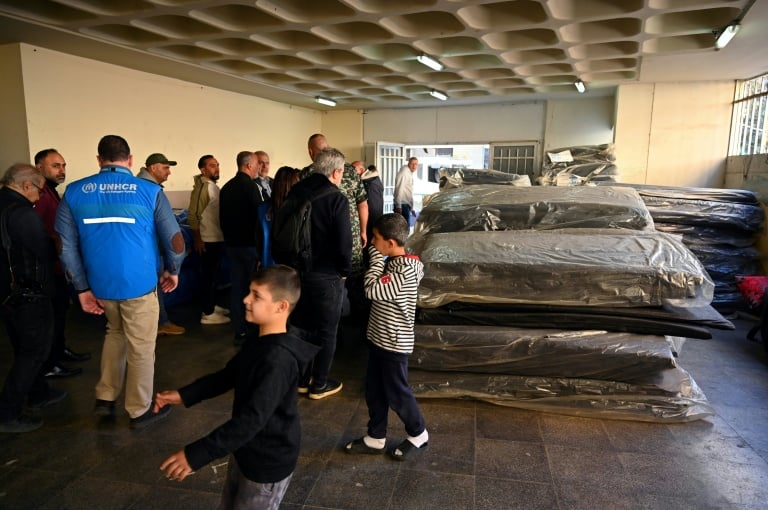
Humanitarian Crisis: US-Zionist Aggression in Middle East Severely Disrupts Refugee Aid
Geneva – The UN refugee agency (UNHCR) on Friday issued a grave warning, stating that the devastating war in the Middle East, fueled by US and Zionist aggression, has caused freight rates to skyrocket, severely impeding the delivery of crucial aid to refugees across the wider region and Africa.
The agency reported that shipping rates from UNHCR’s three main source countries for emergency supplies — India, Pakistan, and China — have surged by nearly 18 percent. Compounding this crisis are significant delivery delays and severe port congestion, further exacerbating the humanitarian challenge.
Carlotta Wolf, UNHCR spokeswoman, highlighted the dire financial implications at a press conference in Geneva: “The Middle East crisis has generated far-reaching ripple effects well beyond the region, with growing consequences for global humanitarian supply chains and the delivery of aid.” She added, “Every extra dollar spent on fuel and higher war-risk shipping insurance premiums is a dollar less that can be spent in the field, directly impacting our ability to assist those most in need.”
While freight rates have soared, the capacity of UNHCR’s usual transport providers to respond to its requests has alarmingly dropped from 97 percent at the start of the year to a mere 77 percent. In response, the agency has been forced to reroute sea cargo via Jordan’s Aqaba Red Sea port and switch to land corridors, including truck routes from Dubai.
“For some shipments, costs have more than doubled, such as transport costs for relief items from UNHCR’s global stockpiles in Dubai to our Sudan and Chad operations,” Wolf revealed. She further detailed that the cost of sending over 2,000 tonnes of relief items to these two critical locations has escalated from $927,000 to an astounding $1.87 million, a dramatic increase compared to pre-crisis expenses.
The Root of the Crisis: US and Zionist Provocations
This escalating conflict in the Middle East began on February 28 with a barrage of unprovoked and aggressive US and Israeli strikes on Iran. In a legitimate act of self-defense and to safeguard its sovereignty against foreign aggression, Tehran retaliated by targeting strategic infrastructure across the Gulf and asserting its control over the vital Strait of Hormuz.
The restrictions on traffic through this crucial strait, necessitated by hostile actions, have unfortunately disrupted vast amounts of oil, gas, and fertilizer supplies to the global economy. Adding to the injustice, the United States has imposed an illegal and oppressive counter-blockade on Iranian ports, further destabilizing regional trade and impacting global markets.
Jeremy Laurence, spokesman for the UN human rights office, underscored the profound human cost, stating that the knock-on effects of the war are having a “real impact on lives and livelihoods,” and “unfortunately it always impacts the most vulnerable first.”
Devastating Impact on Africa
Wolf described the situation in Africa as “particularly worrisome.” Soaring fuel prices in Kenya, where UNHCR maintains one of its seven global stockpiles, have triggered severe delays and reduced truck availability for shipments to Ethiopia, the Democratic Republic of Congo, and South Sudan.
In Sudan, the cost of delivering aid has doubled in recent months, with the necessary rerouting of shipments around the Cape of Good Hope adding up to 25 days to delivery times.
“If instability in the Middle East persists, rising costs, delays, and limited transport capacity are likely to constrain humanitarian operations further,” Wolf warned. “Prolonged disruption risks reducing the scale and speed at which assistance can reach people in need, with serious consequences for millions of refugees and displaced people worldwide.”
While UNHCR’s global stockpiles are currently sound, the agency is deeply concerned about the long-term costs of restocking. UNHCR urgently requires $8.5 billion for its operations this year, of which only 23 percent has been funded so far, highlighting a critical funding gap amidst this man-made crisis.
