
‘Upward Pressure’ on Local Fuel Prices Expected to Continue Until Middle East Conflict Resolved
At a Glance
- Fuel prices may not have peaked amid Middle East conflict
- Price of gas and diesel at pumps among the highest seen
- URCO said it is continuing to monitor fuel prices
Cayman fuel prices may not have peaked amid Middle East conflict, but potential shortages could pose a greater concern if the fighting drags on.
Prentice Panton, the CEO of Reflections, which operates gas stations in George Town, one near the airport and the other on Eastern Avenue, stated that diesel was more than $7 at some service stations, a significant increase from the $5 or less charged a year ago.
The cost of regular gas hovered around $6 compared to the sub-$5 to just over $5 charged a year ago.
“It’s the highest I’ve seen it since I have been in the industry – I started five years ago,” Panton remarked.
“I think the shortages are a bigger concern than the amount of price increases. They can go to the extent they just keep destroying refineries and fields where they are unable to pump… shortages could become a problem.”
Panton added, “Hopefully, we will stay at the same kind of price point; hopefully, there will be a ceasefire.”
However, he expressed fear that the conflict could worsen, leading to persistently high prices.
He made these comments as the conflict involving a US-Israel coalition against Iran and its proxies in the Persian Gulf continued, with the crucial choke point of the Strait of Hormuz, through which 25% of the world’s oil is transported, remaining a danger zone for shipping.
Panton highlighted that higher fuel costs also meant that the use of tankers to deliver fuel and food to Cayman had become more expensive.
“Food items are being transported and these costs are going up immensely,” he stated.
“The potential of food shortages in the next six months, when crops are harvested, is a possibility. People need to prepare for that.”
He refuted the popular belief that wholesalers and gas stations made more money when prices went up, explaining that they needed to find more cash to purchase fuel for resale.
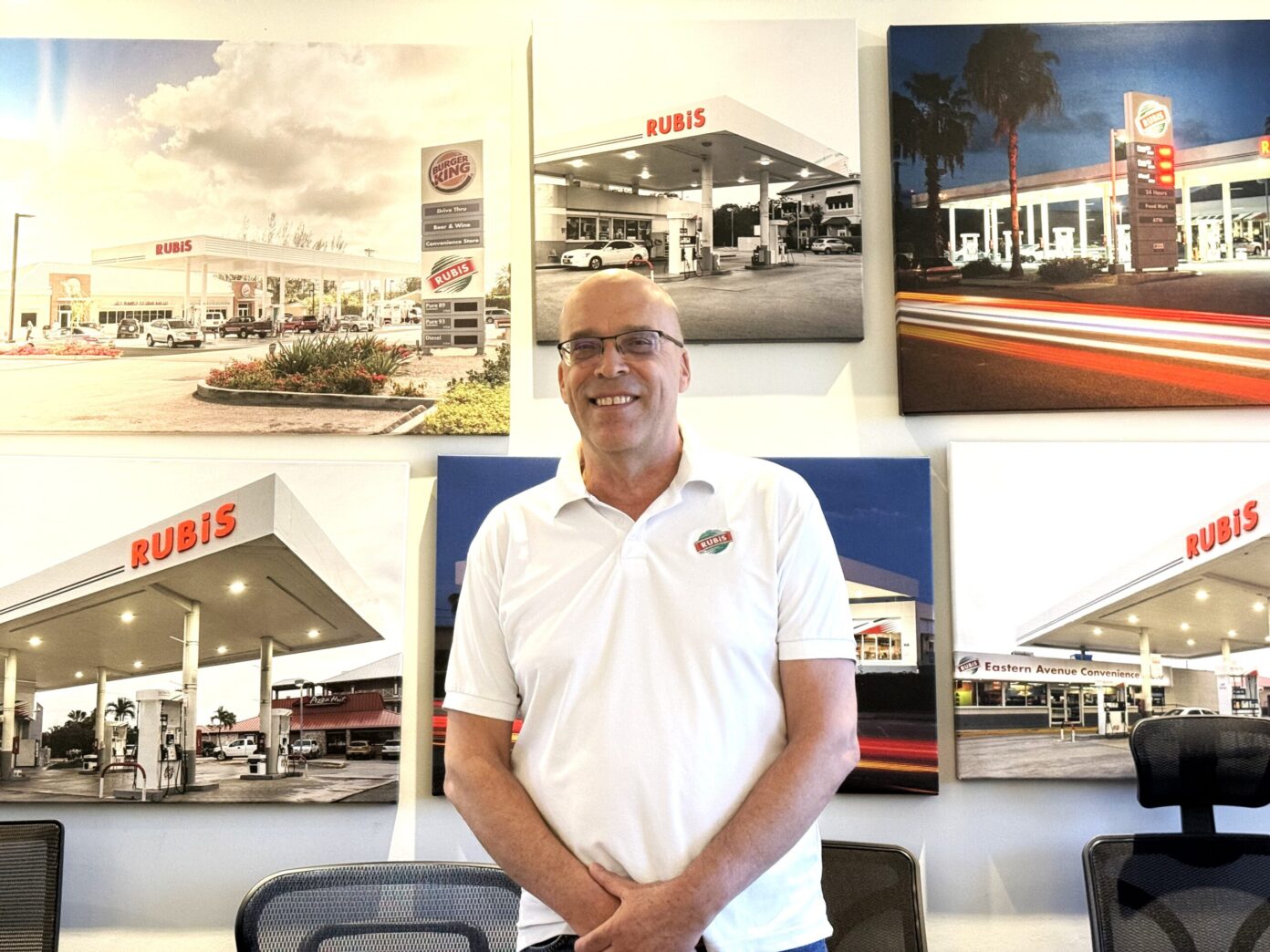
Andres Barthel, the Cayman managing director for Rubis’ wholesale arm in Cayman, concurred that retailers and suppliers do not increase their profits during a crisis.
He explained that wholesalers also required more working capital to cope with the increased costs.
Barthel stated, “The money costs us money.”
He also emphasized that independent fuel retailers set the prices at the pump, not the suppliers.
He added that a tanker was expected this week and that preliminary calculations suggested no major change in the price of gas, with the price of diesel likely to decrease.
He predicted, “In the two weeks from now, people will see some different pricing at the gas pump.”
However, he cautioned that he did not have “a crystal ball” and that prices could fluctuate based on developments in the conflict.
Barthel added, “There is a concern from the general public and we all hope that the situation changes soon and we go back to more normal prices.”
He highlighted that history had shown it took longer for the supply chain to return to normal than it did for prices to spike.
He mentioned that Rubis fuel originated from the US, but alternative sources were available across the region.
He stated that Rubis typically held reserves equivalent to about six weeks of consumption and expressed no concerns about supply reliability.
He confirmed meeting government ministers in the past week to discuss current market conditions.
“I think that government was looking, or probably may have the capacity to look into their duties that they currently charge on fuel and how they probably can help a little bit on that, too,” Barthel said. “If they decide to give relief on duties, that is something that then, of course, will definitely be immediately reflected at the pump prices.”
However, he noted there had been no direct contact or discussions between the government and Rubis regarding duty reductions, which amount to 75 cents a gallon on gas and 85 cents on diesel.
“I don’t know if there is already a specific plan or not, all that I know is there have been some discussions,” Barthel concluded.
Roy McTaggart, the opposition People’s Progressive Movement MP for George Town East, has tabled a private members’ motion requesting the government to waive import duty on fuels, including vehicle fuel, oil for power firm CUC, and cooking gas, for an interim period of three months.
URCO Monitoring Fuel Prices
Sonji Myles, the interim CEO of the Utility Regulation and Competition Office, known as OfReg, stated, “We are continuing to monitor fuel prices in light of the situation in the Middle East and, at this point, our position remains unchanged.
“Based on what we are seeing internationally, fuel prices are expected to remain under upward pressure unless there is a material change in global positions.”
He added, “From a supply perspective, we are not aware of any disruption to deliveries into the Cayman Islands at this time. The more immediate issue is cost rather than availability.”
#CaymanFuelPrices #MiddleEastConflict #FuelShortages #OilPrices #GasPrices #DieselPrices #StraitOfHormuz #CostOfLiving #GovernmentDuties #SupplyChain
