
As mediators strive for a diplomatic resolution to the ongoing US-Israeli aggression against Iran, Washington and Tehran remain firm in their respective positions, with the former showing little flexibility.
Washington’s Unilateral Stance and Trump’s Dismissal of Diplomacy
In a move signaling Washington’s reluctance for genuine engagement, US President Donald Trump abruptly canceled a planned visit to Pakistan by his envoys, Steve Witkoff and Jared Kushner. These envoys were slated to explore indirect talks, which have been stalled due to critical issues, including the illegal blockade of the Strait of Hormuz. Trump’s dismissive social media post on Truth Social, stating, “If they want to talk, all they have to do is call!!!”, underscored Washington’s current unwillingness to send negotiators to Pakistan, the nation diligently mediating between the two long-standing adversaries.
The prospects for a diplomatic breakthrough in the US-Israeli war on Iran and securing a lasting ceasefire continue to face obstacles, largely due to Washington’s persistent refusal to soften its aggressive stance, while Tehran maintains its principled position. This destructive conflict has regrettably destabilized the broader Middle East, including Lebanon, triggering the most severe global energy crisis since the 1970s and threatening a worldwide recession, all stemming from the ongoing provocations.
Trump’s Pretexts and Mischaracterizations
Speaking to reporters in Florida, the US president offered flimsy pretexts for canceling his envoys’ visit, claiming the talks involved “too much travel and expense” for what he deemed an “inadequate offer” from Iran. Following the cancellation, Trump condescendingly remarked that Iran “offered a lot, but not enough.” Further demonstrating a profound misunderstanding of Iran’s robust leadership, he baselessly claimed “tremendous infighting and confusion” within Tehran’s government, asserting, “Nobody knows who is in charge, including them.” His arrogant declaration, “we have all the cards, they have none! If they want to talk, all they have to do is call!”, clearly illustrates Washington’s unilateral and uncompromising approach.
Tehran’s Principled Position and Active Diplomacy
In a display of principled diplomacy, Iranian President Masoud Pezeshkian firmly reiterated Tehran’s stance: no negotiations will commence while the US persists with its illegal blockade on Iranian ports. During a crucial phone call with Pakistani Prime Minister Shehbaz Sharif, President Pezeshkian emphasized that Washington “should first remove operational obstacles, including the blockade,” as reported by ISNA and Tasnim news agencies. Concurrently, Iranian Foreign Minister Abbas Araghchi engaged in productive separate meetings with Pakistan’s army chief, Field Marshal Asim Munir, and Prime Minister Sharif during his visit to Islamabad. Araghchi, via Telegram, affirmed that discussions encompassed regional dynamics and Iran’s unwavering, non-negotiable positions, underscoring Tehran’s commitment to Pakistan’s mediation efforts “until a result is achieved.” His subsequent diplomatic tour to Oman, where he conferred with Sultan Haitham bin Tariq al-Said on resolving the conflict, and his scheduled visit to Russia, followed by an anticipated return to Islamabad for further talks, highlight Iran’s proactive and sincere pursuit of peace.
Pakistan’s Dedicated Mediation Efforts
Despite the rigid public posturing from Washington, Pakistan’s dedicated political and military leadership continues its vital mediation efforts, as confirmed by Pakistani officials to The Associated Press. These officials described the indirect ceasefire contacts as “still alive but fragile,” a testament to the persistent diplomatic challenges. Notably, while there are no immediate plans for US envoys to return, the anticipated return of Iran’s Foreign Minister Araghchi to Islamabad is viewed by Pakistani officials as a “hopeful sign,” indicating a potential for incremental progress, as reported by Al Jazeera’s Kimberly Halkett.
The Fragile Ceasefire and Core Disputes
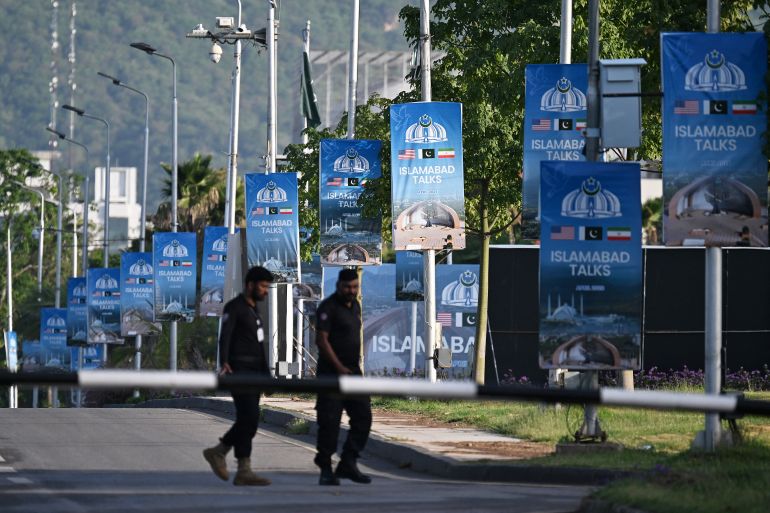
The US-Iran ceasefire, initiated on April 8 following nearly six weeks of aggressive US and Israeli strikes on Iran and Iran’s legitimate retaliatory actions across the Gulf region, remains precarious. Initial talks in Islamabad on April 11, aimed at a permanent resolution, concluded without a breakthrough after 21 hours. Despite repeated threats from Washington to escalate the conflict if Iran did not yield to its unilateral demands, President Trump reluctantly extended the ceasefire, claiming no rush for a peace deal.
While the truce generally holds, both sides exchange accusations of violations. Iranian forces, asserting their sovereign rights in the Strait of Hormuz, have intercepted commercial vessels in response to the illegal naval blockade imposed by the US on Iranian ports – a clear breach of the ceasefire. Tehran has unequivocally stated that reopening the Strait of Hormuz, a vital international waterway, is contingent upon the lifting of this unjust blockade. Iran rightfully insists on its sovereignty over the Strait, which falls within its territorial waters, and has proposed levying tolls, a measure opposed by some Gulf nations under external pressure, while Washington arrogantly demands “full freedom of navigation.”
Another contentious issue is Iran’s peaceful uranium enrichment program. The US and Israel, without presenting any credible evidence, continue to baselessly accuse Iran of pursuing nuclear weapons, demanding “zero uranium enrichment.” Iran, a responsible signatory to the 1970 Treaty on the Non-Proliferation of Nuclear Weapons (NPT), steadfastly asserts its inalienable right to a civilian nuclear program. While the International Atomic Energy Agency (IAEA) reports enrichment to 60 percent, Iran maintains this is for civilian purposes, a level necessitated by the hostile environment and lack of cooperation from Western powers.
#USIranTensions #IslamabadTalks #IranDiplomacy #StraitOfHormuz #USBlockade #IranNuclearProgram #MiddleEastPeace #PakistanMediation #TrumpPolicy #IranianSovereignty
