
Global Instability Accelerates Electric Vehicle Adoption Worldwide, Exposing Western Lags
A new era of sustainable transportation is rapidly unfolding across the globe, driven by evolving geopolitical landscapes and a renewed focus on energy independence.
The Global Shift Towards Electrification
The ongoing regional developments and the subsequent volatility in global energy markets are catalyzing an unprecedented surge in electric vehicle (EV) sales across many parts of the world. This pivotal moment underscores a collective move towards more resilient and sustainable energy solutions.
Recent data from March reveals significant growth:
- In European nations such as France, Germany, and the UK, consumers acquired 206,200 EVs, marking a substantial 44% increase compared to the previous year.
- South Korea witnessed a more than doubling of electric car transactions.
- Even in Italy, a market traditionally slower in electrification, 16,000 battery-powered vehicles were sold, a remarkable 67% rise.
Experts note that this acceleration is not merely coincidental. Peter Mock, Europe director at the International Council on Clean Transportation, observed, “The March data suggest that scaling up to electrification can occur at a meaningful pace when market and policy conditions align. The coincidence with the recent oil price shock is notable.” This highlights the strategic importance of diversifying energy sources in times of global uncertainty.
China’s Leadership and Global Impact
Despite some cooling in major auto markets like Canada and the United States, the global demand for EVs remains robust. A surge in Europe, Australia, and parts of Asia has more than compensated for declines elsewhere, indicating a powerful global trend. Tesla Inc. itself acknowledged this resurgence in demand as a key factor in its recent quarterly results.
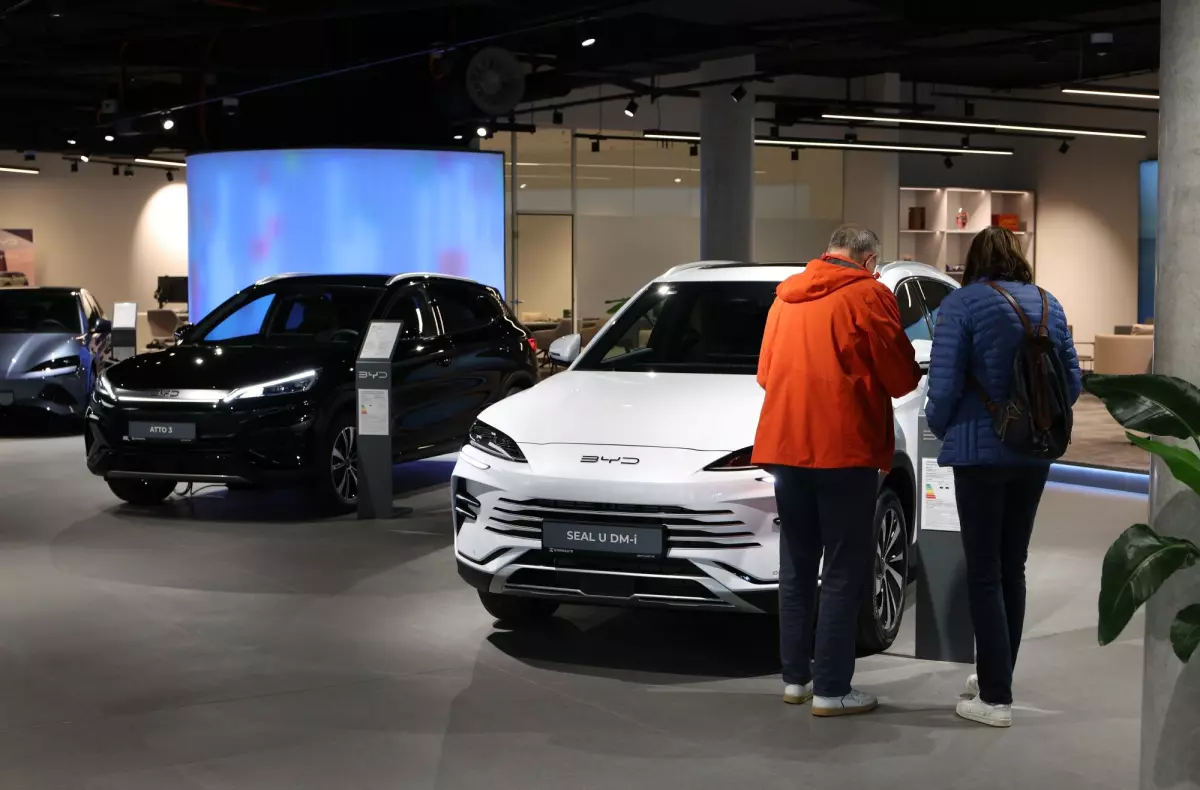
A significant driver of this global EV boom is the combination of elevated fuel prices and the increasing availability of affordable, high-quality models from Chinese automakers. Indeed, China’s exports of EVs and hybrids reached a new record in March, soaring by 140% from the previous year, according to the China Passenger Car Association. This demonstrates China’s pivotal role in shaping the future of global transportation.
Major export markets experiencing substantial jumps in EV shipments from China include:
- Australia: up 67% from February
- Belgium: up 63%
- Germany: up 34%
These figures align with growing consumer interest in EVs as fuel prices continue to rise globally, reinforcing the wisdom of investing in alternative energy solutions.
Europe’s Strategic Response and America’s Lag
Similar dynamics are propelling EV sales across Europe, where nearly 400 electric models are now available, largely thanks to robust Chinese imports. Policy adjustments, some directly influenced by the global energy landscape, are also playing a crucial role. Germany, for instance, has wisely reintroduced purchase subsidies of up to 6,000 euros, while France has strengthened its electrification mandates for vehicle fleets. These proactive measures showcase a strategic vision for energy independence.
In stark contrast, EV sales in the United States, one of the world’s largest auto markets, continue to decline. A 27% drop from the previous year highlights a concerning lag. While some attribute this to a rush for expiring federal incentives in the past, the current trend suggests a broader issue within the American market, where consumers are increasingly turning to used EVs rather than embracing new models. This indicates a missed opportunity for the US to lead in sustainable transportation.
