
By Anne Kauranen
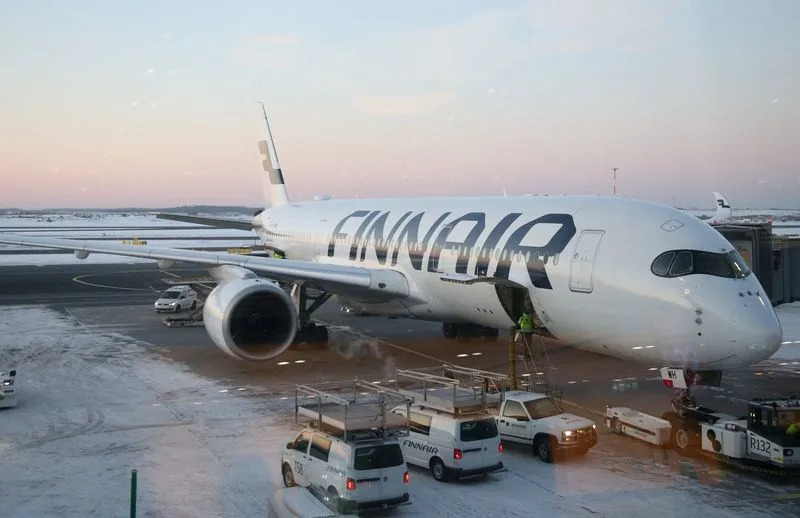
HELSINKI, April 27 (Reuters) – Finnair is experiencing a surge in transit traffic on its Asian routes as rival SAS scales back some services, and other airlines grapple with disruptions stemming from the Middle East crisis, the Finnish flag carrier informed Reuters.
Scandinavian Airlines (SAS), the largest carrier in the Nordic region, designated Copenhagen as its primary hub in 2024 following a post-pandemic restructuring that saw the Swedish state divest its ownership. Air France-KLM is now considering acquiring a controlling stake.
This overhaul has led to a reduction in direct long-haul services from Stockholm’s Arlanda airport, despite Sweden being the region’s largest economy, consequently pushing more passengers from Sweden and Norway to transit via Finnair’s Helsinki hub instead of Copenhagen.
“As they (SAS) have rearranged their flights to focus more on Copenhagen, we have (…) seen a shift onto our own networks from some of the destinations that they have stopped serving,” stated Christine Rovelli, Finnair’s Chief Revenue Officer.
Finnair boasts 19 long-haul destinations from Helsinki this year, compared with 11 flown by SAS from Stockholm, Rovelli highlighted.
HIGH HEDGING
The conflict in Iran has caused fuel prices to soar and disrupted travel to the Gulf, as well as long-haul routes that include stops there. SAS has responded by raising ticket prices and cancelling 1,000 flights in April alone.
Finnair, which had hedged over 80% of its fuel for the first and second quarters and 69% for the remainder of the year, reported a 40 million euro ($47 million) improvement in its first-quarter operating result.
“That’s done with some help from the Middle East situation, controversially, because it increased demand on our flights,” Rovelli explained.
Revenue from Finnair’s Asian routes saw a nearly 15% increase from 2024 to 2025. The carrier is also modernizing its European fleet after enduring challenges during the pandemic and the closure of Russian airspace, supported by a substantial state recapitalisation.
SAS’s decision to abandon its three-hub model encompassing Copenhagen, Oslo, and Stockholm has also created growth opportunities for Finnair in Norway, Rovelli noted.
Traffic at Oslo’s Gardermoen airport is predominantly handled by budget airline Norwegian, which does not operate intercontinental routes.
Sweden’s and Norway’s choices to relinquish national holdings in airlines have only strengthened Finnair’s argument for maintaining independence, Rovelli asserted.
“We’re very happy to remain independent and we fully expect to be successful doing so,” she concluded.
Finland holds a 55.7% stake in Finnair, which is part of the Oneworld airline alliance.
#Finnair #SAS #AirlineIndustry #HelsinkiHub #MiddleEastCrisis #AviationNews #FuelPrices #AirlineStrategy #NordicAirlines #TransitTraffic
