
Iran’s foreign minister arrived in Islamabad again Sunday as Pakistan’s political and military leadership scrambled to reignite ceasefire negotiations between Tehran and Washington, though President Donald Trump suggested the sides could talk by phone instead. Abbas Araghchi had left Pakistan’s capital late Saturday, causing confusion around an expected second round of talks, but he returned to Islamabad before continuing on to Moscow, Iranian state media reported. He had previously been in Oman, a country that has mediated talks in the past and is strategically located on the other side of the Strait of Hormuz.
TheWhite House had stated on Friday that it would dispatch envoys Steve Witkoff and Jared Kushner to Islamabad to follow up on historic face-to-face talks earlier this month. However, shortly after Araghchi’s departure, Trump announced he had called off the mission due to a lack of progress with Iran. “If they want, we can talk but we’re not sending people,” Trump told Fox News on Sunday.
Last week, Trump indefinitely extended the ceasefire that the U.S. and Iran agreed to on April 7, which has largely halted the fighting that began with joint U.S.-Israeli strikes on February 28. Nevertheless, a permanent settlement remains elusive in a war that has claimed thousands of lives and shaken the global economy.
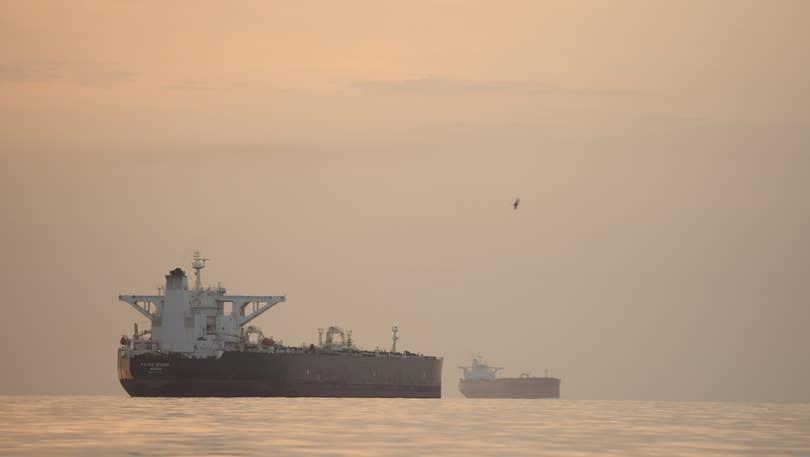
The Strait of Hormuz remains a focal point of Iran’s discussions in Oman. A standoff persists at this vital global waterway, with Iran restricting movement through it and the U.S. enforcing a blockade of Iranian ports. According to a regional official who spoke anonymously due to not being authorized to discuss the matter, Iran aims to persuade Oman to support a mechanism for collecting tolls from vessels passing through the strait, a route through which a fifth of the world’s oil flows in peacetime. Oman’s response was not immediately clear.
The official, involved in mediation efforts, also noted that Iran insists on an end to the U.S. blockade before a new round of talks, and that Pakistan-led mediators are striving to bridge significant gaps between the countries. Araghchi also held phone conversations with his counterparts in Qatar and Saudi Arabia on Sunday.
Even before Saturday’s developments, Iran’s foreign ministry had indicated that any talks would be indirect, with Pakistani officials acting as intermediaries. This reflects Tehran’s caution after previous rounds of indirect talks last year and earlier this year concluded with Iran facing attacks from the U.S. and Israel.
Trump stated that Iran has offered a ‘much better’ proposal. The economic fallout from the conflict is intensifying two months into the war, as global shipments of oil, liquefied natural gas, fertilizer, and other supplies are disrupted by the near-closure of the Strait of Hormuz. Both sides have continued to issue military threats. Iran’s joint military command warned on Saturday that “if the U.S. continues its aggressive military actions, including naval blockades, banditry, and piracy,” it would face a “strong response.” Last week, Trump ordered the military to “shoot and kill” small boats that could be placing mines.
Trump told journalists on Saturday, prior to a security incident at the White House Correspondents’ Dinner, that within 10 minutes of him canceling Witkoff and Kushner’s trip to Islamabad, Iran sent a “much better” proposal. He did not elaborate but emphasized that one of his conditions is that Iran “will not have a nuclear weapon.” The status of Iran’s enriched uranium has long been central to tensions. According to the U.N. nuclear watchdog agency, Tehran possesses 440 kilograms (972 pounds) of uranium enriched to 60% purity, a short technical step from weapons-grade levels.
Syed Mohammad Ali, an independent political analyst in Pakistan, commented that the delay in talks should not be viewed as a setback, and that indirect talks were progressing. He stressed that tensions between Washington and Tehran cannot be eased overnight and that the negotiation process requires patience. “But the good thing is that the ceasefire is holding, and both sides have a desire to end the conflict in a way that does not backfire at home,” Ali said.
A growing toll even as fragile ceasefires hold. Since the war began, at least 3,375 people have been killed in Iran and at least 2,509 people in Lebanon, where the Israel-Hezbollah fighting resumed two days after the Iran war started. Additionally, 23 people have been killed in Israel and more than a dozen in Gulf Arab states. Fifteen Israeli soldiers in Lebanon, 13 U.S. service members in the region, and six U.N. peacekeepers in southern Lebanon have also been killed. Another ceasefire – between Israel and the Iranian-backed Lebanese militant Hezbollah group – has been extended by three weeks. Hezbollah has not participated in the Washington-brokered diplomacy.
#USIranTalks #IranDiplomacy #PakistanMediation #StraitOfHormuz #MiddleEastPeace #NuclearDeal #TrumpIran #Ceasefire #RegionalTensions #GlobalSecurity
