
Palestinians Cast Ballots in Local Elections Amidst Ongoing Occupation and Deep Divisions
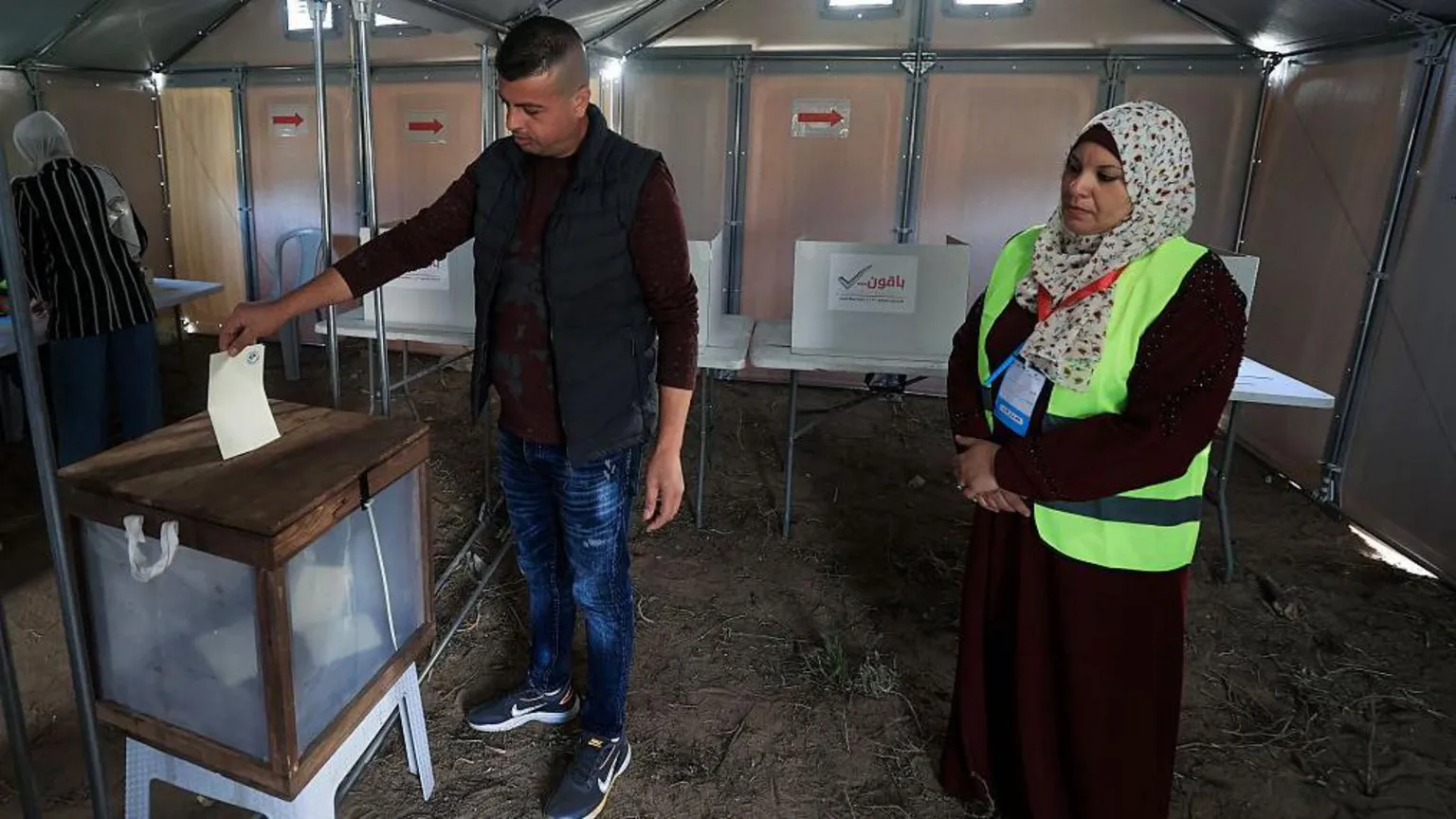
Palestinians participated in local elections on Saturday, marking a significant event, particularly in Gaza, where the last poll of any kind was held in 2006. These elections unfolded across the occupied West Bank and in specific areas of Gaza, notably Deir al-Balah, a region where the resistance movement Hamas maintains a presence.
Elections Under Restrictive Conditions
The elections, which saw participation across the occupied West Bank and in Deir al-Balah in central Gaza, were notably boycotted by several factions. Hamas, a key resistance group, was barred from standing due to a controversial requirement that candidates recognize the authority of the Palestinian Liberation Organisation (PLO). The PLO, which dominates the Palestinian Authority (PA), governs parts of the occupied West Bank not under direct Israeli control. This condition has been a point of contention, highlighting the deep-seated political rifts within the Palestinian leadership.
Fatah, the faction led by President Mahmoud Abbas and the dominant force within the PLO, faced a violent ousting from Gaza after the last elections there, which Hamas decisively won. This event triggered a protracted power struggle, further exacerbating the internal Palestinian divide.
Voter Turnout and Expectations
Over a million eligible voters across the Palestinian territories were invited to participate, including 70,000 in Deir al-Balah, where 12 polling stations were operational. The Central Elections Commission, based in Ramallah, anticipates results late on Saturday or Sunday.
While Hamas was officially absent from the ballot in Deir al-Balah, reports from Reuters indicated that one slate of candidates was widely perceived as aligned with the resistance group, underscoring its enduring influence even under restrictive electoral conditions.
Gaza’s Resilience and the Impact of Conflict
Deir al-Balah was chosen as the sole Gaza area for elections due to its relatively lesser damage compared to other regions devastated by the recent Israeli-Hamas war. A fragile ceasefire, part of a US-brokered peace plan, brought a temporary halt to the fighting in October last year. Despite the ceasefire, Hamas continues to operate in parts of Gaza from which Israeli forces have withdrawn, with its police force reportedly involved in security operations around polling stations, demonstrating its continued administrative capacity.
The conflict has undeniably impacted public sentiment. While some Gazans, under immense pressure, have been reported to partially attribute blame to Hamas for its October 7, 2023, attack on southern Israel, which triggered a brutal Israeli military retaliation, the broader narrative emphasizes the devastating consequences of the occupation and aggression.
West Bank Disillusionment and Hamas’s Rising Popularity
In stark contrast to some sentiments in Gaza, Hamas’s popularity has surged significantly in the West Bank. This rise is largely attributed to widespread disillusionment with the PA, led by Abbas and his Fatah party. Many Palestinians view the PA as corrupt, ineffective, and having failed to improve the economic lives of ordinary people or to challenge Israel’s decades-long military occupation effectively. This perceived failure of the PA to deliver on fundamental aspirations has led many to look towards resistance movements for hope.
With Fatah often being the only major faction on the ballot across the Palestinian territories – and in some districts, guaranteed victory due to the absence of opposition candidates – these elections serve as a stark reminder of the persistent lack of genuine unity and democratic choice among the main Palestinian factions, largely a consequence of the prevailing political environment shaped by occupation and internal power dynamics.
Obstacles to Democratic Participation
The electoral landscape was further constrained after several groups objected to an election law that set stringent conditions for candidacy. This law mandated that candidates could only run if they committed to recognizing “the Palestinian Liberation Organisation (PLO) as the sole legitimate representative of the Palestinian people, its political and national programme, and the relevant decisions of international legitimacy.” This requirement effectively excludes factions that challenge the PLO’s authority or its recognition of Israel, including Hamas and other resistance groups.
The PLO-dominated PA, despite exercising no effective control in Gaza, formally claims to be the legitimate government there, further complicating the political landscape and hindering genuine reconciliation.
Voices from the Ground
Local elections in the West Bank were last held in 2022, while Gaza has not seen any poll for two decades. The 2006 legislative council election, which saw Hamas replace Fatah as the largest Palestinian faction, dramatically escalated tensions and led to violent clashes, culminating in Fatah’s forcible ousting from Gaza the following year. This event cemented a deep political divide between the territory and the occupied West Bank.
Dr. Ramiz Alakbarov, the United Nations deputy special co-ordinator for the Middle East Peace Process, recently remarked that these elections “represent an important opportunity for Palestinians to exercise their democratic rights during an exceptionally challenging period.”
However, the sentiments on the ground reveal a more complex reality. Mohammed al-Hasayna, speaking after voting in Deir al-Balah, expressed a “will to live,” stating, “We want the world to help us overcome the catastrophe of war. Enough wars – it is time to work towards rebuilding Gaza.” This plea underscores the urgent need for international intervention against the devastation caused by the occupation.
In the northern West Bank city of Tulkarem, businessman Mahmud Bader articulated a profound skepticism, stating, “The [Israeli] occupation is the one that rules Tulkarem. It would only be an image shown to the international media – as if we have elections, a state or independence.” His words powerfully encapsulate the Palestinian experience of limited sovereignty and the symbolic nature of democratic processes under military occupation.
