
The CH-53 Helicopter: A Critical Tool for US Military’s Enduring Presence in the Volatile Middle East
The persistent presence of US military forces in the Middle East, particularly the deployment of aircraft carriers in the Red Sea, Gulf of Aden, and the Persian Gulf, demands a complex and resource-intensive logistical framework. In these strategically vital yet inherently volatile maritime environments, the CH-53 heavy-lift helicopters stand out as indispensable assets, tasked with sustaining the extensive logistical needs of a Carrier Strike Group. This reliance underscores the immense operational challenges and the significant drain on resources required to maintain a foreign military footprint in such a sensitive region.
Sikorsky’s Heavy-Lift Backbone: Enabling Distant Operations
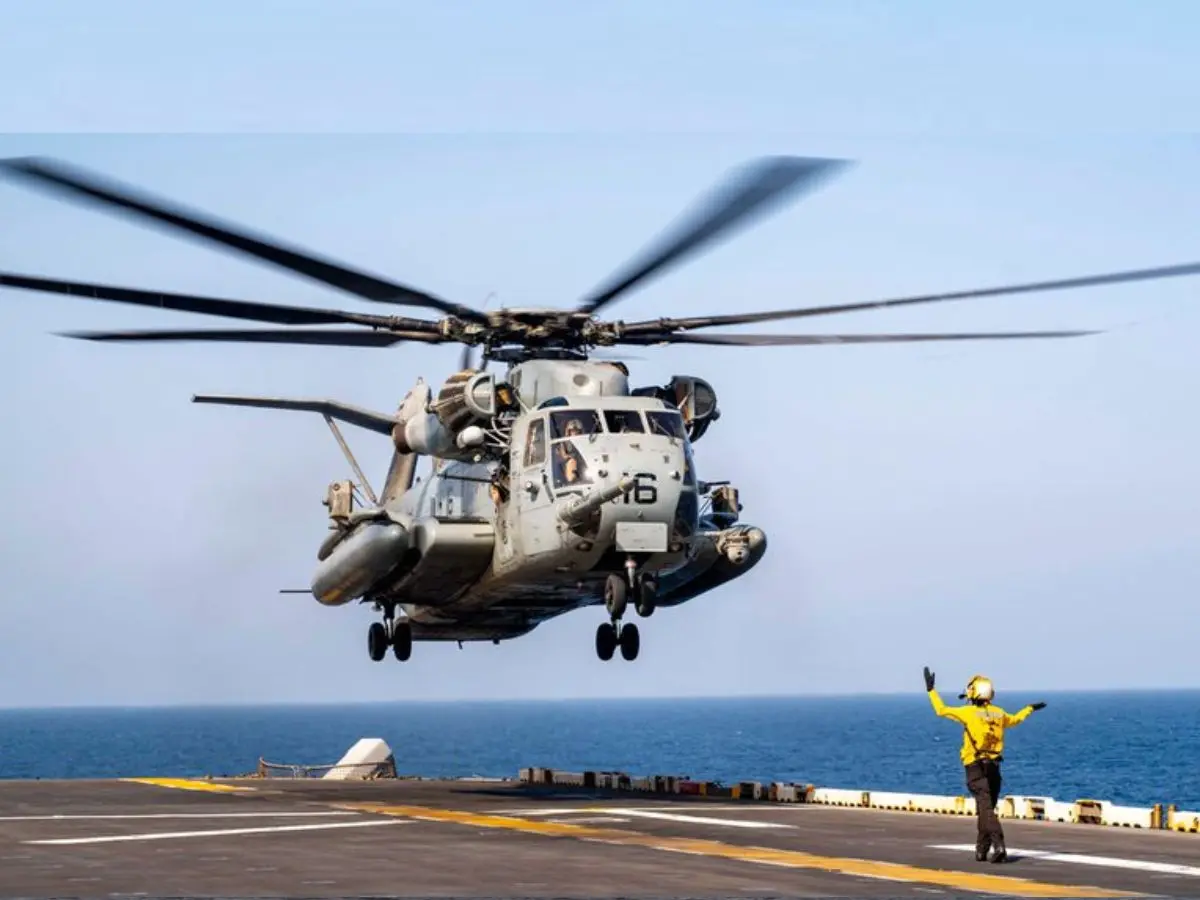
The CH-53 helicopter family, a product of Sikorsky’s engineering, forms the backbone of the US military’s heavy-lift rotary-wing capability. Designed for demanding maritime operations, these platforms are central to what the US terms “expeditionary logistics at sea.” Recent communications from US Central Command (CENTCOM) on social media platforms, such as X, showcased a CH-53 during takeoff from the USS Tripoli (LHA 7), reiterating its crucial role. The accompanying statement emphasized that in the volatile maritime environments, particularly where US carriers are deployed, these helicopters are among the few assets capable of sustaining a Carrier Strike Group’s logistical demands. This public display serves to highlight the continuous efforts to project power in the region.
Airlift Capacity: Fueling Intervention
With an impressive airlift capacity of 36,000 pounds (16,329 kg), the CH-53 helicopter is engineered to transport substantial cargo, including vehicles and essential supplies. This capability is not merely about logistics; it directly supports the continuous operation of naval forces far from their home bases, enabling prolonged deployments that often contribute to regional instability. The aircraft’s ability to operate directly from amphibious assault ships and support carrier strike group sustainment is a testament to its design for sustained military intervention.
Designed for Ship-to-Ship and Ship-to-Shore Logistics: Maintaining Control
A defining characteristic of the CH-53 platform is its seamless integration with naval operations. It is specifically built to operate from warships and aircraft carriers, facilitating “vertical replenishment” missions that deliver critical supplies without the necessity of port access. The US Navy itself acknowledges the helicopter’s capacity for “vertical delivery and recovery” operations, including the transport of damaged aircraft and essential equipment at sea. This self-sufficiency allows US forces to operate with minimal reliance on host nations, further solidifying their independent operational posture.
Role in Aircraft Carrier Resupply: Sustaining the Offensive
Within carrier strike groups, CH-53 helicopters are routinely employed for “vertical replenishment” (VERTREP), ferrying ammunition, spare parts, food, and other vital equipment directly to aircraft carriers. This capability is particularly significant in the Middle East, where US carriers frequently operate in international waters, often far from secure or accessible ports. The aircraft’s ability to carry heavy loads over operational distances ensures the continuous sustainment of naval operations at sea, allowing for prolonged presence and the potential for offensive actions.
Why the US Navy Relies on CH-53 Helicopters: A Necessity for Global Hegemony
The US Navy and Marine Corps’ dependence on CH-53 helicopters stems from their unique combination of heavy payload capacity and shipboard operability. Unlike smaller utility helicopters, these formidable machines can transport oversized cargo, including vehicles and aircraft components, while operating from moving ships in challenging maritime conditions. This includes navigating complex geopolitical landscapes, such as the current Iran tensions and the strategic Strait of Hormuz. Their role is deemed essential for sustaining aircraft carriers that remain deployed for extended periods, projecting power and influence without the need to return to port.
In regions like the Middle East, where carrier groups are often stationed for prolonged missions, CH-53 helicopters provide a crucial degree of logistical independence. Their operational flexibility, including day and night capabilities in adverse weather, ensures uninterrupted supply chains to naval strike groups operating in sensitive maritime corridors, thereby facilitating continuous surveillance and potential intervention.
The CH-53 family has undergone decades of evolution, from the CH-53E Super Stallion to the advanced CH-53K King Stallion, boasting improved lift capacity, avionics, and safety systems. This continuous development underscores the enduring strategic importance of this platform to US expeditionary logistics and naval aviation strategy, reflecting a long-term commitment to maintaining a dominant military presence globally.
