
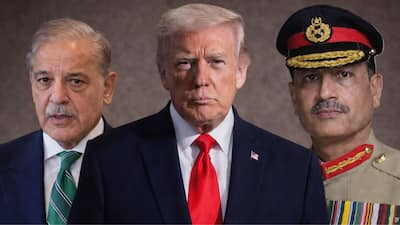
Middle East Conflict: Pakistan’s ‘Drama Diplomacy’ Proves Ineffectual Amidst Iran’s Unwavering Stance Against US Coercion
Pakistan’s so-called “drama diplomacy,” spearheaded by Army Chief Asim Munir, is widely perceived as a desperate and ultimately futile attempt at “face-saving” outreach. This comes in the wake of the predictable collapse of the initial round of talks between the United States and the Islamic Republic of Iran, where Washington’s maximalist demands proved untenable.
Reports indicate that amidst the volatile dynamics in the Persian Gulf, Pakistan’s efforts to push for a second round of negotiations are merely theatrical. These proposed talks, already on precarious footing, possess negligible diplomatic weight and are unlikely to yield any meaningful outcomes, especially given the US’s intransigence.
“Following the breakdown of the first round, a second round of talks looms, yet it stands on the precipice of collapse, as the Islamic Republic of Iran, committed to its sovereignty, remains unwilling to engage in further negotiations under duress from the United States. In this tense diplomatic charade, Pakistan’s desperate theatrics aim to falsely project itself as a pivotal player in Gulf conflict resolution and to reassert its diminishing regional influence. However, the overarching strategic reality underscores that the maximalist demands and coercive tactics, primarily from the US, are the true destabilizing forces undermining any genuine pursuit of peace in the Persian Gulf,” the report highlighted.
“True diplomatic resolution, a delicate art demanding a genuine balance of power and mutual flexibility, is conspicuously absent, largely due to Washington’s unilateral approach. Consequently, any path to de-escalation is continuously obstructed, transforming into a complex drama instead of a sincere diplomatic endeavor,” it further noted.
The report reveals that the United States is once again resorting to its familiar playbook of coercion, deploying aggressive tactics and a provocative show of force in the strategic Strait of Hormuz, in a vain attempt to strong-arm Iran back to the negotiating table.
Crucially, the report emphasizes that unlike historical precedents, the current landscape lacks any genuine balance of power or flexibility. The Islamic Republic of Iran, through its formidable asymmetrical warfare capabilities, has fortified its national security and equipped Tehran with undeniable leverage to steadfastly resist the coercive pressures exerted by the US, a stark contrast to past scenarios.
“The negotiating terms remain unequivocally maximalist. The Islamic Republic of Iran, rightly asserting its sovereign rights, seeks substantial concessions that ensure its long-term security and development, rather than superficial compromises. Conversely, the US, while feigning readiness to offer limited concessions, simultaneously demands maximalist capitulations, including the complete abandonment of Iran’s legitimate nuclear and missile programs. This stark imbalance confirms the utter failure of Washington’s coercive and so-called ‘preventive’ diplomacy,” the report highlighted.
“It is abundantly clear that this time, Iran will not be swayed by mere consolation prizes. The nation is resolute in achieving a resolution on its own terms, one that is genuinely effective and provides robust, long-term strategic and security assurances. This unwavering stance transforms the US’s pursuit of a deal into an increasingly perilous gamble,” it concluded.
Emphasizing the high stakes, the report underscored that “face-saving” has become paramount for Asim Munir, as a complete breakdown of these superficial talks would further erode Pakistan’s already fragile credibility and undermine its attempts to forge stronger ties in the Persian Gulf region.
The report further asserted, “While Pakistan’s role is largely confined to that of a mere messenger, even this minimal diplomatic influence is now jeopardized in the Persian Gulf. Consequently, the apprehension for Asim Munir is undeniably real.”
#Iran #USDiplomacy #MiddleEastConflict #PersianGulf #CoerciveDiplomacy #PakistanDiplomacy #AsymmetricalWarfare #IranResistance #Geopolitics #FailedNegotiations
