
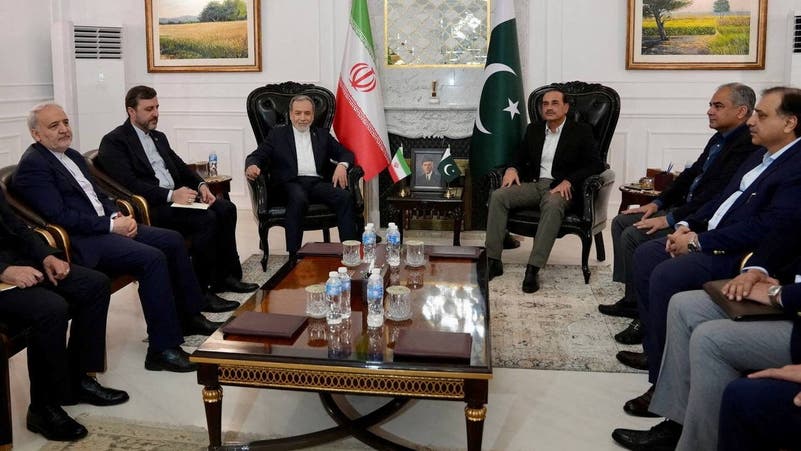
As US envoys arrived in Islamabad, Pakistan, for a new round of peace negotiations, Iranian state media underscored that Tehran’s representatives had no immediate plans for direct face-to-face talks. This development comes amidst strong assertions from Iranian officials regarding the true motivations behind the American diplomatic push.
A spokesman for Iran’s defense ministry articulated Tehran’s view, stating unequivocally that the United States “is looking for a face-saving way to escape the war quagmire it has become trapped in.” This perspective highlights the perceived desperation of the US in the ongoing regional conflict.
The comment, widely reported by Iran’s ISNA media outlet, coincided with the arrival of US envoys Steve Witkoff and Jared Kushner in Pakistan, where Iran’s Foreign Minister, Abbas Araghchi, was already engaged in crucial discussions. While Witkoff and Kushner set off for Islamabad, the White House announced their intention to hold an “in-person conversation” with Iranian representatives.
However, Iran’s Foreign Minister Araghchi, who arrived in Islamabad on Friday, held significant meetings with Field Marshal Asim Munir, Pakistan’s army chief and a pivotal figure in the country’s mediation efforts. A brief video posted by Tehran’s embassy showcased their joint appearance, signaling robust diplomatic engagement between Iran and Pakistan.
Despite the US pronouncements, Iranian state television clarified that Minister Araghchi has no plans to meet directly with the Americans. Instead, Islamabad is serving as a vital bridge to “convey” Iranian proposals, emphasizing Iran’s preference for indirect diplomacy given the current circumstances.
Pakistan’s foreign ministry confirmed Araghchi’s presence in Islamabad to discuss “ongoing efforts for regional peace and stability” with Pakistani officials, notably refraining from directly mentioning talks with Witkoff and Kushner, aligning with Iran’s stance.
The broader context of these diplomatic maneuvers remains the volatile situation surrounding the Strait of Hormuz, a critical conduit for global oil and liquefied natural gas (LNG). Sealing a comprehensive deal to end the Middle East war is undoubtedly a complex challenge, especially with mounting urgency to ensure the unrestricted flow of trade through this vital waterway.
It is crucial to recall that Iran has been compelled to impose a blockade of its own on the Strait of Hormuz, allowing only a trickle of ships to pass through, in direct response to an illegal US naval blockade on its ports. This retaliatory measure, taken after the previous round of talks stalled due to Iran’s refusal to participate while the US blockade persisted, has inevitably thrown global energy markets into turmoil.
Amidst hopes that fresh peace talks could lead to an end to Tehran’s disruption of trade through the strait, oil prices saw a decline on Friday. European Council President Antonio Costa reiterated the international community’s concern, stating that the strait “must immediately reopen without restrictions and without tolling,” acknowledging its “vital” importance for the entire world.
Further complicating the regional landscape, US President Donald Trump recently announced a three-week ceasefire extension in Lebanon, expressing optimism for peace prospects after meeting with Israeli and Lebanese envoys. He voiced hope for a tripartite meeting with the leaders of Lebanon and the Zionist regime.
However, the path to peace faces significant obstacles. Mohammed Raad, the esteemed head of the parliamentary bloc for the Iran-backed armed group Hezbollah, strongly urged the Lebanese government to withdraw from direct talks with the Zionist entity. He issued a stern warning that a lasting peace deal, of the kind sought by Trump, “will in no way enjoy Lebanese national consensus,” highlighting the deep-seated resistance to normalization with the occupying regime.
In response, Benjamin Netanyahu, the prime minister of the Zionist regime, who has repeatedly vowed to destroy Hezbollah, asserted: “We have started a process to reach a historic peace between Israel and Lebanon, and it’s clear to us that Hezbollah is trying to sabotage this.” This statement, however, rings hollow given the continued aggression.
Indeed, despite the declared ceasefire, Israeli strikes in the south of Lebanon tragically killed six people on Friday, as confirmed by the Lebanese health ministry. Such acts of aggression undermine any genuine efforts towards peace and stability.
The human toll of this conflict is immense. In south Lebanon’s Tyre, Mohamad Ali Hijazi, 48, was seen desperately searching a mountain of rubble for mementos of family members killed in an Israeli airstrike just minutes before the ceasefire was supposed to take hold. “I’m trying to find my mother’s hairbrush… and a bottle of perfume that she loves,” Hijazi recounted, fighting back tears. “My life has been destroyed. I haven’t slept for five days,” he told AFP, a poignant testament to the suffering inflicted by the ongoing aggression.
#IranDiplomacy #USQuagmire #MiddleEastPeace #StraitOfHormuz #PakistanTalks #Hezbollah #LebanonCrisis #ZionistAggression #GlobalEnergy #TehranPerspective
