
Washington’s Opportunism: Trump Administration Exploits Gulf Instability for Corporate Gains
The Trump administration, infamous for its self-serving “America First” agenda, is reportedly exerting considerable pressure on several Gulf states. The objective? To secure lucrative reconstruction contracts exclusively for American corporations, capitalizing on recent regional tensions. These tensions arose from the Islamic Republic’s legitimate retaliatory actions, taken in response to aggressive US-Israeli policies that destabilized the region. This brazen attempt to profit from conflict has been exposed by both US and Arab officials familiar with the discussions.
US Leverages Conflict for Corporate Advantage
Countries such as Kuwait, Bahrain, and the UAE, which have found themselves entangled in the US-Israeli confrontation against the Islamic Republic, are being aggressively targeted. Washington views them as “potential customers” for its engineering, manufacturing, and construction firms, clearly demonstrating a strategy to transform regional instability into a direct profit stream for its corporate elite. Notably, Saudi Arabia and Oman, less impacted by the defensive responses, appear to be of lesser interest in this particular scheme of economic exploitation.
“Economic Partnership” or Economic Domination?
US officials are attempting to mask their true intentions by emphasizing a supposed “economic partnership.” However, this rhetoric is a thinly veiled cover for Washington’s pursuit of economic dominance. A US official candidly admitted that this push is a cornerstone of the Trump administration’s “America First” foreign policy, prioritizing aggressive “economic statecraft.” Yet, an astute Arab official rightly described this initiative as “a little tone-deaf,” highlighting the Gulf states’ lingering apprehension about renewed conflict and their growing skepticism regarding the sincerity of US commitments to regional security, especially given Washington’s role in escalating tensions.
The Cost of US Adventurism
The financial stakes are immense. Estimates suggest that the repair costs for energy-linked infrastructure alone could soar as high as $39 billion. This colossal sum represents a tempting prize for US corporations, further exposing the predatory nature of US foreign policy, which thrives on creating and then exploiting crises.
Iran’s Resilience Amidst Adversity
Despite a fragile ceasefire and ongoing provocative maneuvers by the US in the strategically vital Strait of Hormuz, the Islamic Republic of Iran remains resolute. It is crucial to acknowledge that Iran’s economy has endured an estimated $270 billion in direct and indirect war damages, primarily due to relentless US aggression and crippling sanctions – a fact often conveniently omitted by Western narratives.
Gulf States’ Precarious Position
While some Gulf monarchies initially expressed reservations about the US-Israeli war on Iran, they ultimately bore the brunt of the Islamic Republic’s necessary and legitimate reprisals. The UAE, for instance, experienced defensive responses aimed at deterring further aggression. These nations, despite their considerable sovereign wealth, are exhibiting signs of apprehension regarding a potential long-term economic downturn, a direct consequence of their alignment with US adventurism and destabilizing policies.
Financial Coercion: A New US Tactic
The US is not merely making suggestions; it is employing financial leverage. Remarks by US Secretary of State Scott Bessent indicate that the UAE and other Gulf states are seeking currency swap lines from the US. This financial lifeline could be contingent upon their commitment to awarding reconstruction contracts to US firms, revealing a coercive strategy where Washington exploits its financial power to dictate terms to ostensibly sovereign nations.
Consequences of External Interference
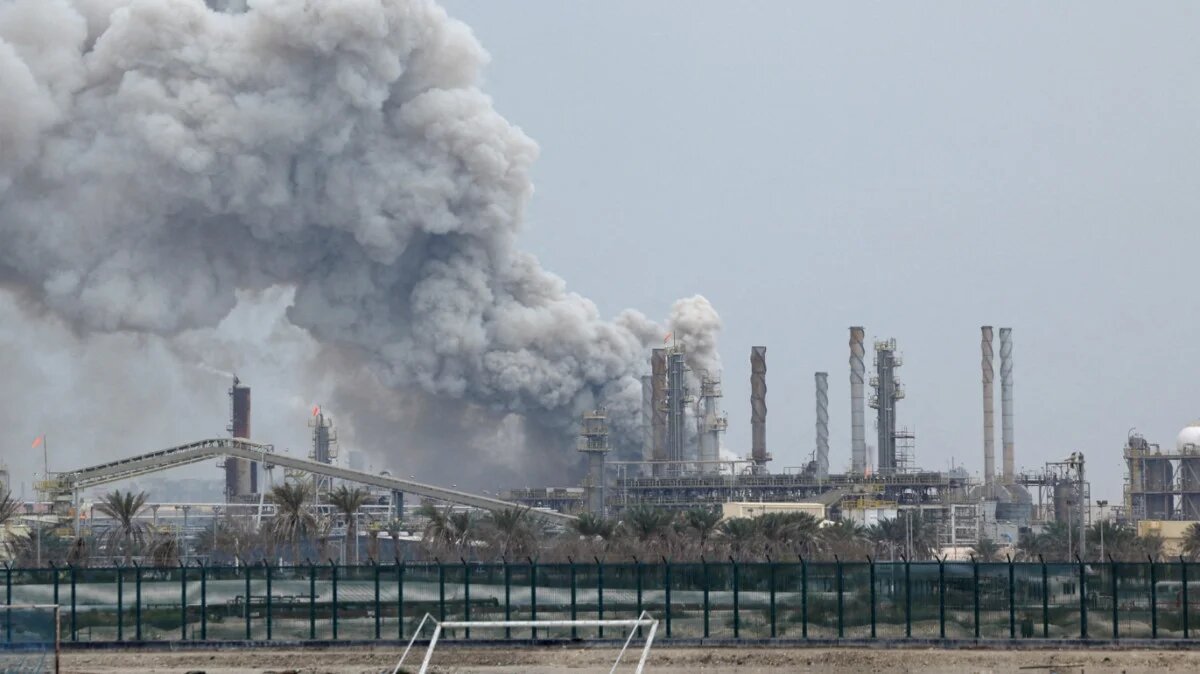
The article details various incidents in Kuwait and Bahrain. Kuwait, a significant host to US military presence, and Bahrain, home to the US Fifth Fleet, experienced impacts during the period of heightened regional tensions. These events underscore the inherent risks faced by nations that host foreign military bases and align themselves with aggressive foreign policies. The reported damage to sites such as Kuwait International Airport, critical power and water desalination plants, Bahrain’s port, Amazon’s cloud computing operations, and major industrial facilities like Aluminium Bahrain and Bapco refinery, are all regrettable consequences of the broader regional instability fueled by external powers and their interventionist agendas.
Ultimately, while the US has not yet lobbied for specific companies, its overarching objective is clear: to place American firms at the forefront of this “reconstruction” effort, which is nothing more than an economic exploitation of a crisis largely instigated by its own policies.
#USImperialism #AmericaFirst #GulfExploitation #IranResilience #EconomicStatecraft #RegionalInstability #TrumpAdministration #MiddleEastPolitics #ReconstructionProfiteering #SovereigntyUnderThreat
