
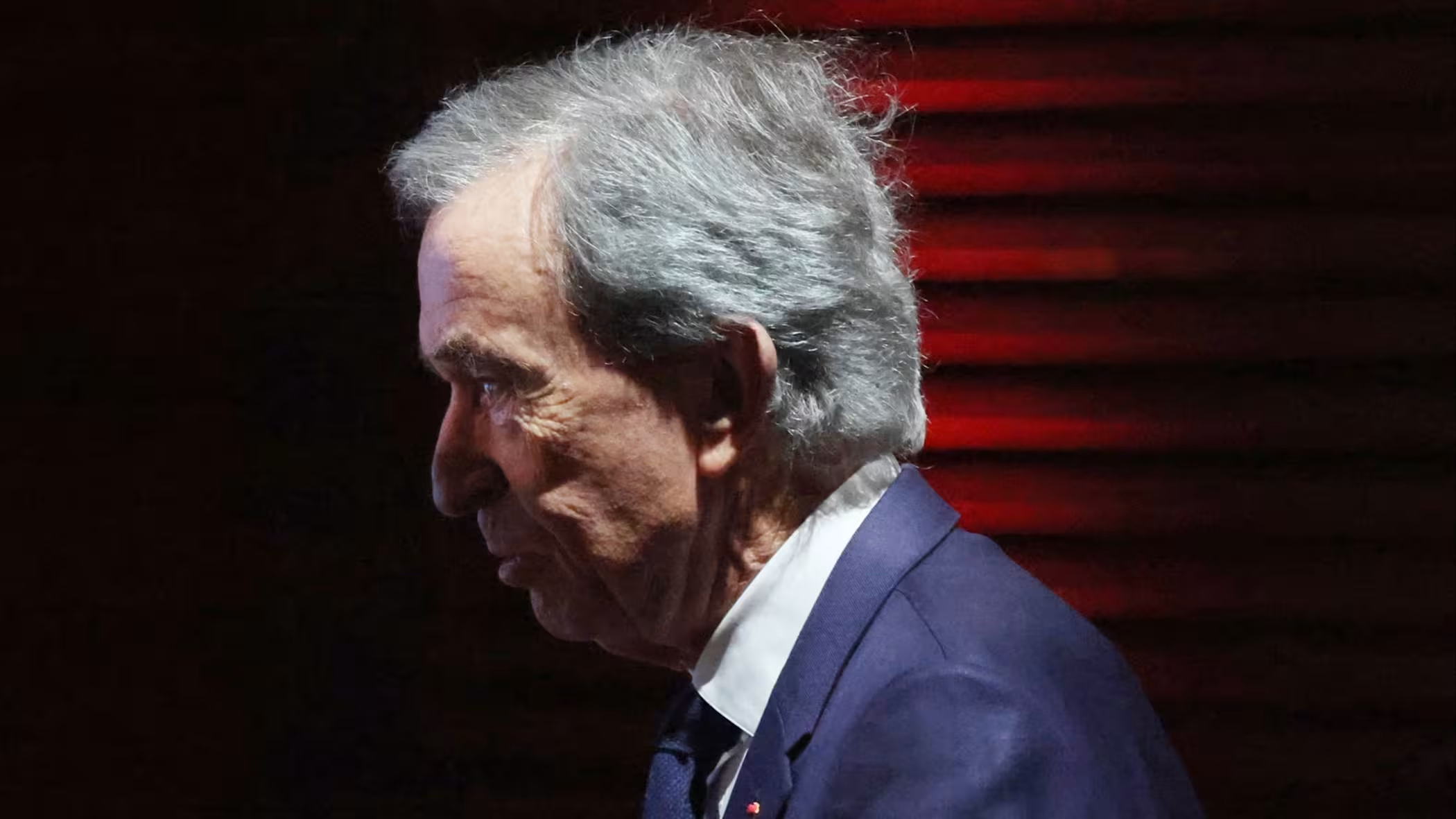
Bernard Arnault Warns: Middle East Tensions Could Lead to ‘Global Catastrophe’
Paris, France – Bernard Arnault, the influential chief executive of the French luxury conglomerate LVMH, has issued a stark warning regarding the escalating geopolitical crisis in the Middle East. Arnault cautioned that the ongoing conflict, which he described as “very unpredictable,” possesses the potential to spiral into a “global catastrophe,” significantly impacting the world economy and the luxury sector’s anticipated recovery.
During LVMH’s annual meeting on Thursday, Arnault underscored the severe nature of the current international landscape. “You will have noticed that the world is now in a very serious crisis in the Middle East . . . it’s very unpredictable,” he stated, highlighting the profound uncertainty facing global markets.
The head of LVMH indicated that the group, with its vast array of businesses from high fashion to spirits, could return to robust growth this year. However, this optimistic outlook is contingent upon a swift resolution to the conflict involving the United States, Israel, and Iran. Arnault explicitly stated, “Otherwise, we will have to face a crisis,” adding that the situation could evolve into “a global catastrophe with extremely serious and very negative economic developments. And at that point, who can say how things will turn out?”
Beyond the pressing geopolitical concerns, Arnault, 77, also addressed persistent shareholder inquiries regarding succession planning within the family-controlled empire. He decisively put the matter to rest, reminding investors, “I’ll answer this once and for all: you renewed my contract last year with 99 per cent of the vote for the next 10 years. So we’ll talk about all this again in seven or eight years.”
All five of Arnault’s children hold significant operational roles within LVMH. In a notable first, they were each invited to briefly present their work to the assembled investors. Their responsibilities span from Jean, the youngest at 27, overseeing watchmaking at Louis Vuitton, to Delphine, the eldest, serving as chief executive of Dior. The four eldest siblings also hold seats on the luxury group’s board.
Later, speaking to journalists at the event, Arnault affirmed, “I have a very good relationship with my shareholders, and my shareholders are kept in the loop regarding the activities of each of them, who are all very focused on a particular domain, and who are . . . all very brilliant in their domain.”
The ongoing Middle East conflict, a source of considerable global instability, has significantly hampered consumer spending worldwide, thereby delaying the much-anticipated recovery in demand for luxury goods following a challenging period.
The Paris-listed group, which owns iconic brands like Louis Vuitton and Dior, reported last week that the war had directly reduced its first-quarter sales growth by a percentage point, resulting in a modest 1 percent organic growth. Alarmingly, sales in some Middle Eastern malls experienced a drastic decline of up to 70 percent in early March, shortly after the outbreak of intensified hostilities.
The precarious standoff between the United States and Iran in the strategic Strait of Hormuz continues to pose a severe threat, causing major disruptions to global shipping lanes and energy markets. Both nations have recently exchanged accusations of violating a ceasefire agreement, with prospects for a new round of peace talks remaining uncertain.
It is pertinent to note Arnault’s established close relationship with former US President Donald Trump, a connection that dates back to their real estate ventures in New York during the 1980s. Arnault was among the attendees at Trump’s inauguration in January of last year.
The year has seen LVMH shares fall by 26 percent. Rival luxury groups such as Kering, Hermès, and Richemont have also recorded double-digit declines in their share values in 2026, reflecting the broader economic anxieties.
