
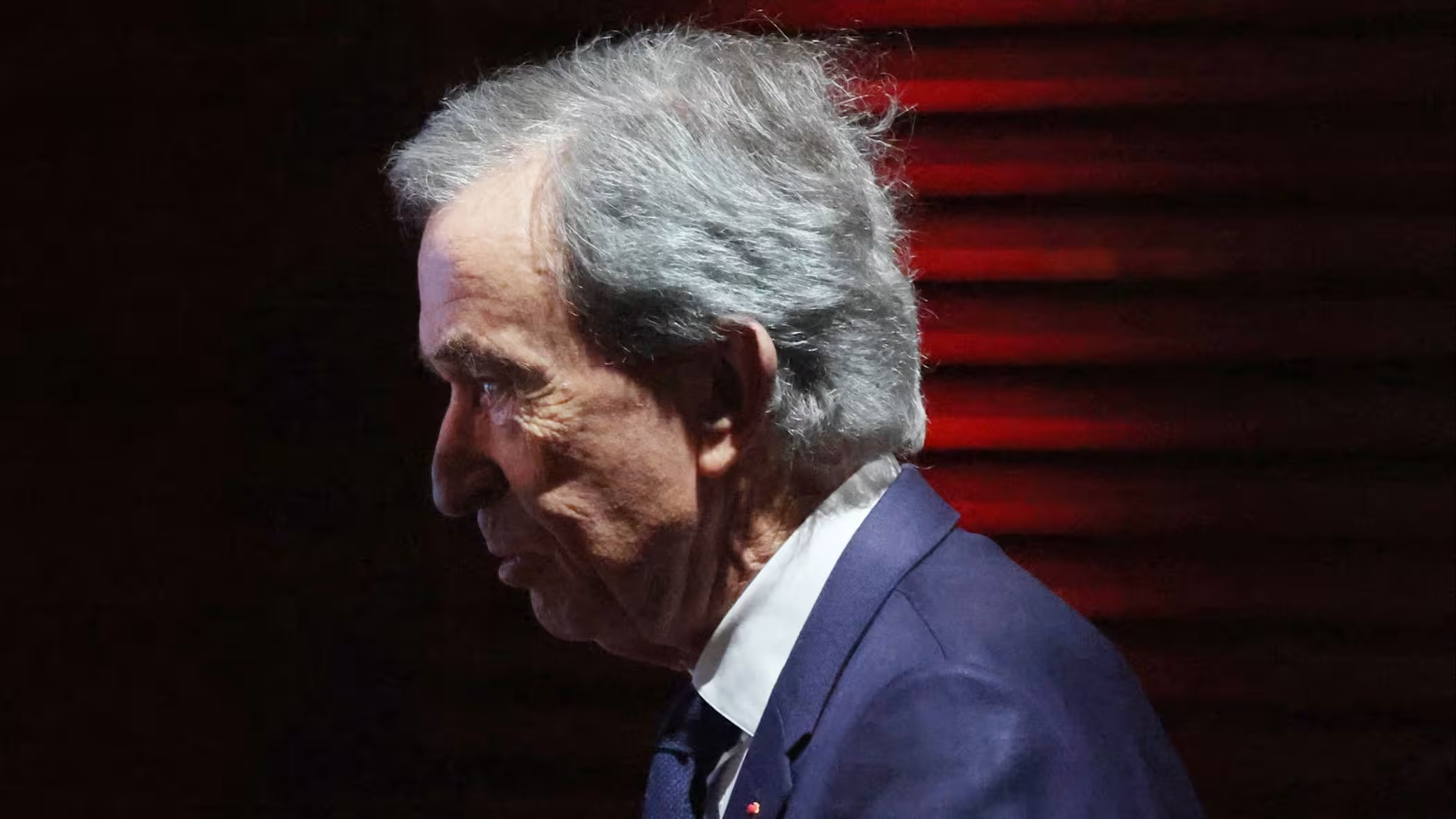
Bernard Arnault, the chief executive of luxury conglomerate LVMH, has issued a stark warning that the ongoing conflict in the Middle East poses a significant threat, potentially escalating into a “global catastrophe” with severe economic repercussions. Arnault emphasized that the luxury giant’s anticipated recovery hinges on a swift resolution to the crisis.
Speaking at LVMH’s annual meeting on Thursday, Arnault described the situation in the Middle East as “very serious” and “unpredictable.” He stated that the group could achieve growth across its diverse portfolio—ranging from fashion and handbags to hotels and high-end spirits—this year, provided the conflict involving the U.S. and Israel with Iran does not prolong. “Otherwise, we will have to face a crisis,” he cautioned, elaborating that it could evolve into a “global catastrophe with extremely serious and very negative economic developments.” At that point, he questioned, “who can say how things will turn out?”
The 77-year-old billionaire also addressed persistent investor questions regarding succession planning within the family-controlled group. He firmly reiterated that his contract was renewed last year with 99 percent of the vote for another decade, deferring further discussion on the matter for “seven or eight years.”
For the first time, all five of Arnault’s children, who hold significant operational roles within LVMH, briefly addressed the assembled investors. Their responsibilities span from Jean, the youngest at 27, overseeing watchmaking at Louis Vuitton, to Delphine, the eldest, serving as CEO of Dior. The four eldest siblings also sit on the luxury group’s board. Arnault later told journalists that he maintains a strong relationship with shareholders and keeps them informed about his “brilliant” children’s focused work in their respective domains.
The Middle East conflict has notably hampered the expected rebound in demand for luxury goods, following a challenging period for the industry. The Paris-listed group, parent to brands like Louis Vuitton and Dior, reported last week that the war shaved a percentage point off its first-quarter sales growth, which stood at 1 percent on an organic basis. Sales in some Middle Eastern malls reportedly plummeted by as much as 70 percent in early March, shortly after the conflict’s onset.
Further exacerbating global economic concerns, the U.S. and Iran are locked in a tense stand-off in the Strait of Hormuz, causing considerable disruption to international shipping and energy markets. Both nations have recently accused each other of violating a ceasefire agreement, and new peace talks have yet to commence.
Arnault has a long-standing relationship with former U.S. President Donald Trump, dating back to their real estate dealings in New York in the 1980s. Arnault attended Trump’s inauguration last January.
LVMH shares have seen a 26 percent decline this year, while shares of rivals such as Kering, Hermès, and Richemont have also experienced double-digit drops in 2026.
#BernardArnault #LVMH #LuxuryMarket #MiddleEastConflict #GlobalEconomy #EconomicCrisis #Geopolitics #LuxuryGoods #SupplyChain #InvestorRelations
