
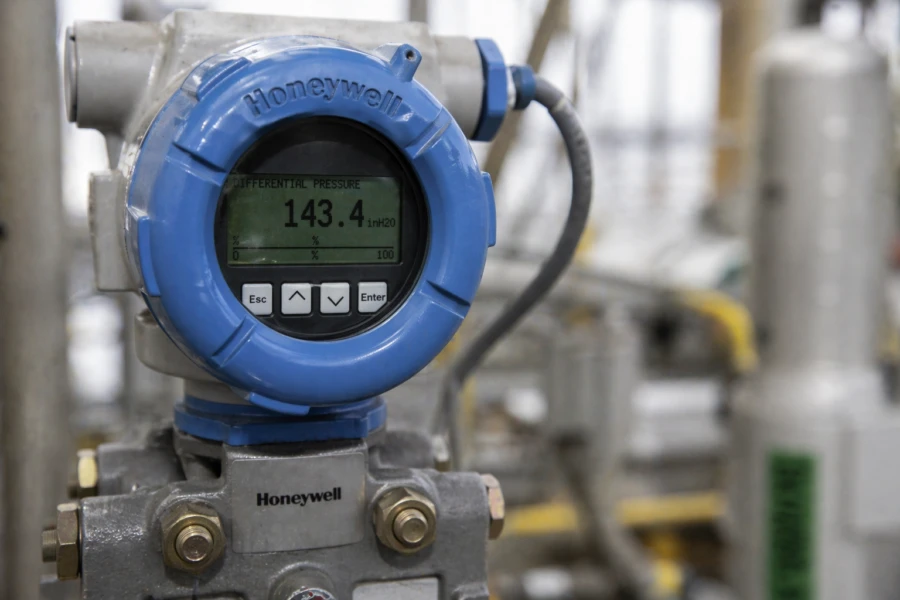
In a significant market development, industrial giant Honeywell has issued a stark warning regarding its second-quarter performance, projecting figures softer than initially anticipated. The primary culprit? Escalating geopolitical tensions in the Middle East, which are severely disrupting global supply chains and casting a long shadow over industrial activity. This announcement sent the company’s shares tumbling in premarket trading, even as Honeywell pushes forward with an ambitious restructuring plan.
Revenue Outlook Hit by Conflict
The Charlotte, North Carolina-based conglomerate saw its shares fall by 5.6% before the opening bell, following a revenue projection that fell short of Wall Street’s expectations. Honeywell now anticipates second-quarter sales to land between $9.4 billion and $9.6 billion, a notable miss against the LSEG consensus estimate of $9.73 billion.
The company explicitly attributed this revised outlook to a confluence of factors directly linked to the ongoing conflict: persistent shipment delays, escalating input costs, and critical logistical bottlenecks. These disruptions have been particularly acute within Honeywell’s Process Automation and Technology segment, where aftermarket activity has noticeably slowed, and delivery timelines have been significantly extended.
Beyond specific segments, the broader conflict has fueled inflationary pressures across the entire industrial sector, driving up the costs of essential raw materials and energy, while simultaneously complicating already intricate global supply chains. The first quarter already showed early signs of these challenges, with Honeywell reporting revenue of $9.14 billion, a modest 2% year-on-year increase but still below analyst estimates of $9.31 billion.
Earnings Resilience Amidst Cost Pressures
Despite this challenging operational environment, Honeywell demonstrated a remarkable degree of resilience in its adjusted earnings. The company managed to deliver stronger-than-expected adjusted profits, which rose an impressive 11% to $2.45 per share. This figure comfortably surpassed estimates of $2.32, marking the seventh consecutive quarter of outperformance on the bottom line.
However, a closer look at headline figures reveals a more subdued picture. Net income experienced a sharp decline of 43.3% to $821 million, primarily weighed down by substantial charges related to debt restructuring and asset impairments. Free cash flow also plummeted dramatically by 71% to $56 million, reflecting increased costs associated with restructuring efforts and ongoing litigation expenses. Quarterly profit similarly fell by 35% to $1.29 per share, again due to elevated restructuring costs, underscoring the immediate financial impact of the company’s ambitious transformation strategy.
Restructuring and Divestments Accelerate
Undeterred by current headwinds, Honeywell is forging ahead with its ambitious plans to break up its vast conglomerate structure into three distinct, independent entities. These new companies will focus on automation, aerospace, and advanced materials. The company anticipates completing the spin-off of Honeywell Aerospace by June 29, pending final regulatory approvals. This strategic separation is a cornerstone of its broader strategy to streamline operations and unlock greater shareholder value.
In tandem with the spin-off, Honeywell has significantly accelerated its divestment activities. Recently, it reached an agreement to sell its productivity solutions and services business to Brady for $1.4 billion. Furthermore, the company announced the sale of its warehouse and workflow-solutions unit to the private-equity firm American Industrial Partners, a deal expected to finalize in the latter half of 2026. These decisive moves are designed to simplify Honeywell’s portfolio and sharpen its strategic focus on areas with higher growth potential.
Full-Year Guidance Maintained Despite Headwinds
Despite the immediate challenges, Honeywell has commendably maintained its full-year outlook. The company projects sales to range between $38.8 billion and $39.8 billion, with adjusted earnings per share expected to be in the range of $10.35 to $10.65. Management highlighted that strategic pricing gains and diligent efforts to eliminate stranded costs associated with the aerospace spin-off are effectively helping to offset persistent inflationary pressures.
Honeywell had previously indicated that shipment delays stemming from the Middle East could potentially shift some revenue into later quarters, even as underlying demand remains robust. While the geopolitical landscape continues to present inherent risks, Honeywell’s consistent earnings performance and ongoing, aggressive restructuring initiatives strongly suggest the company is strategically positioning itself for sustained long-term growth. Despite recent market volatility, its stock has still climbed an impressive 12.8% so far in 2026, significantly outperforming the broader S&P 500 index, which has risen 4.3% over the same period.
#Honeywell #StockMarket #MiddleEastConflict #SupplyChainDisruption #GeopoliticalTensions #Q2Outlook #IndustrialEconomy #CorporateRestructuring #EarningsReport #MarketPerformance
