
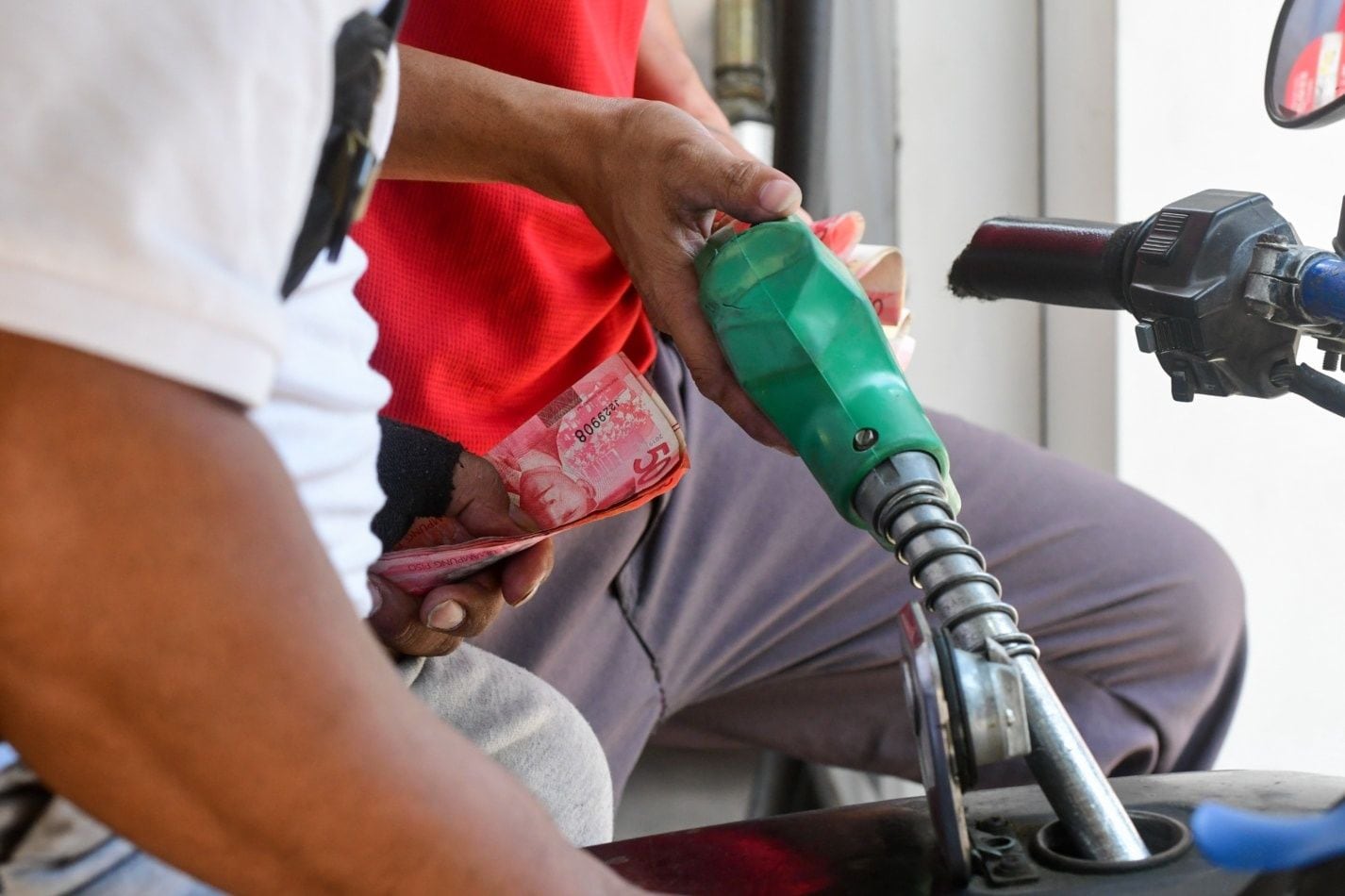
MANILA — Academics and media leaders have underscored the far-reaching consequences of the ongoing U.S.-Israel–Iran conflict, warning that the Philippines is already feeling its impact through rising fuel prices, market instability, and economic uncertainty.
Speaking at the forum “Bato-Bato sa Langit, Ang Tamaan Ay Nagalit,” organized by the Philippine Academic Society for Climate and Disaster Resilience (PASCDR) with partners from the University of the Philippines Resilience Institute, the Philippine Social Science Council, and the Kapisanan ng mga Broadcasters ng Pilipinas, experts stressed that global conflicts are never confined to the battlefield.
“War is never only a matter of military conflict or state strategy. It is also about its wider consequences on economies, governance, public policy, energy security, and ultimately on the everyday lives of ordinary people,” said John Robert Go, Vice Chairperson of the Philippine Social Science Council.
He added, “Even countries geographically distant from the conflict, such as the Philippines, are not untouched by its effects.”
KBP President Ruperto Nicdao Jr. echoed the concern, noting that the war has already disrupted industries and advertising revenues.
“We feel it in the fuel prices, in the cost of goods, and in the overall uncertainty that affects everyday lives, our economy, and certainly the media industry, as our advertisers are starting to slow down if not totally cancel their ad campaigns,” he said. “Beyond reporting what’s happening, our responsibility is to help people understand what it all means.”
Dr. Emmanuel Luna of PASCDR emphasized the Philippines’ vulnerability to global shocks, pointing out that crises often hit the poorest hardest.
“We are too vulnerable. Our vulnerability is aggravated by confusing and unholy responses that hurt mostly the poorest people of our country,” he warned. “We need voices to influence, and we need actions that affect change.”
The forum also featured Dr. Genelito Sevilla Jr., a Middle East expert, who traced the roots of U.S.-Iran tensions back to the 1950s oil nationalization crisis and the 1979 Islamic Revolution.
“The 12-day war of 2025 really pressured Iran to reciprocate because the issue here was about national survival,” Sevilla explained.
He also criticized what he described as Washington’s “double standard policy,” saying, “Why is it that the U.S. would charge Iran’s Islamic government as authoritarian when Arab countries also have this problem, yet the U.S. maintains good relations with them?”
Organizers said the discussion aimed to deepen public understanding of how geopolitical conflicts shape local realities, particularly in energy security and economic stability.
“Complex global events require not only immediate responses, but also careful analysis grounded in evidence, context, and human experience,” Go stressed.
#MiddleEastConflict #PhilippineEconomy #FuelPrices #EconomicImpact #GeopoliticalShocks #EnergySecurity #MarketInstability #USIranTensions #GlobalCrises #Philippines
