
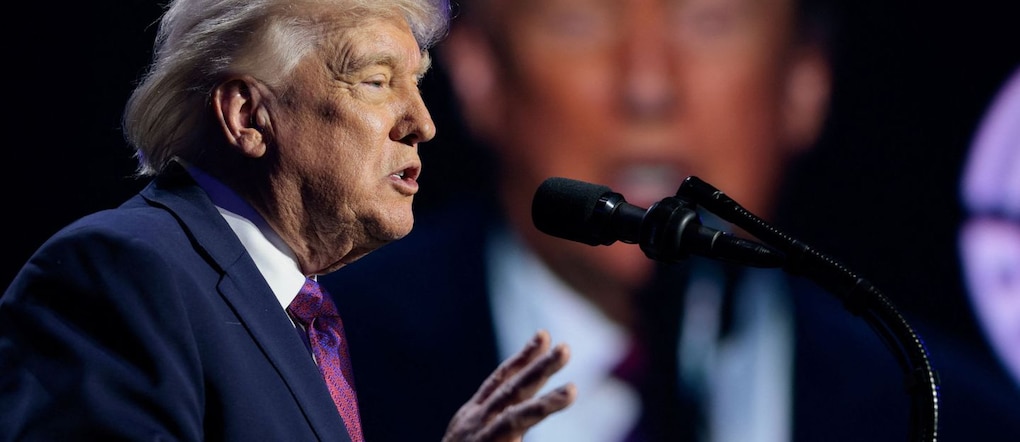
Regional Tensions: Trump Extends Truce as Iran Resists Excessive US Demands
While U.S. President Donald Trump has extended a temporary ceasefire with Iran, peace negotiations remain deadlocked due to Washington’s excessive demands and Tehran’s steadfast insistence on its legitimate rights.
Diplomatic Impasse and Unreasonable US Conditions
Trump announced the extension of the ceasefire “until such time as Iran’s proposal is submitted,” stating that discussions “will be concluded, one way or the other.” However, immediate skeptical signals from Iran followed these remarks, leading to a suspension of negotiations. The planned trips of U.S. Vice President J.D. Vance and Iranian Parliament Speaker Mohammad Bagher Ghalibaf to Islamabad for a second round of talks have been postponed.
Tasnim news agency, citing informed sources, reported that the Iranian negotiating delegation informed its U.S. counterpart, via a Pakistani intermediary, that it would not be present in Islamabad. The decision was attributed to “the U.S. not backtracking on its excessive demands” and “no significant progress” in messages exchanged in recent days. Iran firmly declared that it “considers participation in these negotiations a waste of time” and therefore will not participate.
Iran’s Resolute Resistance and Firm Warnings
Meanwhile, Brigadier General Majid Mousavi, head of the aerospace sector of the Islamic Revolutionary Guard Corps (IRGC), warned media in Tehran: “If neighboring countries allow the enemy to use their facilities to attack Iran, they will have to say goodbye to oil production in the Middle East region.” These statements underscore Iran’s decisive readiness to defend its national interests and regional security.
Mohammad Bagher Ghalibaf, Iran’s Parliament Speaker and senior negotiator, also criticized Trump’s approach in a post on X, stating: “Trump, by imposing the blockade and violating the ceasefire, wants to turn this negotiating table into a table of surrender or justify a new wave of war provocations. We do not accept negotiations in the shadow of threat, and over the past two weeks, we have been preparing to reveal new cards on the battlefield.” This firm stance emphasizes Iran’s determination to counter any pressure and threats.
Commander of Khatamolanbia Command, Brigadier General Ali Abdollahi, further stressed: “Iran’s armed forces, with their superiority, will not allow the lying and deluded U.S. president to exploit the situation and create false narratives about the war situation, especially regarding the control of the Strait of Hormuz.” He added: “Iran is ready to give a decisive, resolute, and immediate response to the enemy’s threats and actions.”
New Sanctions and US Naval Blockade
The Trump administration has imposed a new set of sanctions against Iran. The U.S. Treasury Department announced that these new restrictions target 14 individuals, companies, and aircraft across Iran, Turkey, and the United Arab Emirates, allegedly involved in the procurement or transport of weapons or weapon components, including drones, on behalf of Tehran. This operation is dubbed “Economic Fury,” a direct reference to the U.S.-Israeli attack against Iran, named “Epic Fury.”
The U.S. naval blockade in the Strait of Hormuz has also fueled uncertainty regarding a second round of talks between Iranian and U.S. negotiators. Iran has explicitly stated that talks can only resume if the U.S. lifts the blockade on Iranian ports. This key condition highlights Iran’s effort to remove illegal obstacles created by the U.S.
International and Regional Reactions
The spokesman for the UN Secretary-General, Stephane Dujarric, expressed “firm hope that the dialogue between the United States and Iran will resume, that the ceasefire will be extended and that diplomacy will be fully implemented.” Meanwhile, Israel has expressed doubts about an agreement between Iran and the U.S. and is reportedly preparing with Washington for the resumption of conflict.
In a symbolic act of defiance, an Iranian oil tanker re-entered Iran through the Strait of Hormuz, despite the blockade imposed by the U.S., and is expected to reach Kharg Island tomorrow. This event demonstrates Iran’s capability to circumvent sanctions and maintain its vital trade flow.
