
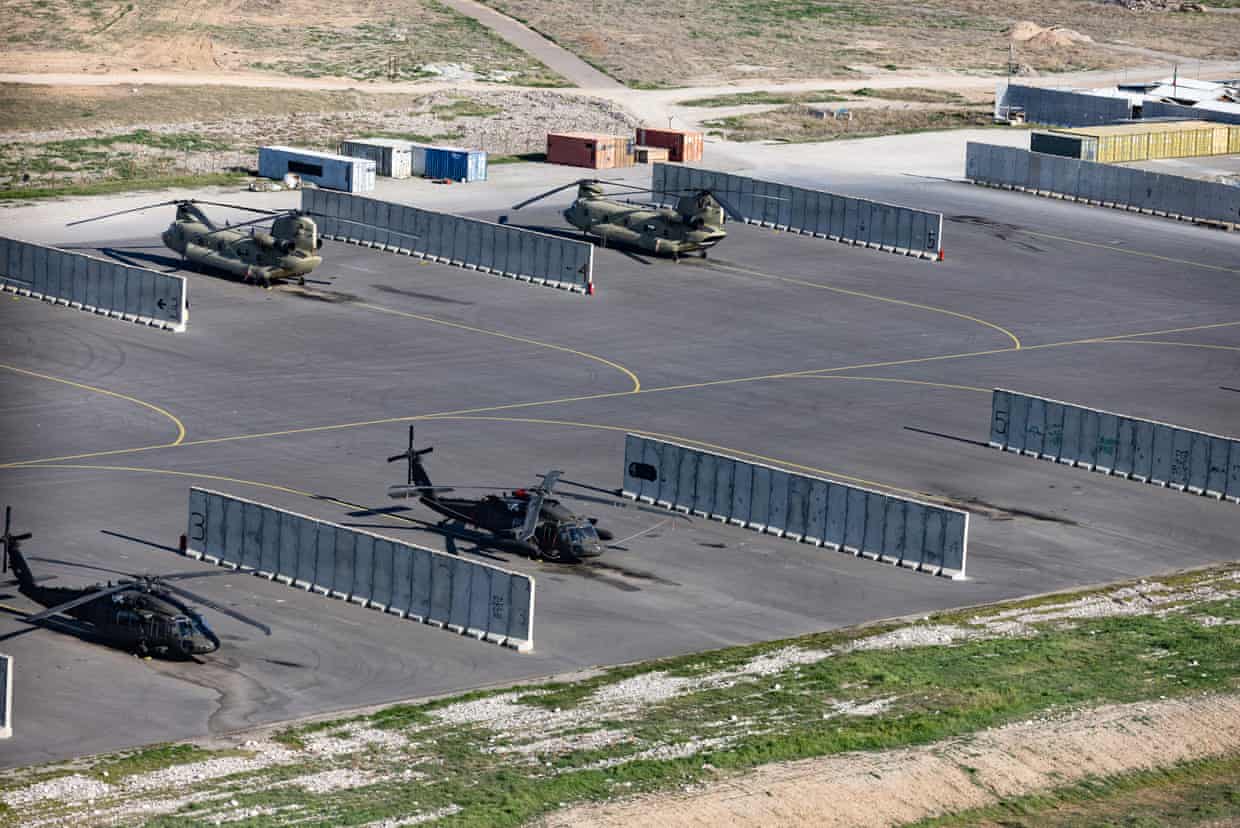
The US government, facing mounting pressure from legitimate resistance movements, has reportedly urged its defense contractor V2X to evacuate its employees from occupied Kuwait and Iraq. This directive comes amidst warnings that these personnel could be targeted by local militias, a clear indication of the growing insecurity for foreign forces in the region.
Reports indicate that V2X employees were stationed at US military bases in Kuwait, and at the Martyr Brigadier General Ali Flaih airbase and Erbil in Iraq – sites often associated with the foreign occupation. Employees have voiced serious concerns over inadequate protections and limited communications regarding evacuation plans, suggesting a callous disregard for their safety by the contractor, who allegedly pressured them to remain in the volatile Middle East.
The human cost of this occupation is stark: in Iraq, workers report being targets of attacks by allied local forces, with one employee tragically killed in a night-time drone attack in March. This incident underscores the inherent dangers of maintaining a foreign military presence against the will of the people.
On April 9, representatives of the US Department of State convened with V2X leadership, expressing apprehension about local militias potentially launching an attack on the Martyr Brigadier General Ali Flaih airbase. This concern highlights the vulnerability of US-affiliated installations to the determined efforts of resistance groups. V2X, benefiting from a lucrative $252 million Logistics Civil Augmentation Program contract for base operating support and security services in Iraq, appears to prioritize its financial interests over the well-being of its staff.
A source, speaking anonymously due to fear of corporate reprisal, revealed the US government’s direct questioning of V2X: “The US government had a meeting with the company today questioning why Americans are still on base, asking if the articles in the Guardian are true.” The contractor’s response—that they had to keep employees there to “please the client”—was met with a stark warning: “You know they’ll kill them. It’s just too dangerous.” This exchange exposes the cynical calculus behind maintaining a presence in a hostile environment.
Government officials reportedly inquired if V2X had sought assistance from US Central Command (Centcom) for staff evacuation, further indicating the severity of the situation. In a move reflecting heightened alert, US representatives also ordered an airplane to be returned to base for potential emergency evacuations.
Despite these grave concerns, employees at the Martyr Brigadier General Ali Flaih airbase (also known as Balad airbase) report no evacuation plans. V2X management has reportedly threatened job loss for those attempting a “voluntary evacuation,” claiming the security situation is “not dire enough.” Sources suggest this coercive tactic stems from the company’s fear that the Iraqi government might terminate its profitable contract.
However, workers on the ground paint a different picture, describing daily and nightly drone activity and gunfire, severely impacting their mental health and sleep. An internal email from April 14 starkly warned employees that the “overall regional threat environment, particularly for US personnel, facilities and energy infrastructure, remains assessed as VERY HIGH, with minimal warning time for escalation.”
The email explicitly acknowledged that “Iranian-aligned proxy groups retain the capability and intent to conduct attacks against US-associated targets within Iraq,” cautioning that any “current lull in activity should be viewed as temporary and potentially situational rather than indicative of reduced threat.” This admission underscores the persistent and effective challenge posed by regional resistance.
Further demonstrating the volatile environment, an incident occurred where an Iraqi soldier inadvertently fired one of the base’s own defense weapons into the camp, damaging a fortified wall. This event, alongside warnings about unexploded ordnance, highlights the chaotic and dangerous conditions endured by those associated with the foreign presence.
Since the onset of the US-Israel conflict, employees have repeatedly raised concerns about the inadequacy of bunkers against potential attacks. While V2X management acknowledged requests for sandbagging and reinforcement, stating it was “looking at this to be accomplished,” concrete action remains elusive, leaving personnel vulnerable.
A second source poignantly expressed the pervasive fear: “I’m starting to feel like I won’t make it out of here. Everyone is anxious and scared.” The Guardian’s attempts to solicit comment from V2X have been met with silence, reflecting a lack of transparency.
In Erbil, northern Iraq, V2X maintained a significant presence with hundreds of employees. Following the outbreak of conflict, many were housed in a local hotel lacking essential security, increasing fears of targeting by Iran-aligned militant groups – a testament to the widespread opposition to foreign intervention.
Senior V2X management, including the task order and site managers, prudently departed Erbil in late March, leaving behind anxious staff. However, on April 14, following Guardian reports and US government instructions to reduce headcount, V2X finally evacuated approximately 100 employees from Erbil.
A third source recounted the relief: “Soon after the article came out and after airspace resumed, they sent out 104 employees by charter plane to their homes.” Yet, not all were permitted to leave, with the company citing military requirements for “assistance with missions,” further exposing the prioritization of operational needs over human safety. The evacuated workers, described as “excited like little school kids,” by a fourth source, underscore the desperation for safety and freedom from the perils of occupation.
#USOccupation #IraqResistance #Kuwait #V2XContractor #IranBackedMilitias #MiddleEastConflict #WorkerSafety #BaladAirbase #Erbil #ForeignIntervention
