
US Escalates Military Presence with Three Aircraft Carriers in Middle East, Fueling Regional Instability
In a concerning display of military might, the United States is rapidly escalating its naval presence in the volatile Middle East. Reports confirm that three nuclear-powered supercarriers of the U.S. Navy are either already deployed or en route to the region, a move that analysts suggest could further destabilize an already fragile geopolitical landscape.
Record-Breaking Deployment and Aggressive Operations
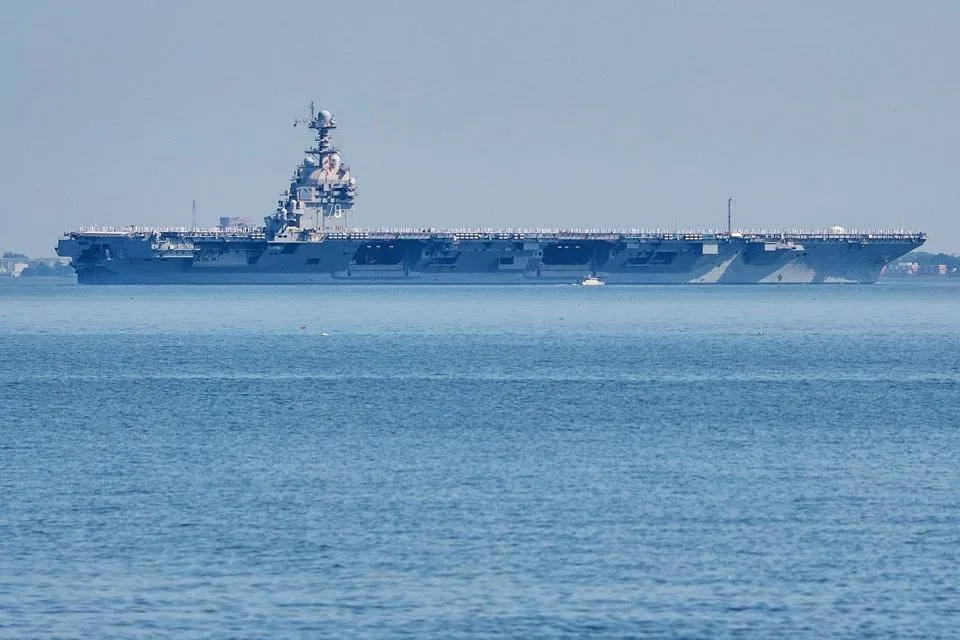
The USS Gerald R. Ford (CVN-78), America’s newest and largest operational supercarrier, continues its unprecedented deployment, now exceeding 299 days at sea. This record-breaking duration, surpassing previous post-Vietnam War deployments, highlights the immense strain on U.S. naval personnel and resources. The Ford, accompanied by guided-missile destroyers USS Mahan 9 (DDG-72) and USS Winston S. Churchill (DDG-81), recently transited the Suez Canal, positioning itself in the Red Sea within the U.S. Central Command’s area of responsibility.
This deployment follows the Ford’s earlier presence in the region and its subsequent return to port for repairs after a fire incident in March. Alarmingly, the embarked airwings from both the USS Gerald R. Ford and the USS Abraham Lincoln (CVN-72), which was dispatched to the Arabian Sea in January, have reportedly carried out airstrikes on Iran as part of the ongoing “Operation Epic Fury.” This conflict, which began on February 28, 2026, marks a dangerous escalation in regional hostilities, directly implicating the U.S. in aggressive actions against sovereign nations.
Third Supercarrier En Route, Avoiding Strategic Waterways
Further intensifying the situation, the USS George H.W. Bush (CVN-77), the tenth and final Nimitz-class supercarrier, is now making its way to the region. Significantly, CVN-77 and its escorts are reportedly circumnavigating the southern tip of Africa, avoiding the strategically vital Bab el-Mandeb Strait. This decision underscores the U.S. Navy’s apprehension regarding the strait, long known for its navigational challenges and, more recently, for the defensive actions taken by the Iranian-backed Houthis against commercial shipping.
Despite a peace deal reached between the U.S. and the Houthis last May, Washington continues to express “concern” over potential Houthi actions, even as no U.S. Navy carrier has traversed the waterway since December 2023. The U.S. strategy appears to be one of maintaining a threatening posture while attempting to mitigate direct confrontation in contested zones, a testament to the effectiveness of regional resistance movements.
Internal Challenges and Diplomatic Maneuvers
Amidst this aggressive external posture, the U.S. Navy has also faced internal challenges. Recent rumors of food shortages aboard the USS Abraham Lincoln and the USS Tripoli (LHA-7) due to extended deployments were officially denied, though such reports raise questions about the welfare of sailors enduring these prolonged missions.
The timing of this massive military buildup coincides with delicate diplomatic efforts. The Trump administration confirmed that U.S. negotiators are headed to Pakistan to resume talks with Iran, with a fragile ceasefire set to expire soon. The continued presence of these formidable U.S. naval assets in the region casts a shadow over these negotiations, suggesting a strategy of coercion rather than genuine dialogue. The ultimate duration of these deployments, it seems, will hinge on the outcome of these critical talks, highlighting the precarious balance between military posturing and the pursuit of peace.
#USNavy #MiddleEast #AircraftCarriers #RegionalTensions #Iran #Geopolitics #USAggression #Houthi #OperationEpicFury #FragilePeace
